
REVIEW · AUSTRIA
Vienna: Romantic Classics Piano, Violin, and Cello Concert
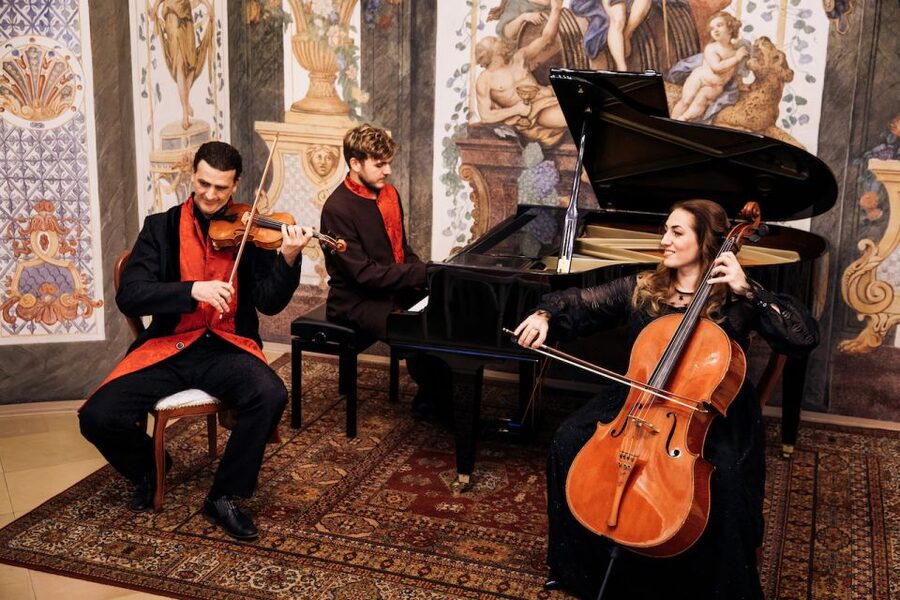
Vienna’s Romantic Classics concert puts you close to the music in the frescoed Sala Terrena, only 150 meters from St. Stephen’s Cathedral. Over 90 minutes, piano, violin, and cello performers move from Beethoven’s quiet Moonlight Sonata to Chopin, Liszt, Schubert, Mozart, Bach, and Brahms.
I like the intimate setting, where the room’s size helps you hear detail instead of sending the sound off into a vast hall. I also like the broad program, which gives you famous favorites alongside less familiar pieces such as Haydn’s Trio all’ungarese and Paganini’s Caprice 13.
The main consideration is seating and extras. You can choose student, back-row, or closer seats, but the room is relatively small, and refreshments are not included. During the break, drinks can be bought outside with cash, so bring some if that matters to you.
Key points to know before booking
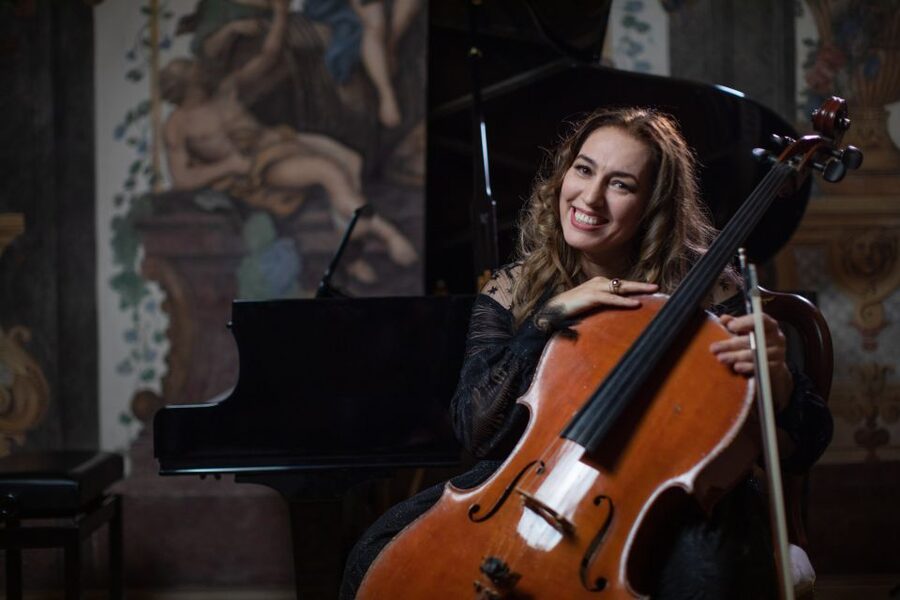
- A frescoed Sala Terrena near St. Stephen’s Cathedral: Enter through the Deutschordenskirche gate, just 150 meters from Vienna’s landmark cathedral.
- A 90-minute program with piano, violin, and cello: The music ranges from Mozart and Haydn to Chopin, Liszt, Bach, Paganini, Saint-Saëns, Massenet, and Schubert.
- Recognized performers: Violinist Claudio Bentes appears alongside pianist Dushan Sretovic and soloist Teodora Miteva.
- Several ticket positions: Student tickets, back-row tickets, and seats closer to the performers are available.
- Strong acoustic appeal: The small venue allows clear, detailed sound and keeps you close to the musicians.
- Simple evening logistics: A cloakroom is included, English and German assistance is available, and you can cancel up to 24 hours before the concert for a full refund.
Why this concert works so well in Vienna
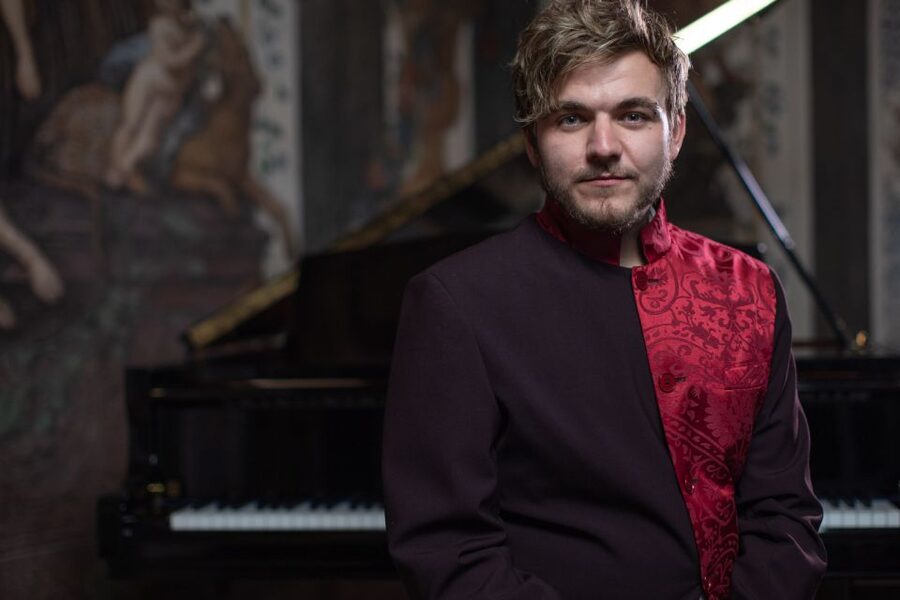
Vienna offers plenty of grand concert halls, but a smaller room changes the experience. Here, you are not simply sitting far back in a large audience. The Sala Terrena gives the performance a more direct feel, with the musicians and their instruments close enough for you to notice changes in touch, bowing, and volume.
The room’s frescoes also matter. You are surrounded by decorative artwork rather than sitting in a plain modern auditorium. That setting suits the program, which moves through music written across several centuries of European classical tradition.
I would choose this concert for an evening when you want music to be the main event, not a long dinner show or a large tourist production. The 90-minute length is useful in Vienna. It gives you a complete cultural outing without taking up an entire night.
The program is also friendly to different levels of musical interest. If you know classical music well, the names are familiar and the selection offers plenty to anticipate. If you mainly know Beethoven’s Moonlight Sonata or Schubert’s gentle melodies, the concert gives you a manageable introduction to composers you may not have heard in full before.
More Piano Concerts in Vienna:
- Mozarthaus Concert in Vienna – Piano Trio
★ 4.5 · 43 reviews - Krakow: Chopin Piano Recital at Chopin Concert Hall
★ 4.7 · 2,330 reviews - Warsaw: Live Chopin Piano Concert
★ 4.7 · 370 reviews
Finding the Sala Terrena near St. Stephen’s Cathedral
The meeting point is easy to place on a Vienna walking route. The venue is 150 meters from St. Stephen’s Cathedral, and you enter through the gate at Deutschordenskirche. Look for the poster stand for concerts at Mozarthaus at the entrance.
That last detail is worth noting because the performance is not entered directly from a generic concert-hall frontage. Give yourself time to locate the gate rather than arriving at the exact start time. You are asked to arrive 15 minutes early, which is sensible for finding the entrance, checking in, and using the cloakroom.
The location works especially well if you are already in central Vienna. You do not need to build a separate transport plan around the concert. It can fit before or after a walk around the cathedral area, though you should keep your schedule loose enough to arrive early.
English and German are available from the host or greeter. The venue is wheelchair accessible, and a cloakroom is included, useful if you are carrying a coat during a cool Vienna evening.
The first musical movement: Haydn and Beethoven
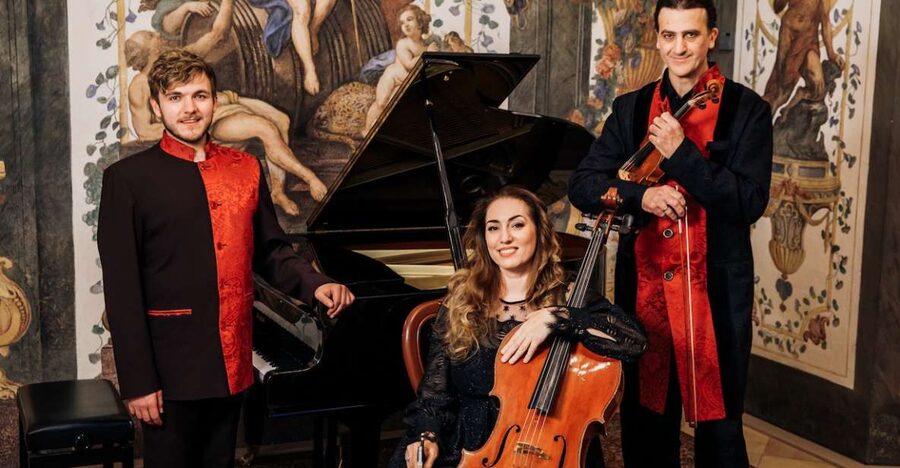
The concert opens with Joseph Haydn’s Trio all’ungarese, Hob XV:25. Its listed sections include the Andante, Poco Adagio, and Finale, Rondo. This is a good opening choice because it introduces the trio format before the program moves into solo works.
A trio lets you hear the instruments in conversation. Piano, violin, and cello do not simply play the same musical line. Each adds a different color and role, and the shifting balance helps you listen to how a chamber group works together.
Beethoven then arrives with the Adagio from the Moonlight Sonata. This is one of the most recognizable pieces in the program, but a close performance can still make it feel fresh. The slow, repeated piano figures create a calm surface, while the melody carries a more serious mood underneath.
The smaller room is particularly well suited to this work. You can listen for the control of the quiet passages instead of relying only on the piece’s famous reputation. If you want the biggest possible orchestral impact, this is not that kind of event. If you value a more personal reading of a piano classic, it makes good sense.
Mozart and Beethoven show two different sides
Mozart’s La tartine de beurre, also known as Das Butterbrot, adds a lighter touch. Its title refers to buttered bread, and the short piece helps prevent the first part of the program from becoming too solemn.
That small Mozart selection is followed by Beethoven’s Sonata Op. 2, with the Allegro con brio. The contrast is useful. Mozart’s playful miniature gives way to Beethoven’s faster, more forceful piano writing.
This pairing shows how much the program changes mood within a short period. You move from quiet reflection to humor and then to energy. I appreciate that variety because a concert made up only of slow romantic pieces can begin to feel heavy, especially late in the day.
For listeners who know only Beethoven’s Moonlight Sonata, the Sonata Op. 2 offers another view of the composer. It has a more urgent character, and the title alone does not prepare you for the difference in pace and attack.
More Live Music in Vienna:
- Vienna: Vivaldi’s Four Seasons Concert in Karlskirche
★ 4.7 · 14,951 reviews - Vienna: Classical Concert in the World-Famous Musikverein
★ 4.6 · 6,673 reviews - Vienna: Mozart Concert at the Musikverein – Golden Hall
★ 4.6 · 5,194 reviews - Vienna: Classical Concert in St. Anne’s Church (Annakirche)
★ 4.6 · 3,414 reviews
Liszt and Chopin bring the Romantic heart
Franz Liszt’s Un sospiro is one of the program’s key romantic selections. The piece is known for its flowing, singing quality and its demanding piano writing. It is the sort of work that makes the pianist’s control easy to notice, especially in a close room.
Chopin receives two contrasting selections. The Nocturne in C minor, Op. 48 No. 1, brings a serious, expressive mood. Chopin’s nocturnes are often treated as simple evening music, but this one has more weight and drama than a soft background piece.
The program then shifts to Chopin’s Étude Op. 10 No. 1 in C Major. An étude is built around a technical challenge, but it is meant to be music, not merely an exercise. The sweeping movement across the keyboard can sound both athletic and lyrical when handled well.
Pianist Dushan Sretovic is specifically noted for his Chopin interpretations and regularly performs on international stages. That makes this portion especially important if Chopin is your main reason for booking. You are not getting one short Chopin encore added as an afterthought. You get two pieces that show different sides of his writing.
If you prefer only slow, familiar melodies, the Étude may feel more intense. If you enjoy watching piano technique turn into musical expression, it should be one of the evening’s strongest sections.
Bach, Paganini, Saint-Saëns, and Massenet add color
Johann Sebastian Bach’s Cello Suite in G Major, BWV 1007, begins with the Allegro. The suite was written for solo cello, so this part changes the texture again. Instead of a full trio or piano-centered performance, the cello carries the musical line alone.
That makes the work a useful pause in the program. You can focus on the cello’s warm, direct sound and on the performer’s phrasing. The lack of other instruments also places more responsibility on the soloist.
Paganini’s Caprice 13 brings the violin into sharper focus. Paganini’s caprices are associated with demanding technique, and this selection gives the violinist a chance to show speed, precision, and character.
The program then softens with Saint-Saëns’s The Swan. It is one of the most approachable pieces on the list, with a smooth, singing line that many listeners recognize even if they do not know the title.
Massenet’s Thaïs Meditation continues that lyrical mood. The melody is often appreciated for its calm, floating quality, and it gives the violin another chance to carry the emotional center of the performance.
Violinist Claudio Bentes is part of the featured lineup, and Teodora Miteva is described as an award-winning soloist with experience in international competitions. The supplied information does not assign every listed work to a specific performer, so I would not book expecting a particular musician to play a particular piece unless that is confirmed at the time of purchase.
Schubert closes with a substantial finale
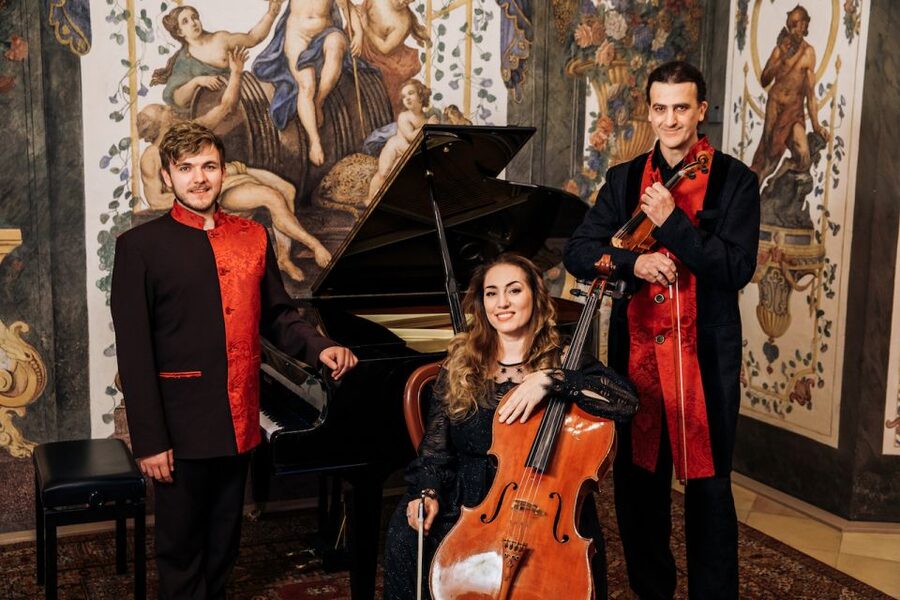
The final listed work is Schubert’s Trio in E-flat Major, Op. 100, Andante con moto. This is a longer and more substantial closing selection than a quick encore. It returns to the trio format and brings the piano, violin, and cello back into conversation.
Schubert’s writing here has a broad, reflective quality. It is a fitting close after the sharper contrasts of Chopin, Paganini, and Beethoven. The program ends not with a burst of showmanship, but with music that gives you room to listen and settle into the sound.
The choice also makes the concert feel balanced. You get famous individual pieces in the middle, but the opening Haydn trio and closing Schubert trio frame the evening as a chamber music program rather than a string of disconnected hits.
The musicians and the close-room advantage
The named performers give the event a clear artistic identity. Claudio Bentes is presented as the violinist, Dushan Sretovic as a prize-winning piano virtuoso known for Chopin, and Teodora Miteva as a soloist with numerous international competition awards.
In a small venue, those credentials matter less as a marketing list and more as a promise of focused performance. You are close enough to notice the physical work behind the sound. Fast piano passages, sustained violin lines, and cello phrases all have a visible human source.
The room’s acoustics have been praised for clarity and depth. That is important in chamber music, where a poor acoustic can blur the balance between instruments. Here, the smaller size should help you follow individual lines without losing the combined sound.
Seat choice still matters. If you want the closest possible view, choose a seat nearer the performers. A back-row ticket may cost less and can still give you the full concert, but you will have less visual contact with the musicians. Student tickets offer another price option for eligible buyers.
Is $69 good value for 90 minutes?
At $69 per person, this is not a bargain-priced background activity. You are paying for a live performance in a special historic setting, with a program built around major composers and an internationally experienced lineup.
The value is strongest if you care about three things: a central Vienna location, a visually distinctive room, and close listening in a small setting. The price is easier to justify when the concert is part of your main cultural plan for the evening rather than something you squeeze in casually.
The 90-minute duration helps. You receive a full concert without committing to a very long performance. It also leaves time for dinner or an evening walk afterward.
There are a few limits. Refreshments are not included, and drinks available during the break may require cash. The bathroom signs could also be clearer, so take note of facilities before the music begins. These are small issues, but they are worth knowing if you expect a fully serviced concert evening.
Free cancellation up to 24 hours before the start gives you some protection if your Vienna schedule changes. You can also reserve now and pay later, which helps if you are planning several activities and want to keep your options open.
Who should book this concert?
I would recommend it to you if you want a classic Vienna evening that is easy to fit into a central itinerary. It suits couples, solo visitors, and anyone who prefers a focused cultural event over a large stage production.
It is especially good for listeners who want famous works but also appreciate some variety. Beethoven, Chopin, and Schubert give you recognizable anchors, while Haydn, Bach, Paganini, Saint-Saëns, and Massenet broaden the program.
Families with older children or teenagers may also find the 90-minute length manageable, though the suitability depends on their interest in concert music. Student tickets can help keep the cost down for eligible buyers.
I would think twice if you need included drinks, a large auditorium, or a highly formal concert-hall production. I would also check the available seating carefully if seeing the musicians from close range is important to you.
Should you book Romantic Classics?
Book it if you want close-up chamber music in a beautiful central room, with a program full of familiar names and enough variety to keep the evening moving. The Sala Terrena, clear acoustics, and 90-minute format make this a practical choice for a Vienna night out.
The strongest reasons to choose it are the setting, the proximity to St. Stephen’s Cathedral, the range of music, and the chance to hear performers such as Claudio Bentes and Dushan Sretovic. Just arrive 15 minutes early, enter through the Deutschordenskirche gate, choose your seat with care, and carry cash if you may want a drink during the break.
FAQ
Where does the concert take place?
The concert takes place in the Sala Terrena. Enter through the gate at Deutschordenskirche, which is 150 meters from St. Stephen’s Cathedral.
How long is the concert?
The performance lasts 90 minutes.
How early should I arrive?
You should arrive 15 minutes before the concert begins.
Which composers are included in the program?
The program includes Haydn, Beethoven, Mozart, Liszt, Chopin, Bach, Paganini, Saint-Saëns, Massenet, and Schubert. Brahms is also highlighted among the featured composers, though the supplied program list does not identify a specific Brahms work.
Who are the named performers?
The featured musicians include violinist Claudio Bentes, pianist Dushan Sretovic, and soloist Teodora Miteva.
Are different seat types available?
Yes. You can choose from student tickets, back-row tickets, and tickets for seats closer to the performers.
Is the venue wheelchair accessible?
Yes, the activity is wheelchair accessible. English and German assistance is available, and a cloakroom is included.
Just added to the listings in Vienna
- Vienna: Sunday Brunch Danube Cruise & Live Music★ 4.2 · 42 reviews
- Vienna Supreme Orchestra at Palais Niederösterreich★ 4.8 · 10 reviews
- Vienna: Concert by the Vienna Baroque Orchestra★ 4.6 · 56 reviews
- Vienna: Musical Tickets THE PHANTOM OF THE OPERA★ 4.9 · 132 reviews
- Vienna Private Walking Tour including State Opera★ 3.2 · 7 reviews
- Vienna: Mozart Concert with Dinner and Carriage Ride★ 4.8 · 25 reviews
- Vienna: Classical Concert in the historic 1837 Strauss-Hall★ 4.5 · 39 reviews
- Vienna: Baroque Orchestra Concert and Dinner★ 4.6 · 18 reviews
Piano Concerts, compared.
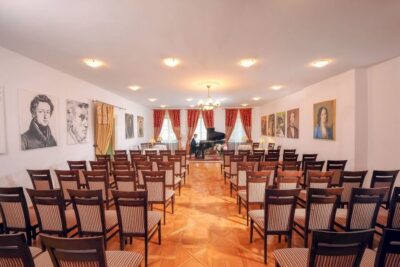
Chopin Piano Recital at Chopin Concert Hall
Read our review →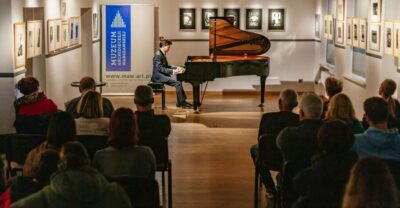
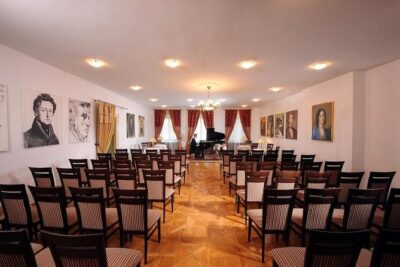
Chopin Piano Concert at Chopin Gallery with a Glass of Wine
Read our review →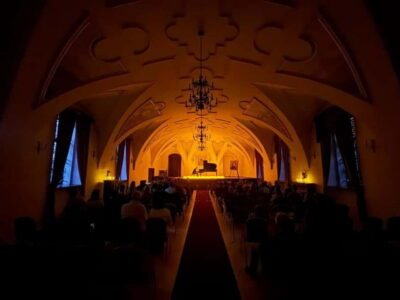
Piano Trio Chopin & Friends Concert VIP with Wine
Read our review →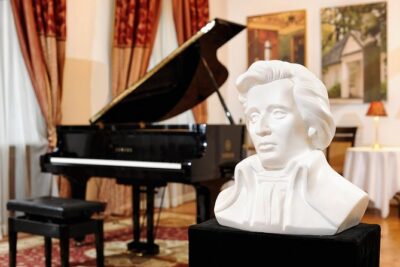
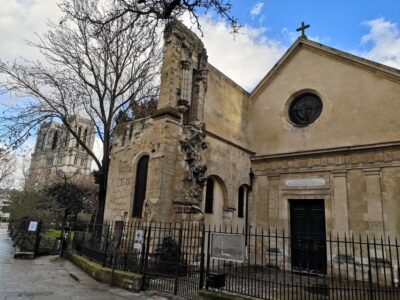
Romantic Piano Concert at Saint-Julien-le-Pauvre
Read our review →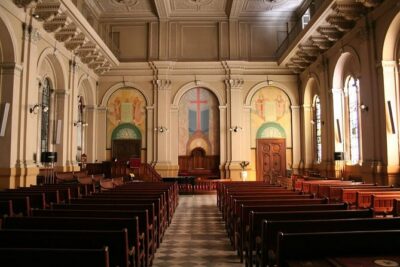
Browse the lists this tour appears in