
REVIEW · AUSTRIA
Salzburg Cathedral: Organ Concert at Midday
The most striking part of this 30-minute concert is its use of several organs inside Salzburg Cathedral. Instead of hearing one instrument from one spot, you hear different tones echo through the vast baroque interior, sometimes from surprising directions. The noon bells set the scene before the music begins.
I like two things especially: the $10 price makes this one of Salzburg’s better-value cultural stops, and the short running time fits neatly into a day of sightseeing. The main drawback is also clear: half an hour can feel far too brief if you are hoping for a full concert.
- Seven organs in one cathedral: The program may use four, five, six, or all seven instruments, depending on the performance.
- Two organists: The musicians demonstrate the different character and power of the cathedral’s organs.
- Noon bells and baroque surroundings: The setting is part of the performance, not just a backdrop.
- English and German introductions: Short explanations help you follow the instruments and music.
- Unreserved seating: Arrive early if you want the best choice of seats.
- Wheelchair accessible and flexible booking: Cancellation is allowed up to 24 hours before the concert, and reserve-now, pay-later booking is available.
Why This Short Concert Works So Well in Salzburg
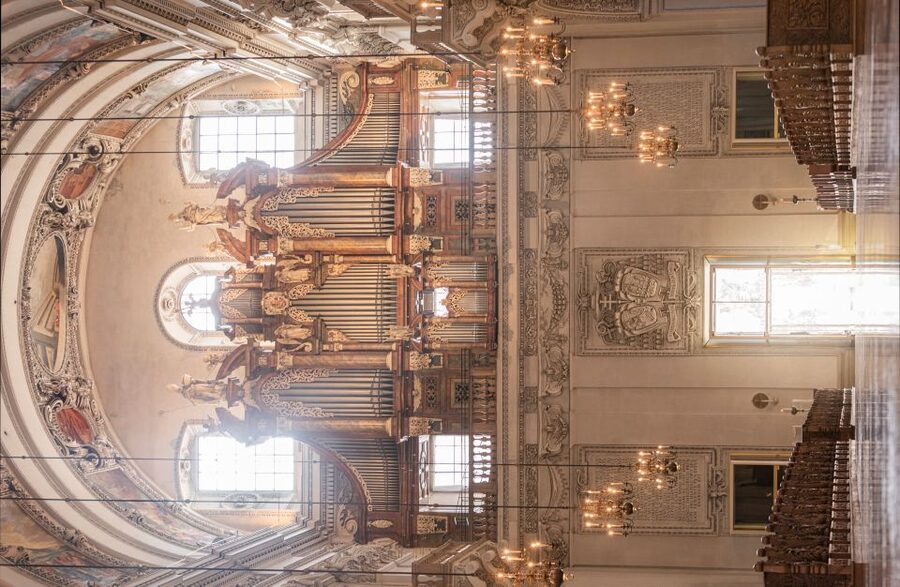
Salzburg is strongly associated with Wolfgang Amadeus Mozart, grand churches, and classical music. Yet you do not need to commit to a long evening performance to enjoy that tradition. This midday organ concert gives you a concentrated dose of music inside the city’s most important church.
The experience is less about a long musical program and more about contrast. One organ may sound bright and clear, while another feels heavier and more powerful. The instruments are played in different parts of the cathedral, so the sound changes with each selection.
I would think of it as a musical tasting rather than a full recital. That distinction matters. If you want an hour or more of uninterrupted music, this may leave you wanting another piece. If you want a memorable pause between sights, the length is just right.
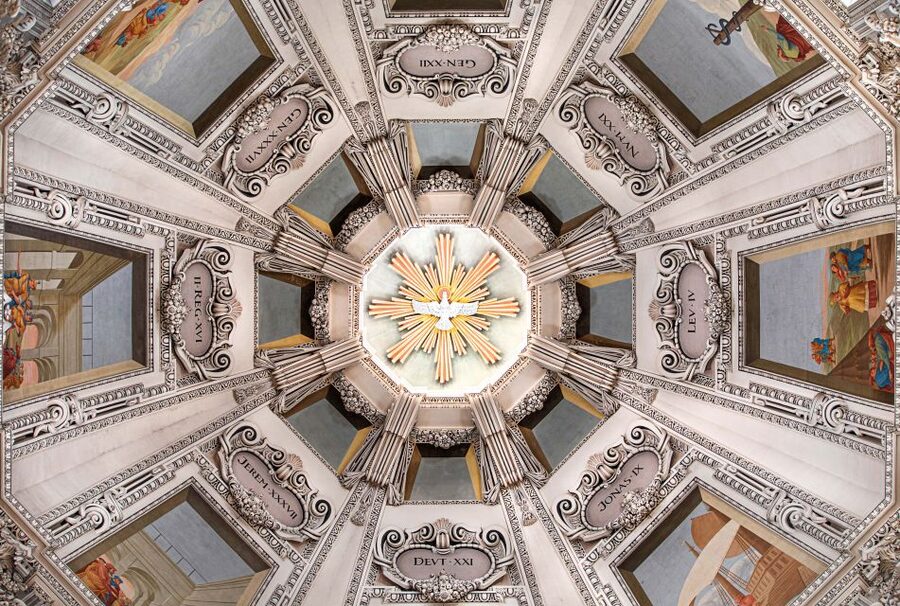
The cathedral itself carries much of the experience. You look up at the dome, take in the marble facade, and then sit beneath the muted light of the nave. Even when the music pauses, there is plenty to see.
Entering Salzburg Cathedral at Midday
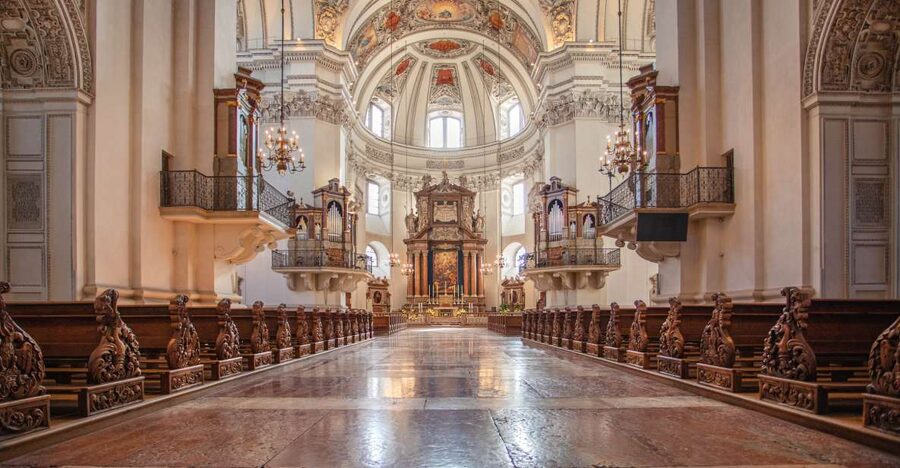
The concert begins with the cathedral’s setting doing some of the work. The noon bells announce the hour, then the performance brings the building to life from within.
The interior is known for its purity of baroque style. The main space feels large, bright, and carefully ordered, with light falling into the sanctuary while other parts of the nave remain more subdued. This changing light gives the concert a calm, almost theatrical opening.
You should allow time to look around before the music starts. The marble details, dome, and scale of the nave are easy to miss if you rush in just before the first notes. Arriving early also helps because seat reservations are not included.
There is no assigned place to sit. That is simple enough, but it affects your planning. If you care about your view of the cathedral or prefer a particular part of the seating area, arrive with time to spare. A short concert can feel less relaxed if you are still searching for a seat as the bells ring.
More Church and Cathedral Concerts in Austria
- Vienna: Classical Concert at St. Stephen’s Cathedral
★ 4.1 · 4,177 reviews - Vienna: Classical Concert in St. Anne’s Church (Annakirche)
★ 4.6 · 3,414 reviews - Vienna Classical Concert at St. Peter’s Church
★ 4.5 · 2,039 reviews
Hearing Four, Five, Six, or Seven Organs
The cathedral has seven organs, and the program is built around that unusual collection. The exact number played can vary. Some performances use four or five, while others include six or all seven. You should expect several instruments, but not assume that every concert will feature every organ.
That variety is the main reason to choose this experience over simply visiting the cathedral. You hear how different pipe organs can shape the same building in different ways. Some selections may sound intimate and precise. Others send a broad wall of sound through the nave.
The famous Great Organ is often part of the program. Hearing it in the cathedral’s huge acoustic gives the concert its biggest moment. The contrast between that powerful instrument and the smaller organs helps you understand why the concert moves between locations.
Two organists take part, and the musicians move between instruments during the performance. That movement creates a little visual rhythm as well as a musical one. You are not simply sitting through a single block of sound. You are following a demonstration of the cathedral’s musical range.
At times, the program can include additional musicians such as violinists or a singer. These appearances are not the central promise of the activity, so I would treat them as possible extras rather than plan around them.
The Sound Inside the Cathedral
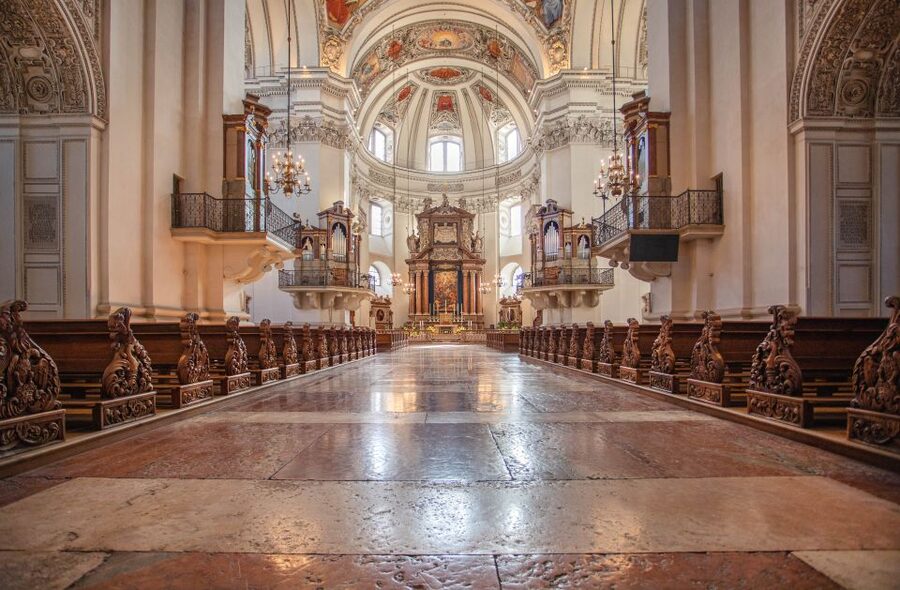
The acoustics are a major part of the appeal. Organ music needs space, and Salzburg Cathedral provides plenty of it. Notes linger, swell, and travel across the interior, making even a short selection feel larger than its running time.
This can also be a matter of taste. The sound may be forceful, especially when the largest organ is used. If you prefer quiet chamber music with crisp, close detail, the cathedral’s echo may feel less precise. For most people, though, the atmosphere is exactly the point.
The muted nave and light-filled sanctuary add another layer. You are listening in a building designed to impress through proportion, sound, and decoration. The music does not merely fill an empty room. It interacts with the stone, dome, and long lines of the cathedral.
I would avoid treating the concert as background music while checking your phone. The performance is short, and the sound changes quickly from one instrument to the next. Photos and video are allowed according to the supplied information, but using a phone throughout can distract you and those seated nearby.
Short Introductions in German and English
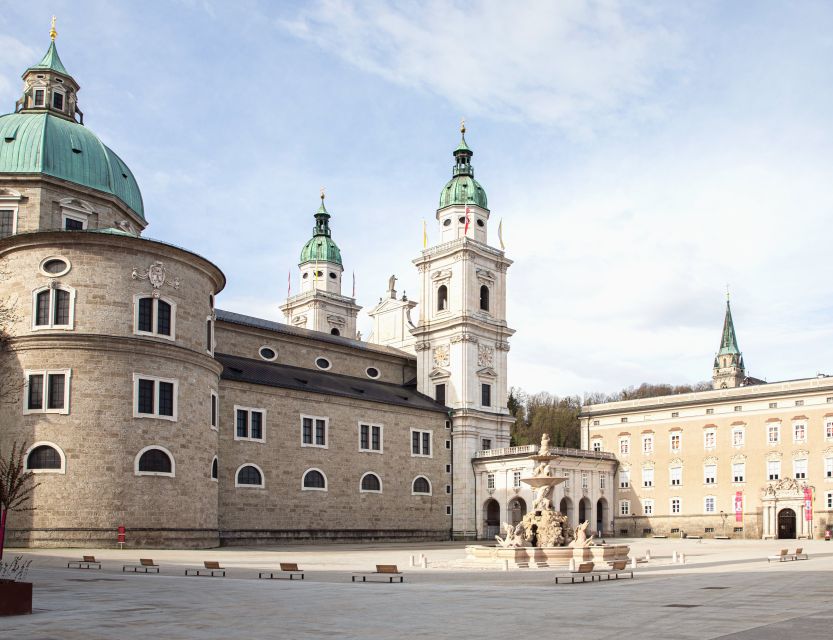
The performance includes introductions in German and English. These explanations help you understand what you are hearing and why the musicians are changing organs.
That guidance is useful even if you know little about organ music. You do not need to identify every composer or understand technical terms. The basic idea is enough: the organists use the cathedral’s instruments to show different tones, sizes, and musical effects.
The narration also adds context about the cathedral and its organ tradition. It turns the event from a string of pieces into a guided look at the building’s musical character.
The amount of spoken explanation may vary, and the concert remains focused on music rather than a full architectural tour. If you want detailed art and church history, plan extra time to explore the cathedral separately.
Another night with a band on stage:
- Vienna: Vivaldi’s Four Seasons Concert in Karlskirche
★ 4.7 · 14,951 reviews - Vienna: Classical Concert in the World-Famous Musikverein
★ 4.6 · 6,673 reviews - Vienna: Mozart Concert at the Musikverein – Golden Hall
★ 4.6 · 5,194 reviews - Salzburg: Mozart Concert at Mirabell Palace
★ 4.8 · 3,498 reviews
A 30-Minute Schedule That Fits a Busy Day
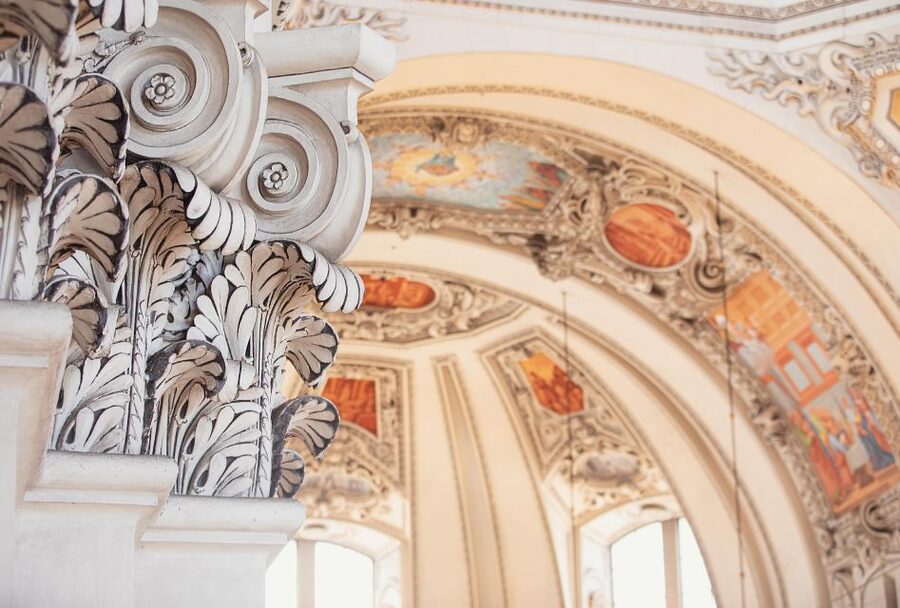
The concert is especially useful for a day trip or a tightly planned visit to Salzburg. Thirty minutes gives you a proper pause without taking over the afternoon.
A sensible plan is to arrive early, choose a seat, and look around before the opening. The bells and first pieces begin the formal program. The organists then move through several instruments, with short explanations between selections. The final piece usually brings together the strongest sound of the concert.
Afterward, you can continue exploring the cathedral rather than leaving immediately. The concert gives you a reason to sit and study the interior, and many people find the building more meaningful after hearing it used as a musical space.
The short format also helps if you are unsure about classical music. You do not need to spend an entire evening testing your patience. At the same time, regular concertgoers may wish the program lasted an hour. One hour would allow more music and more time with each organ, but it would also make the event harder to fit into a sightseeing schedule.
Is $10 Good Value?
At $10 per person, this is inexpensive by Salzburg concert standards. You receive entry to the musical performance inside a major cathedral and hear several historic organs in a setting that would be worth seeing even without the music.
The value improves if you already plan to visit the cathedral. You are not paying only for a seat and a short recital. You are adding an organized musical experience to one of Salzburg’s main sights.
The price is less attractive if you want a full concert with a long program, assigned seating, or a formal evening atmosphere. This is a sampler, and the cost reflects that. Still, the combination of music, architecture, and location makes it an easy recommendation for most first-time visitors.
Check whether a cathedral combination ticket is available when you arrive. One person found that buying a combined cathedral ticket directly could have worked out cheaper when they wanted to visit before the concert. Availability and terms can change, so compare the options before purchasing.
Practical Details Before You Go
The activity is wheelchair accessible, which makes it suitable for a wider range of visitors. The supplied information does not specify particular seating zones, so anyone who needs a certain position should allow extra time and speak with cathedral staff.
Bring your booking QR code, but be prepared to show it to the person at the entrance so it can be exchanged or scanned correctly. One booking issue reported was that the QR code could not simply be scanned at the door scanner without staff assistance.
The experience allows free cancellation up to 24 hours before the start time. Reserve-now, pay-later booking is also available, which can help if your Salzburg schedule depends on weather or a day trip timetable.
The cathedral can feel cool, even when the city outside is mild. A light layer is sensible, especially if you tend to chill while sitting still for half an hour.
There is no seat reservation included. For the best choice of seating, arrive early rather than cutting it close. The concert is popular enough that a little planning is worthwhile.
Who Will Enjoy This Most
I would recommend the concert to anyone who wants a strong Salzburg experience without giving up half a day. It suits first-time visitors, music lovers, architecture fans, and people who simply want somewhere peaceful to sit during a busy sightseeing day.
It is also a good choice for families or mixed-interest groups. Someone who is not devoted to classical music can manage 30 minutes, while someone who loves organs will appreciate the chance to hear several instruments in one building.
Day trippers from Vienna can also fit it into a visit, as long as the timing works with their transport. The short duration makes it more practical than a longer concert.
You may want to skip it if you dislike organ music, need assigned seating, or want a detailed guided tour of Salzburg Cathedral. The narration is helpful, but this remains a performance first.
My Booking Verdict
I would book this if I had a free half hour in Salzburg, especially at $10. The multiple organs, excellent acoustics, and remarkable setting give it far more impact than the price suggests.
Book early enough to choose a seat, allow time to see the cathedral before or after, and keep your expectations realistic. You are getting a compact recital, not a full evening concert. For a short, atmospheric introduction to Salzburg’s church music, it is one of the easiest cultural additions to justify.
FAQ
How long does the Salzburg Cathedral organ concert last?
The concert lasts 30 minutes.
How much does the concert cost?
The listed price is $10 per person.
How many organs are in Salzburg Cathedral?
Salzburg Cathedral has seven organs.
Will all seven organs be played?
Not necessarily. The program can feature different numbers of organs. Performances described in the supplied information used four, five, six, or seven instruments.
Are seats reserved?
No. Seat reservation is not included, so seating is unreserved.
Are introductions available in English?
Yes. Introductions are given in both German and English.
Is the concert wheelchair accessible?
Yes. The activity is listed as wheelchair accessible.
Just added to the listings in Austria
- Christmas Concerts in Capuchin Church★ 4.5 · 81 reviews
- Konzerte der Wiener Royal Orchester★ 4.5 · 143 reviews
- Vienna: A Little Night Music – Concert at Capuchin Church★ 4.8 · 145 reviews
- Salzburg: Christmas/Advent Concert & Dinner★ 4.4 · 154 reviews
- Christmas and New Year Concert at St. Peter’s Church in Vienna★ 4.5 · 155 reviews
- Concert at the Palais Schönborn-Batthyány by the Vienna Baroque Orchestra★ 4.5 · 168 reviews
- Salzburg: Classical Music Concert at the Mirabell★ 4.1 · 180 reviews
- Vienna: Classical Music Concert in the World-Famous Musikverein★ 4.5 · 180 reviews
Church and Cathedral Concerts, compared.
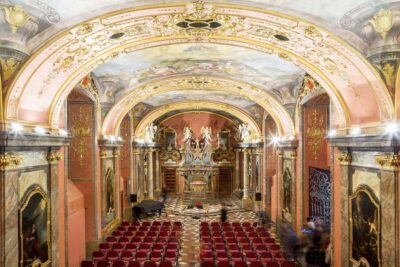
Entry Ticket Classical Concert at the Mirror Chapel
Read our review →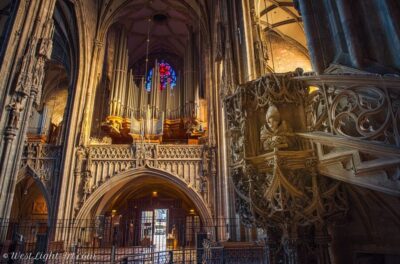
Classical Concert at St. Stephen’s Cathedral
Read our review →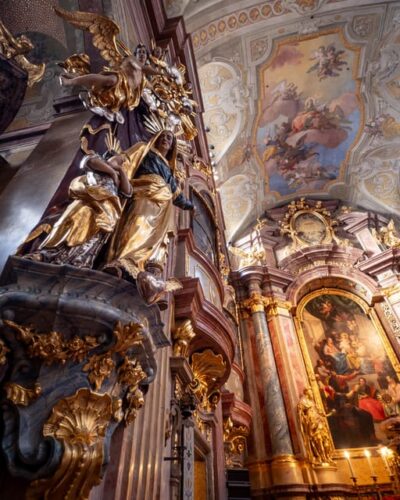
Classical Concert in St. Anne’s Church (Annakirche)
Read our review →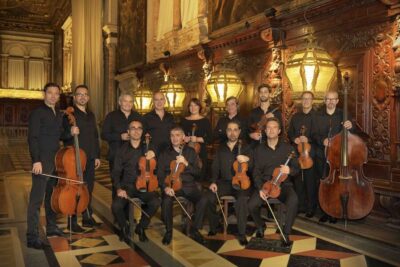
Interpreti Veneziani Concert at Church of San Vidal
Read our review →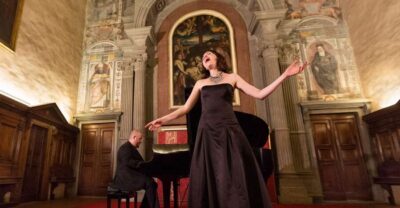
Santa Monaca Church Italian Opera Concert Ticket
Read our review →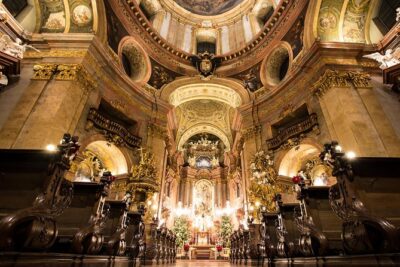
Vienna Classical Concert at St. Peter’s Church
Read our review →
Vivaldi Four Seasons Concert at Vivaldi Church
Read our review →
Tromsø: Midnight Concert Ticket at the Tromsø Cathedral
Read our review →Browse the lists this tour appears in