REVIEW · BRUGES, BELGIUM
Concertgebouw Circuit with panoramic view over Bruges
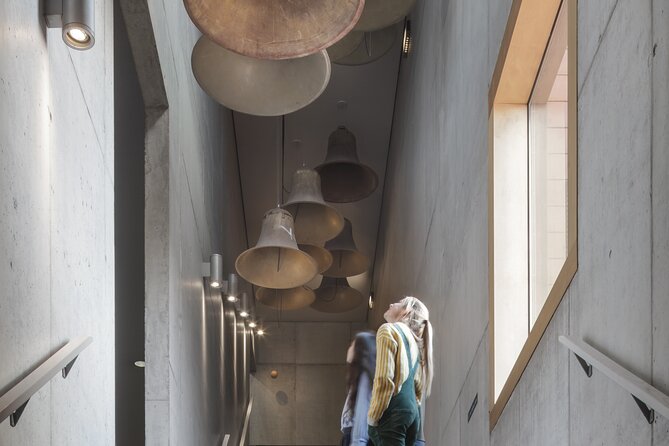
The best surprise here is that the Concertgebouw is not only a place to hear music. Its interactive sound installations, visual art, and unusual architecture turn the building itself into the attraction. You can look into the main concert hall from above, experiment with sound, and finish with a broad view across Bruges.
I like the mix of art and hands-on play, and I like that children get their own discovery trail rather than being expected to admire a modern building in silence. The main consideration is timing: the circuit is listed as about an hour, but visitors who stop for the exhibits, use the audioguide, or enjoy the rooftop view may want closer to two hours.
Key points at a glance
- Rooftop view over Bruges: The panoramic outlook is a major reason to make the climb, with some visitors finding it better than the view from the Belfry.
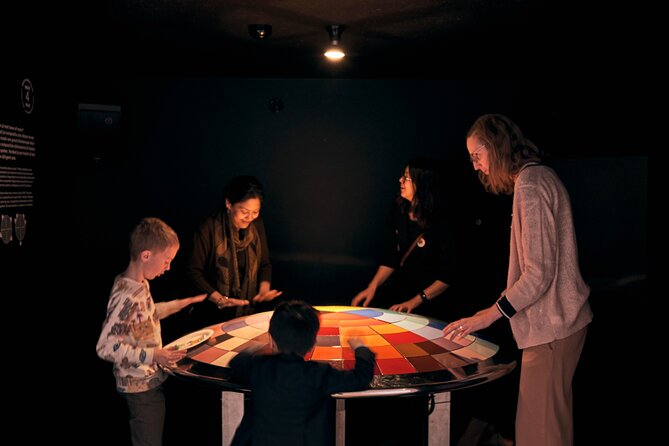
- Music you can touch and hear: Interactive installations let you create sounds instead of simply reading about music.
- Architecture with a story: The building’s exterior and interior design become part of the tour, including two performance spaces.
- Good for families: Children can follow a playful trail with a stamp search and a story linked to the route.
- Self-guided flexibility: You can move at your own speed, with an audioguide available according to visitor information.
- Useful first stop: The Concertgebouw offers a different introduction to Bruges before you spend the day among the medieval streets.
Why the Concertgebouw makes a good first stop in Bruges
Many first visits to Bruges begin with canals, cobbled lanes, and the famous Belfry. The Concertgebouw gives you another way into the city. It is a modern cultural building with bold design, music at its center, and a high viewpoint that helps you get your bearings.
The building is located in Bruges and is close to public transportation. That makes it practical to reach without turning the visit into a separate expedition. You will spend the entire experience at Concertgebouw Brugge, following a visitors’ circuit through the building rather than traveling between several city sights.
The circuit works especially well at the start of your day. From the upper levels, you can look across Bruges and begin to understand how the modern concert hall fits into the city. Then, when you later walk through the historic center, you have a useful contrast between old Bruges and its contemporary cultural side.
I would not book this only as a substitute for the Belfry. The two views are different experiences, and the Concertgebouw’s main appeal is the complete package: architecture, exhibitions, music, and the panorama.
More Live Music in the world:
- Vienna: Vivaldi’s Four Seasons Concert in Karlskirche
★ 4.7 · 14,951 reviews - Venice: La Fenice Opera House Entry Ticket with Audio Guide
★ 4.6 · 11,742 reviews - Sydney: Opera House Guided Tour with Entrance Ticket
★ 4.8 · 8,312 reviews
Inside the building: architecture becomes part of the tour
The circuit introduces you to the Concertgebouw through a series of discoveries rather than a standard room-by-room museum visit. You follow the route at your own pace, finding art, displays, and views into spaces normally associated with performances.
The building itself receives as much attention as the objects inside it. The two performance halls are important stops, and their acoustics are part of the experience. If you are interested in architecture, design, or music, you will get more from the visit than someone simply searching for a quick city viewpoint.
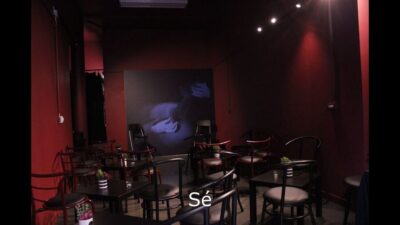
One particularly effective feature is the chance to see the large concert hall from above. That perspective gives you a better sense of its scale and design than you get from a seat during a normal performance. Depending on the schedule, you might also see musicians rehearsing, though that is not guaranteed.
The route also includes visual works by Belgian artists. These are not just decoration placed around the building. They help explain how sound, space, light, and movement work together in a concert setting.
I would give yourself time to pause. The listed duration is about one hour, but the building rewards a slower pace. If you rush from one marker to the next, you may miss the details that make the circuit worthwhile.
Interactive sound installations, not just display cases
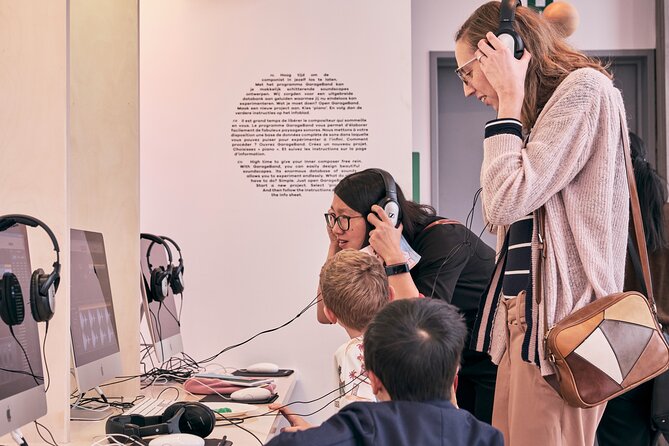
The hands-on exhibits are one of the strongest reasons to choose this activity over a conventional architecture tour. You can create music through interactive sound installations, which gives the visit a physical quality. You are not only looking at information panels or listening to a guide explain how music works.
This is also where the Concertgebouw becomes easier for children to enjoy. Young visitors do not need a long attention span or a special interest in contemporary architecture. The playful elements give them something to do while adults take in the building’s design and exhibitions.
The sound program has serious artistic content, too. The circuit includes a presentation connected with Edgard Varèse’s Poème électronique, along with musical works associated with Evo Pärt’s Da Pacem Domine and Rachmaninov’s Vocalese. These references may mean more to music lovers than to casual visitors, but the experience is not limited to experts.
You can think of this part of the visit as an introduction to the way music occupies a room. The Concertgebouw asks you to notice acoustics, silence, echo, and the relation between a performance and its setting.
If you are hoping for a full concert, this is not that. The activity is a self-guided circuit, not a performance ticket. Its strength is that it lets you examine the building and its music-related installations during the daytime.
The performance halls and their acoustics
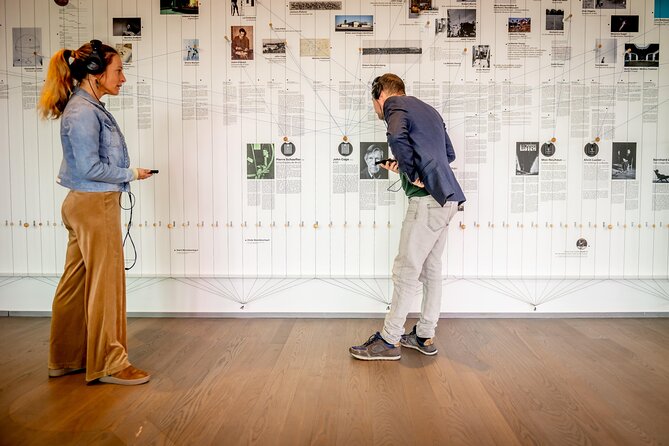
The Concertgebouw’s two performance spaces are among the most memorable parts of the route. You can see how large performance rooms are shaped and arranged, then hear how their acoustics affect the sound.
That matters because concert halls are often judged only when you sit in a seat for a performance. Here, you get a closer look at the rooms as works of architecture. The circuit helps you understand that the walls, angles, materials, and volume all influence what an audience hears.
The experience may include the chance to listen to the acoustics of both venues. That is a useful feature for anyone who enjoys classical music, vocal music, or live performance. Even if you are not familiar with the composers featured in the displays, hearing the spaces gives the visit a clear purpose.
A rehearsal may be taking place during your visit, but you should not count on it. It is best treated as a pleasant possibility, not part of the promised route.
The audioguide can add useful context. A self-guided visit gives you freedom, but an audio explanation can point out details you might otherwise walk past. One visitor found that additional explanation made the building much easier to appreciate. If an audioguide is available when you arrive, I would use it if you want the design and art explained rather than simply observed.
Another night with a band on stage:
- New Orleans Steamboat Natchez Jazz Cruise with Dinner Option
★ 4.0 · 7,533 reviews - Budapest Danube Cruise and Dinner Options, Live Music and Dance
★ 4.5 · 7,428 reviews - Paris: 3-Course-Dinner Cruise on the Seine with live music
★ 4.7 · 7,248 reviews - Vienna: Classical Concert in the World-Famous Musikverein
★ 4.6 · 6,673 reviews
The rooftop panorama over Bruges
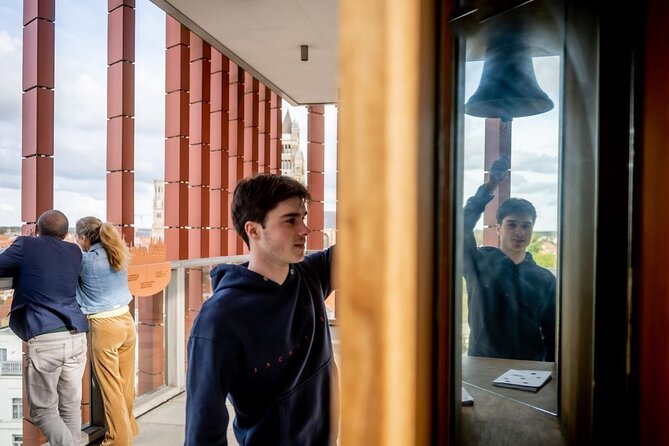
The rooftop view is the most obvious payoff of the circuit. From the top of the building, you can look across Bruges and see the city from a less familiar angle.
The panorama is especially useful because it gives you a sense of the city’s shape before you explore it on foot. You can identify the historic center, notice the contrast between the Concertgebouw and the older buildings, and get a broad view that is difficult to find at street level.
Some visitors have preferred this view to the one from the Belfry. That does not mean it replaces the Belfry. The Belfry puts you in the heart of the old center and offers a different relationship with the medieval rooftops. The Concertgebouw viewpoint is part of a cultural visit, and the building below you is part of the scene.
Bring your camera, but do not treat the rooftop as a quick photo stop only. The view makes more sense after you have explored the building, because you can see how the Concertgebouw’s modern design relates to the older city around it.
Weather may affect how long you want to stay outside. The circuit itself also offers a comfortable indoor option, which can be helpful on a hot day. One visitor noted that the building was pleasantly cool during a very warm visit.
A family-friendly route with a stamp search

The Concertgebouw has made a clear effort to include children. A playful discovery trail gives young visitors their own task, and a stamp search can keep them moving through the building with a purpose.
This is more useful than a generic claim that an attraction is family-friendly. Children can connect a story with the route, search for stamps, and take part in art and culture without needing to follow an adult lecture. Parents can enjoy the architecture while children have a simple challenge to complete.
The activity can also work for mixed-age groups. Older children may enjoy the sound installations, while younger ones may respond better to the trail and stamps. Adults interested in modern design or music can take their time without making the visit feel like a school assignment.
The exact family materials may vary by date, so it is wise to confirm what is available when booking or on arrival. Still, the building’s playful route is a strong reason to choose this over a more formal architecture tour if you are visiting Bruges with children.
Self-guided freedom, with guided help possible
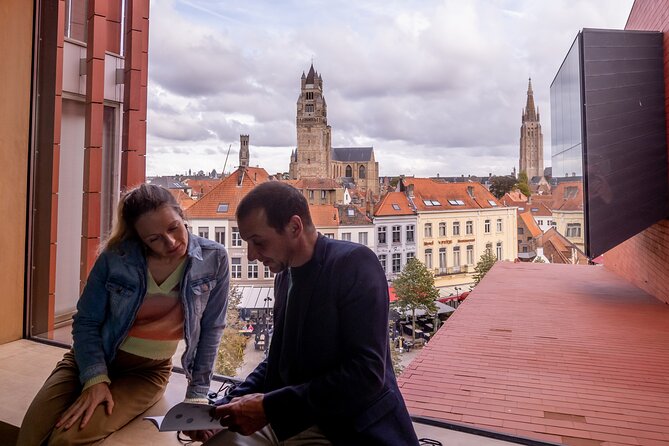
The experience is designed to let you explore independently. That means you can stop when something catches your attention, move on when an explanation is less relevant, and spend extra time with the music installations or rooftop view.
An audioguide with headphones has been available for the circuit, allowing you to follow markers through the building. The route uses visual cues, including small globes that help you find your way through the exhibition.
There is also evidence that guided visits may be possible, and Dagmar and her colleagues have been singled out for being helpful. However, the standard description presents this as a self-guided activity, so you should not assume that a personal guide is included with every booking.
That distinction matters. If you want a detailed architectural explanation from a guide, check the arrangement before you go. If you prefer independence, the self-guided format is a benefit rather than a compromise.
The English option makes the experience accessible to English-speaking visitors. The material combines architecture, music, and visual art, so an English explanation can be valuable if you want to understand the ideas behind the installations.
How long to allow, and when to go
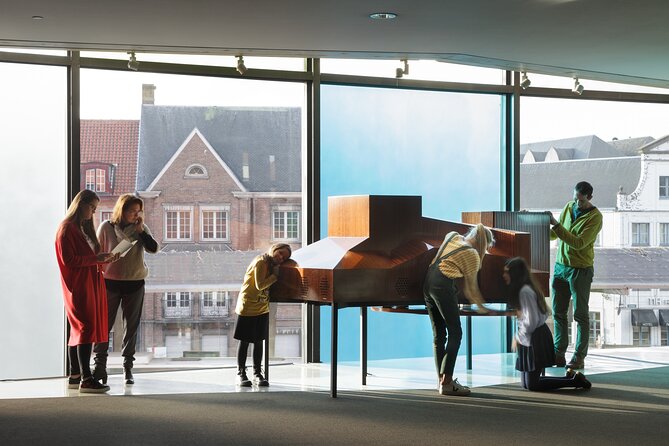
The official duration is approximately one hour. I would allow at least that much, then add extra time if you want to listen closely, try the interactive exhibits, follow the children’s trail, or enjoy the rooftop view without rushing.
Some visits have taken closer to two hours, especially when the audioguide and exhibitions are included. The difference depends on how you travel through the circuit. A quick visit can cover the main points, while a slower visit feels more like a small cultural outing.
For the dates provided, opening hours are limited:
- From April 2 to March 29, 2026, the circuit is open Wednesday through Saturday from 2:00 p.m. to 4:30 p.m.
- From April 1 to April 29, 2026, it is open Wednesday through Saturday from 2:00 p.m. to 6:00 p.m.
The first date range appears unusual because it spans an earlier March date after April 2. Check the date shown for your intended visit before relying on these hours. The afternoon schedule also means this is not a flexible early-morning activity.
Because the opening window is narrow, arrive with enough time to complete the route. A late arrival could leave you choosing between the exhibits and the rooftop view.
Is $14.46 a good value?
At $14.46 per person, this is a reasonable price for a cultural stop that combines several experiences. You are paying for access to the building, the artistic displays, the concert halls, interactive sound features, and the rooftop panorama.
The value is strongest if you like architecture, music, modern design, or visual art. It is also good for families because the children’s trail gives the ticket more purpose than a simple admission to a viewpoint.
The value is less clear if you want only a panoramic photo. In that case, the circuit may feel longer than necessary, since the view is one part of a larger cultural visit. You should choose it because you want the building and its exhibits, too.
The price also compares well with the time you can spend inside. At one hour, it is a compact stop. At closer to two hours, it becomes a substantial afternoon activity, especially if you use the audioguide and take your time with the interactive features.
Small practical details that matter
Confirmation is provided at booking. The site is near public transportation, and service animals are allowed. Most people can take part, so the activity does not require a special level of fitness or prior music knowledge.
The on-site cafe may suit drinks and small bites more than a full lunch. If you are planning a meal, treat the cafe as a place to pause rather than the main reason to visit.
The attraction offers free cancellation if you cancel at least 24 hours before the start time. Cancellations or changes made less than 24 hours before the start are not refunded or accepted, and the cut-off follows local time.
These details are worth noting because the limited Wednesday through Saturday afternoon hours make scheduling important. If your Bruges day changes, the 24-hour rule gives you some flexibility, but not at the last minute.
Who will enjoy the Concertgebouw Circuit most?
I would choose this for:
- Architecture and design fans who want to see how a modern concert building works.
- Music lovers interested in acoustics, sound installations, and performance spaces.
- Families who want an art activity with a stamp search and a child-focused trail.
- Repeat visitors to Bruges looking for something beyond canals and medieval streets.
- First-time visitors who want a rooftop view and a clear introduction to the city’s layout.
- Independent sightseers who prefer to explore with an audioguide and set their own pace.
I would think twice if your only goal is a classic Bruges experience. This is not a canal cruise, a medieval landmark, or a guided walk through the old center. It is a modern cultural visit, and that difference is exactly why it works for some people and not for others.
Should you book this Bruges experience?
Book it if you want more than old streets and postcard views. The Concertgebouw Circuit gives you a look at Bruges through contemporary architecture, sound, art, and a high city panorama. The interactive installations and children’s trail make it more engaging than a standard building tour, while the concert halls and music displays give adults plenty to consider.
The strongest plan is to visit early in your Bruges stay, preferably with enough time for the full circuit rather than squeezing it into a short gap. Choose it especially if you like architecture or music, are traveling with children, or have already seen the city’s main historic sights.
Skip it if you want a quick viewpoint only, or if your schedule cannot accommodate the limited afternoon opening hours. For the right visitor, though, the $14.46 ticket offers an original and fairly priced change of pace in Bruges.
FAQ
Where does the Concertgebouw Circuit take place?
The experience takes place at Concertgebouw Brugge in Bruges, Belgium.
How long does the visit last?
The visit is listed as approximately one hour. You may want closer to two hours if you take your time with the exhibits, use the audioguide, follow the children’s trail, and enjoy the rooftop view.
Is the experience self-guided?
Yes. The circuit is designed for independent exploration. An audioguide with headphones may also be available.
Is the experience offered in English?
Yes, English is one of the offered languages.
What are the opening hours?
For the dates provided, the circuit is open Wednesday through Saturday from 2:00 p.m. to 4:30 p.m. during the first listed period, and Wednesday through Saturday from 2:00 p.m. to 6:00 p.m. during the second listed period. Check the date for your visit because the published date ranges should be confirmed before booking.
Is the rooftop view included?
Yes. The panoramic view over Bruges is part of the Concertgebouw Circuit.
Can I cancel for a full refund?
Yes, if you cancel at least 24 hours before the experience starts. Cancellations or changes made less than 24 hours before the start time are not accepted, and the amount paid is not refunded.
Just added to the listings in the world
- Wine, Jazz and Magic: A Night at Malkhaz Jazz Club★ 5.0 · 2 reviews
- Warsaw: Guided Walking Tour with a Private Chopin Concert★ 5.0 · 13 reviews
- Wrocław: Chopin & Friends piano concerts★ 4.6 · 28 reviews
- Warsaw: Chopin Concert Ticket With Glass of Champagne★ 4.7 · 59 reviews
- Viva Blackpool: ABBA Bottomless Brunch with Live Music★ 5.0 · 2 reviews
- Warsaw: Candlelight Concert at Fryderyk Concert Hall★ 4.7 · 110 reviews
- Vienna: Sunday Brunch Danube Cruise & Live Music★ 4.2 · 42 reviews
- Vienna Supreme Orchestra at Palais Niederösterreich★ 4.8 · 10 reviews
Live Music, compared.
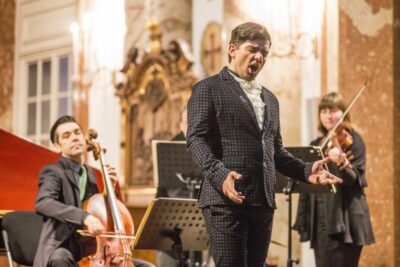
Vivaldi’s Four Seasons Concert in Karlskirche
Read our review →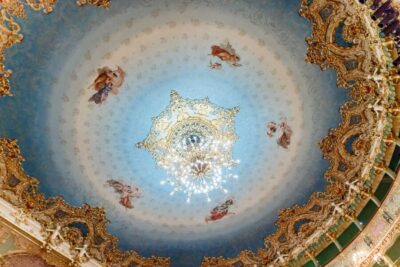
La Fenice Opera House Entry Ticket with Audio Guide
Read our review →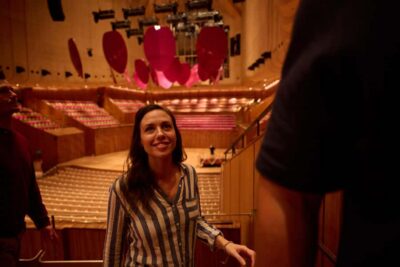
Opera House Guided Tour with Entrance Ticket
Read our review →
New Orleans Steamboat Natchez Jazz Cruise with Dinner Option
Read our review →
Budapest Danube Cruise and Dinner Options, Live Music and Dance
Read our review →
3-Course-Dinner Cruise on the Seine with live music
Read our review →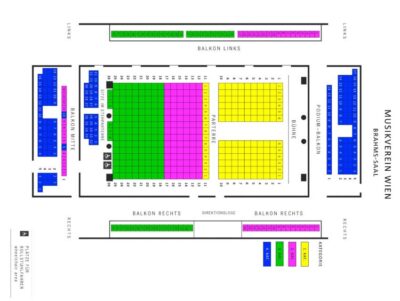
Classical Concert in the World-Famous Musikverein
Read our review →