
REVIEW · CHINA
Beijing Culture Event: Tea Ceremony, Music Show, Calligraphy
Beijing’s most memorable cultural moments are not always found in its biggest monuments. This small-group event brings you into a certified Guqin Art Center and tea base for tea preparation, music, calligraphy, Hanfu dress, and ritual. The setting is private, and the group size keeps the session personal.
I like the hands-on format, especially the chance to try the guqin rather than simply watch a performance. I also like the bilingual cultural guidance, which adds context to the sounds, symbols, and gestures instead of leaving you to guess what they mean.
The main consideration is location and timing. You must reach Hua Gong Station on Line 7, then meet the group at Exit C. Transportation is not included, and the 2.5-hour session is focused on traditional arts rather than a broad sightseeing tour of Beijing.
Five things to know before booking
- Six activities share one 2.5-hour session: Tea, guqin performance, guqin practice, calligraphy, Hanfu and ritual, plus cultural interpretation.
- A national-level guqin master performs: The program includes a performance by a teacher with about 40 years of experience.
- You practice, not just watch: You brew tea, pluck guqin strings, and write with brush and ink.
- The group is limited to eight people: That matters when you need help with the instrument, calligraphy, or Hanfu.
- Meet at Hua Gong Station Exit C: Plan to arrive 10 minutes early, and allow extra time if Beijing’s metro is new to you.
Six traditional arts in one compact Beijing visit
This is a culture class, performance, photo session, and tasting experience rolled into one. That combination is the reason to book it. You are not spending two and a half hours in a theater seat. You move from watching to doing, with a teacher or guide explaining the purpose of each step.
The schedule is built around six parts:
- Tea brewing with porcelain teaware
- A guqin performance
- Basic guqin practice
- Chinese calligraphy
- Hanfu dressing and a teacher-honoring ceremony
- Historical and social interpretation from a bilingual guide
The pace should feel full rather than leisurely. If you want long periods of quiet tea drinking or an extended concert, this may feel too packed. If you want a concentrated introduction to several traditional arts, the format makes good use of your time.
The experience is offered in Chinese and English, and the guide is described as having a master’s degree in history and sociology. That academic background matters here because the objects and gestures carry meaning that is easy to miss when you see them without explanation.
More Live Music in the world:
- Vienna: Vivaldi’s Four Seasons Concert in Karlskirche
★ 4.7 · 14,951 reviews - Venice: La Fenice Opera House Entry Ticket with Audio Guide
★ 4.6 · 11,742 reviews - Sydney: Opera House Guided Tour with Entrance Ticket
★ 4.8 · 8,312 reviews
Tea ceremony: learning the six-step method
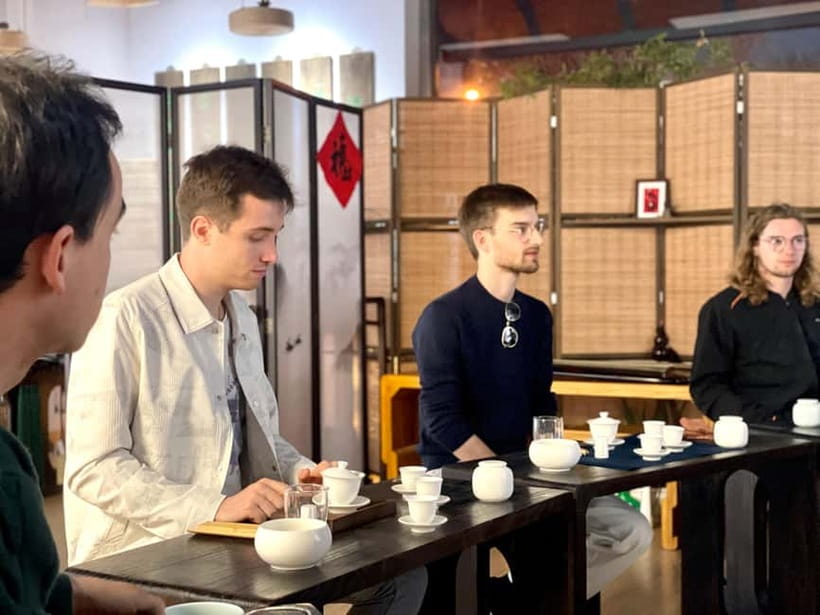
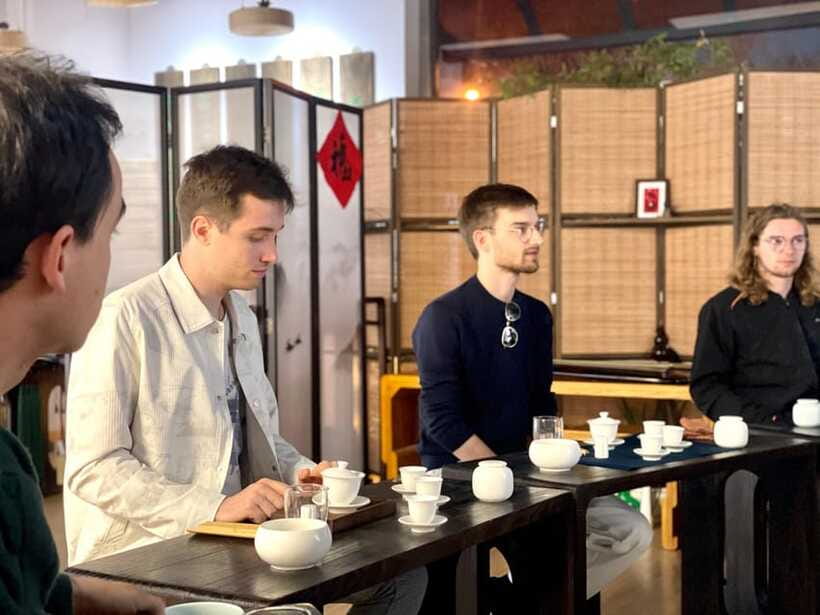
The tea portion begins with a professional tea master demonstrating a traditional six-step tea process. You then get guidance as you prepare tea yourself using porcelain equipment.
The appeal is in the small differences. Red, green, and floral teas vary in color, aroma, and finish, and the process gives you a structured way to notice those changes. You are not simply handed a cup and told that tea is important. You see how the vessel, water, leaves, and movements form one practice.
The porcelain tea set also gives the lesson a stronger sense of place than a standard tasting in a hotel lounge. It connects the drink to objects made for handling, pouring, and sharing.
I would pay attention to the pace of the tea master’s hands. The point is not to memorize every movement for later use. It is to understand why traditional tea service values measured actions, clean presentation, and attention to taste.
Tea and water are included. Meals are not, so plan this as a cultural activity rather than a replacement for lunch or dinner.
Guqin performance: quiet music with a long story
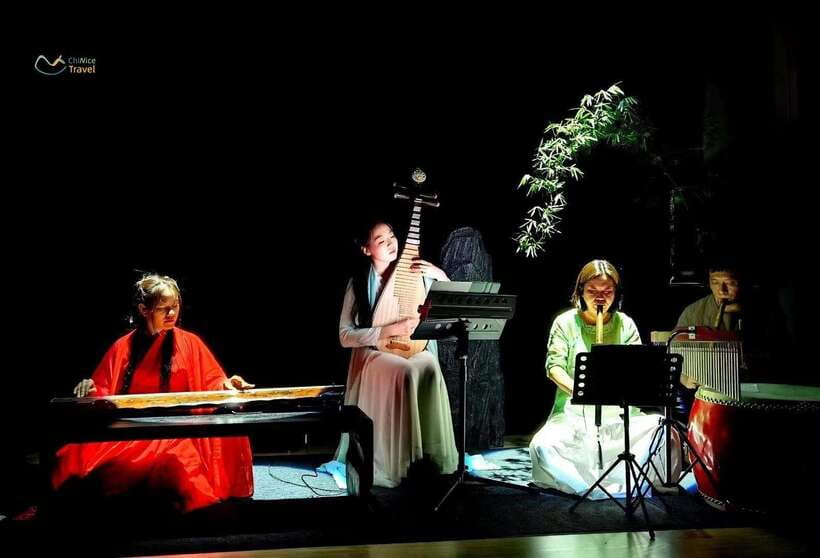
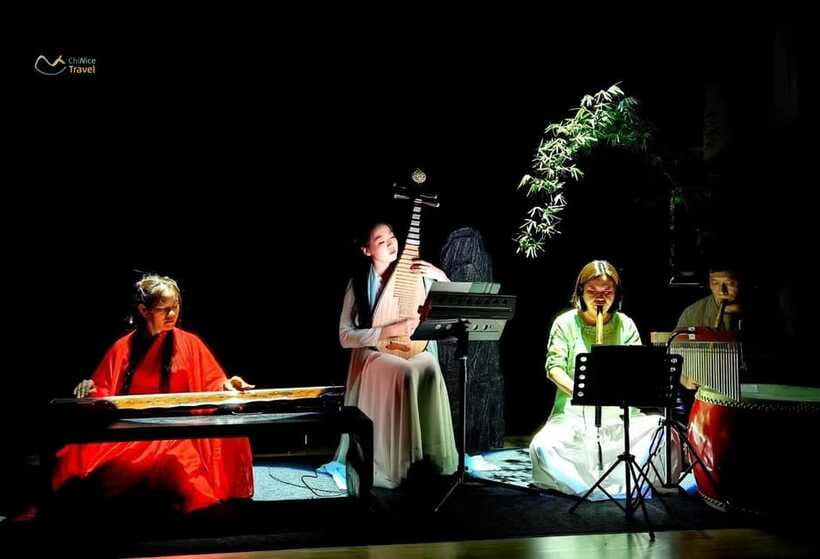
The guqin is a seven-stringed Chinese zither associated with scholars, study, and refined artistic life. The event presents it as a national treasure, with a performance by a heritage master who has about 40 years of experience.
The music may surprise you if you expect a loud stage show. The guqin is a subtle instrument, and the attraction lies in the sound of individual notes, pauses, and controlled rhythm. The performance is meant to connect the instrument with Chinese characters, scholarship, and ideas that have been passed down through centuries.
The program describes the guqin as having around 3,000 years of history and as an instrument used when receiving foreign dignitaries. You do not need prior musical knowledge to appreciate the session. The guide’s explanation helps you understand why the instrument carries such a high cultural status.
This is one of the strongest parts of the experience for anyone who prefers intimate performance to spectacle. The possible drawback is simple: people looking for a full concert may find the performance short because several other activities share the same visit.
Your turn at the guqin
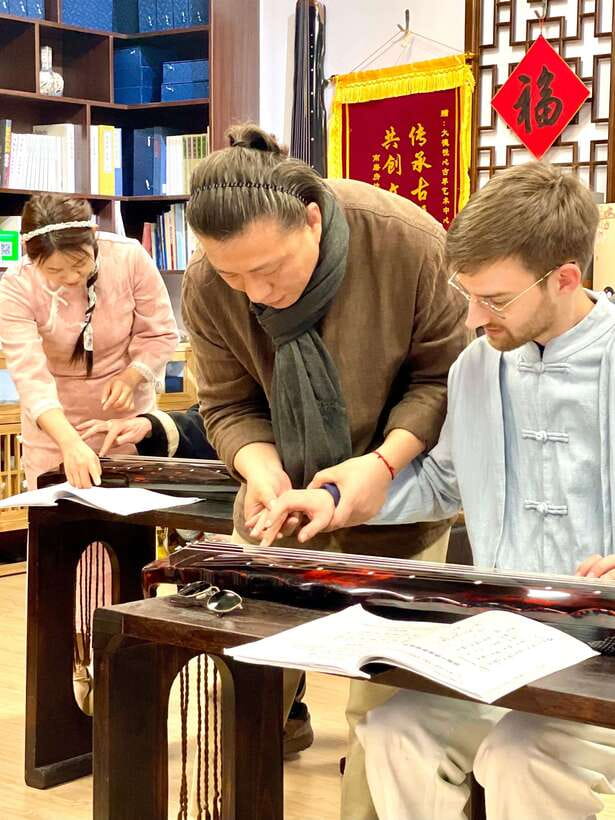
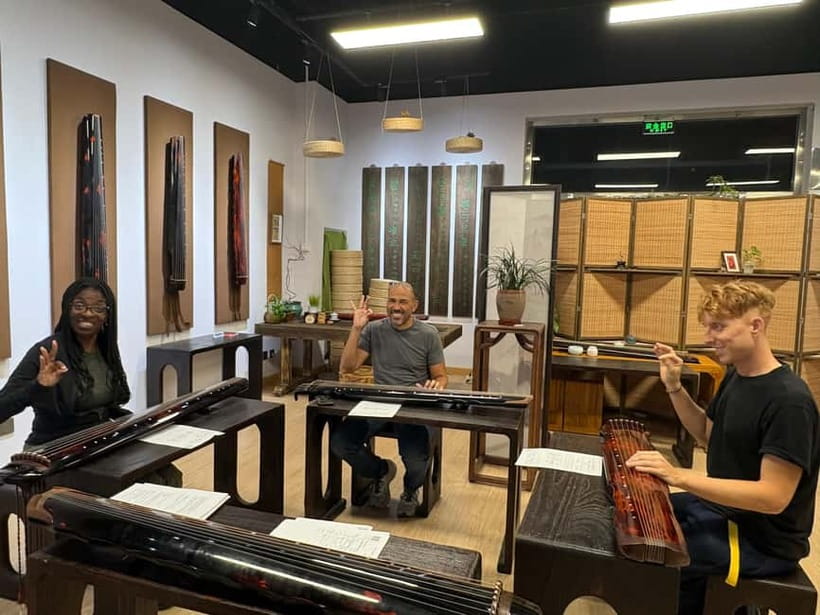
After the performance, you get a chance to handle the instrument and learn a simple melody. This is not a full music course, and you should not expect to leave ready for a recital. The value is in feeling how the strings respond and discovering why the instrument demands patience.
The small group helps here. With no more than eight participants, the instructor can give attention as you try the notes. That personal help is important because the guqin is unfamiliar to most first-time visitors.
The experience also includes a tutor who is one of the guqin performers. That gives you a direct link between the demonstration and your own attempt. You can hear the difference between a master’s controlled playing and your first careful plucks without the session becoming intimidating.
I would treat this as a chance to slow down. The instrument’s quiet sound and deliberate rhythm make the activity calming, but you still need to listen closely and follow instructions.
Another night with a band on stage:
- New Orleans Steamboat Natchez Jazz Cruise with Dinner Option
★ 4.0 · 7,533 reviews - Budapest Danube Cruise and Dinner Options, Live Music and Dance
★ 4.5 · 7,428 reviews - Paris: 3-Course-Dinner Cruise on the Seine with live music
★ 4.7 · 7,248 reviews - Vienna: Classical Concert in the World-Famous Musikverein
★ 4.6 · 6,673 reviews
Calligraphy from pictographs to personal meaning
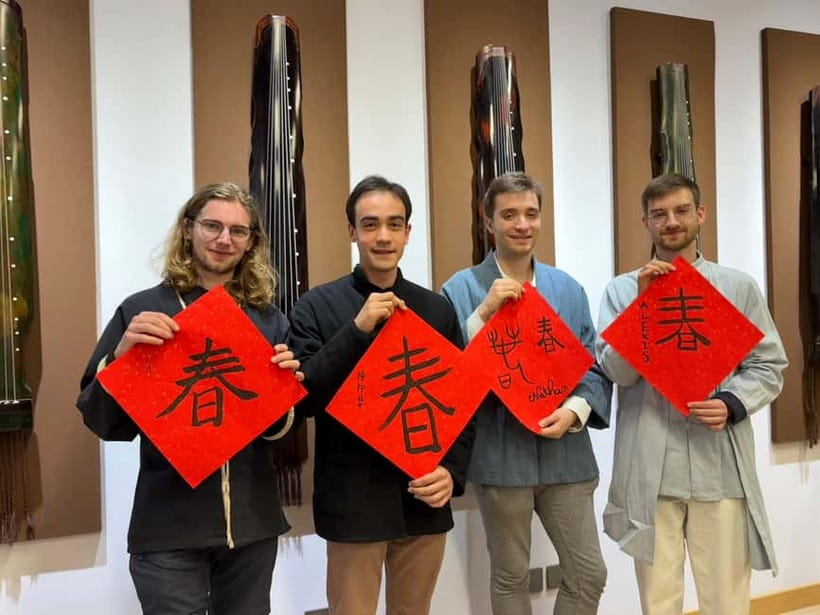
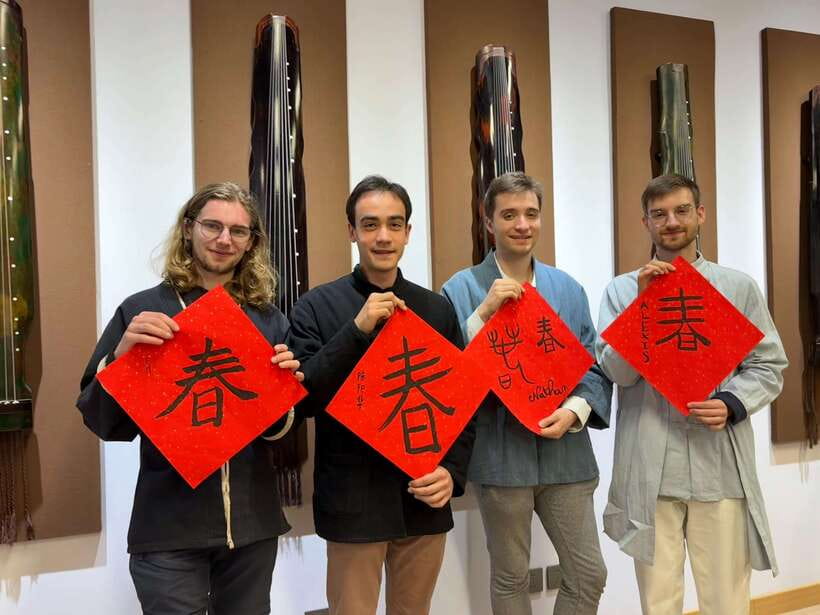
The calligraphy section introduces the development of Chinese writing, from early pictographs to the five major traditional styles. You then use brush and ink to write a meaningful symbol.
This part works especially well for visitors who want something personal to take home. You may choose to write your name or a word such as blessing, as one participant did. The result does not need to look like a master’s work. The important part is learning that Chinese characters are not just modern symbols on signs and menus. Their forms changed over time, and their shapes carry traces of that development.
Brush control can be harder than it looks. You will need to pay attention to pressure, direction, and spacing. The class is introductory, so you are there to experience the method, not produce museum-quality calligraphy.
Calligraphy is also a useful bridge between the other activities. Tea requires measured movement, guqin requires controlled touch, and brush writing asks you to slow your hand down. Taken together, the three activities show different ways traditional arts value concentration.
Hanfu, ceremony, and the photo session
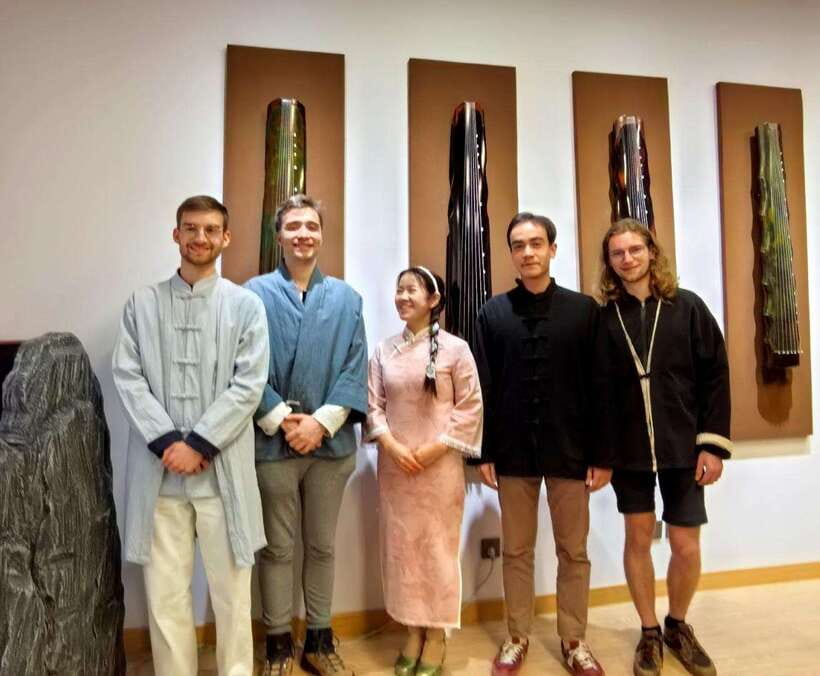
Hanfu rental is included, along with a traditional ceremony honoring your teacher. The clothing gives the activity a visual and physical element that you would not get from a lecture or concert alone.
You should wear comfortable clothing underneath the Hanfu. You will also want to bring a camera for the photo session. The included photoshooting means you can document the costume and the setting without turning the entire activity into a self-directed photo stop.
The ceremony adds a formal note to the visit. It is not just dressing up for pictures. You take part in a traditional gesture of respect toward the teacher, which connects the clothing to social customs and learning.
This section may be especially appealing to families and younger participants. A family group ranging from age 11 to 40 found the activity engaging across age groups, with children and adults responding to different parts of the program. If someone in your party is reluctant about a formal cultural class, the Hanfu and photo element may provide an easy way into the experience.
The guide’s role and the value of a small group
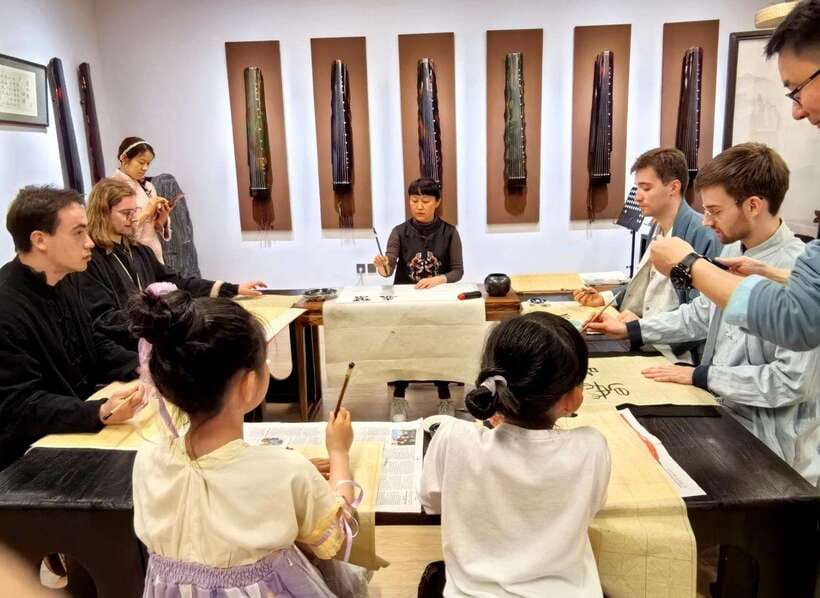
The guide is more than a translator. The program calls for a bilingual cultural expert with graduate-level study in history and sociology, and the guide explains the meaning behind the objects, sounds, and movements.
That context is one of the better reasons to choose this event over trying to copy the activities from a book or online video. You can ask why a gesture is made, what a symbol means, or how a practice changed over time. The guide can also connect the separate parts into one larger lesson about Chinese ideas of learning, respect, craft, and balance.
Sylvia has helped participants from the Hua Gong Station entrance find the art center. If your booking includes her assistance, it can be useful, particularly after a long metro journey or if you are staying near the Kerry Hotel and traveling across the city.
The group limit of eight is another practical advantage. In a large class, guqin practice and brush work can become passive. Here, the small number should make it easier to see the demonstrations and receive help when it is your turn.
Getting there from Hua Gong Station
The meeting point is Hua Gong Station, Exit C, on Line 7. The activity ends at the same meeting point, and transportation to and from the venue is not included.
The station is about 30 minutes from the Temple of Heaven, according to the activity information. That makes it possible to pair the experience with other southern Beijing sightseeing, but do not schedule a major attraction immediately afterward unless you have a generous buffer.
Arrive 10 minutes early. You need time to find Exit C, meet the guide, and prepare for the session. One family traveling from the Kerry Hotel found the train manageable after sorting out the tickets, but allow extra time if you are still learning Beijing’s metro system.
The venue is described as a private, certified Guqin Art Center and tea culture base that is closed to the general public. That means the setting is a major part of the appeal, but it also means you are not simply walking into a familiar tourist attraction with obvious signs. Meeting the guide matters.
The activity is wheelchair accessible, though the supplied information does not describe the exact layout or any equipment available at the venue. If you need specific access arrangements, confirm them before booking.
Is $79 a fair price?
At $79 per person, this is not the cheapest way to drink tea or write a Chinese character. It becomes better value when you count what is included: tea and water, the show ticket, Hanfu rental, photoshooting, guqin instruction, a professional tutor, souvenirs, and bilingual guidance.
You are also paying for access to a specialist setting and several instructors. A standalone tea tasting might cost less, and a public music performance might offer more playing time. This activity combines both with calligraphy, clothing, ritual, and interpretation, so the price makes the most sense if you want variety in one booking.
The event is also limited to eight participants. That is useful when the program asks you to practice an instrument and brush writing. A larger group could lower the price, but it would likely reduce the time available for personal instruction.
Meals, personal purchases, and transportation are not included. Bring money only if you want to buy something separately, and plan food before or after the session.
Who will enjoy this most?
I would recommend this activity to you if you want direct contact with Chinese arts and prefer doing something over simply looking at displays. It is particularly suitable for:
- Families with school-age children and adults
- First-time visitors seeking a structured cultural introduction
- People interested in tea, music, calligraphy, or traditional clothing
- Couples and small groups who want photos with a cultural setting
- Visitors who value English explanation and personal instruction
It may be less suitable if you want a relaxed half-day with one subject only. The schedule covers a lot, so each part receives a compact introduction rather than a specialist-level lesson.
The range of ages is a real strength. Younger participants can focus on Hanfu, photos, and trying the guqin, while adults may pay more attention to the historical and social meaning. Nobody needs prior experience.
Booking details worth remembering
The session lasts 2.5 hours, with starting times shown according to availability. It is offered in Chinese and English, and the group is limited to eight people.
You can cancel up to 24 hours in advance for a full refund. The reserve-now-and-pay-later option is useful if your Beijing schedule is still moving around.
Wear comfortable clothes for the Hanfu session, bring a camera, and arrive 10 minutes early. Tea and water are supplied, but meals and drinks beyond that are not.
Should you book this Beijing cultural experience?
Book it if you want a compact, personal introduction to several Chinese traditions and like the idea of taking part rather than sitting through a talk. The strongest reasons are the experienced guqin performance, the chance to try the instrument, the carefully guided tea process, and the small group.
I would be more cautious if your main goal is a long concert, an advanced calligraphy lesson, or a full meal with tea. This is a broad cultural sampler, not a single-subject master class.
For families, first-time visitors, and anyone curious about the meaning behind Chinese arts, $79 is a reasonable price for the number of activities included. Just plan the metro journey carefully and arrive ready to slow down, listen, and use your hands.
FAQ
How long does the Beijing cultural event last?
The activity lasts 2.5 hours. Starting times depend on availability.
Where do I meet the group?
Meet at Hua Gong Station on Line 7, Exit C. The activity ends back at the same meeting point.
What activities are included?
The session includes a tea ceremony and tea brewing, a guqin performance, basic guqin practice, Chinese calligraphy, Hanfu rental, a traditional teacher-honoring ceremony, photoshooting, and cultural guidance.
Is transportation included?
No. Transportation to and from the venue is not included. You are responsible for reaching Hua Gong Station and returning from the meeting point.
Is the activity available in English?
Yes. The activity is offered in Chinese and English, with a bilingual cultural guide or tutor.
What is included in the price?
The price includes water and tea, the show ticket, Hanfu rental, photoshooting, a guqin class, professional guidance, and original souvenirs. Meals, drinks beyond the listed tea and water, transportation, and personal purchases are not included.
Can I cancel or pay later?
You can cancel up to 24 hours in advance for a full refund. A reserve-now-and-pay-later option is also available.
Just added to the listings in the world
- Beijing: Night Tour Of Peking Opera Show / Transfer★ 4.3 · 5 reviews
- Barcelona: Jam Session – Jazz, Cocktails and Tapas★ 4.8 · 19 reviews
- Barcelona: Taste 5 Spanish Wines paired with Live Music★ 5.0 · 3 reviews
- Bangkok: ThreeSixty Jazz Lounge at Millennium Hilton★ 4.0 · 8 reviews
- Barcelona: Solo Piano Intimate concerts in Barcelona★ 4.9 · 9 reviews
- Bangkok: Party Boat Cruise with DJ and Live Music★ 4.3 · 3 reviews
- Bali Phinisi Cruise: Sunset Dinner with Live Music & Buffet★ 3.7 · 18 reviews
- Barba Negra Bar with Live Rock Music Show!★ 3.4 · 2 reviews
Live Music, compared.

Vivaldi’s Four Seasons Concert in Karlskirche
Read our review →
La Fenice Opera House Entry Ticket with Audio Guide
Read our review →
Opera House Guided Tour with Entrance Ticket
Read our review →
New Orleans Steamboat Natchez Jazz Cruise with Dinner Option
Read our review →
Budapest Danube Cruise and Dinner Options, Live Music and Dance
Read our review →
3-Course-Dinner Cruise on the Seine with live music
Read our review →
Classical Concert in the World-Famous Musikverein
Read our review →
Browse the lists this tour appears in