
REVIEW · GERMANY
Berlin: Historical Walking Tour with Live Music
Berlin’s past gets a musical guide on this 2.5-hour walking tour with Axel Glorvigen. Instead of hearing only dates and political facts, you stop at the Brandenburg Gate, Holocaust Memorial, Berlin Wall, and Checkpoint Charlie while live songs connect each place to its time.
I like the way the tour joins history with live performance, and I like its simple route through some of central Berlin’s most important sights. Axel’s guitar, singing, and other instruments give the walk a personal feel. The trade-off is that you spend much of the time outdoors, so poor weather and tired feet could affect the experience.
Key points at a glance
- Music tied to each landmark: Songs are chosen to match the place and story being discussed.
- Axel Glorvigen leads the walk: He combines guiding with guitar, singing, and violin.
- A useful central Berlin route: The tour begins at Pariser Platz and finishes at Checkpoint Charlie.
- History beyond dates and battles: Topics include Nazi propaganda bands, East German songwriters, and David Bowie in 1970s Berlin.
- Good value at $12: The price includes the guided walk and live music, with no transport cost.
- Plan for the pavement: Good shoes and a weather check matter because the entire experience is on foot.
Why music changes a Berlin history walk
Berlin has plenty of ordinary sightseeing walks. You pass a famous building, hear a date, take a photo, and move on. This tour takes a different path by asking how people used music in times of power, fear, censorship, and change.
At each major stop, Axel connects the location to a live song. That gives the walk a clear rhythm. You are not simply moving from one monument to the next. You hear how music could serve a political system, express resistance, or capture the mood of a city.
I especially like the range of subjects. The tour covers the Nazi use of propaganda bands, the role of East German songwriters who pushed back against the regime, and David Bowie’s connection to 1970s Berlin. Those topics show that music was not just entertainment. It could spread an official message, preserve private feelings, or help an artist respond to a divided city.
The music also gives you another way to remember the places. The Holocaust Memorial and Berlin Wall can feel heavy and abstract when presented only as historical markers. A carefully chosen song can make the story more immediate. This is still a sightseeing walk, not a concert, but the live element gives each stop a distinct mood.
More History Tours in the world:
- Porto: An Intimate Fado Show in a Historical Tavern
★ 4.8 · 2,055 reviews - Vienna Mozart Concert in Historical Costumes at the Musikverein
★ 4.5 · 888 reviews - Tenerife: History The Evolution of Music Show Entry Ticket
★ 4.8 · 620 reviews
Starting at Pariser Platz and the Brandenburg Gate
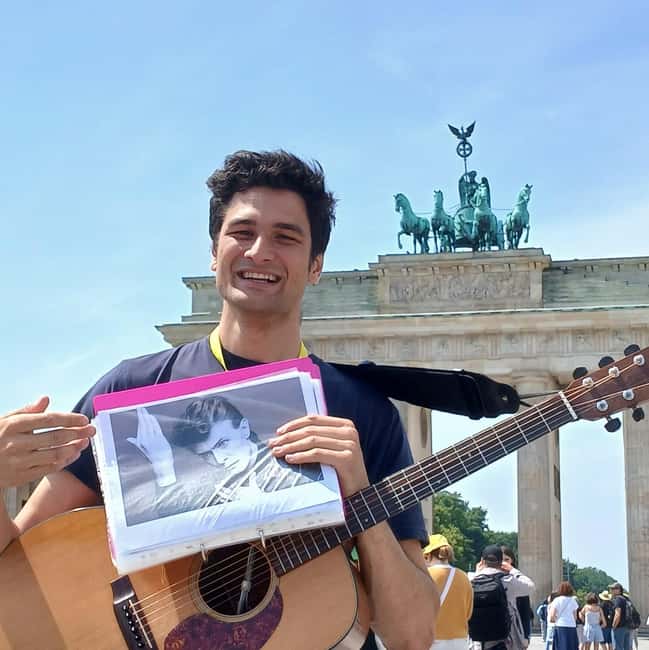
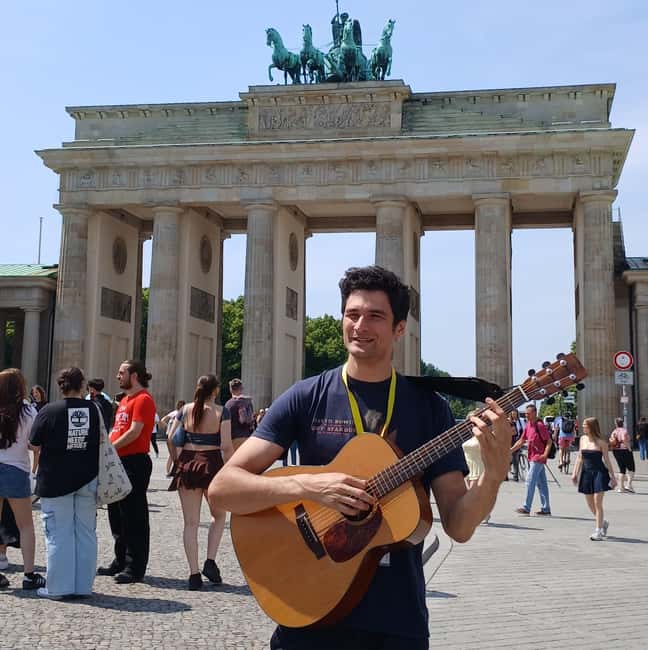
Meet Axel at Pariser Platz, in front of Starbucks. He will be carrying a guitar, which makes the meeting point easier to spot in a busy central area. The walk begins beside the Brandenburg Gate, one of Berlin’s most familiar symbols.
The Brandenburg Gate has served as a royal entrance, a Nazi-era backdrop, a Cold War symbol, and a sign of reunified Berlin. That makes it a strong opening stop because one structure carries several layers of the city’s story.
You spend about 20 minutes here. That is enough time for an introduction to the gate and the surrounding area without turning the first stop into a long lecture. The live song adds the musical thread right away, helping you understand how the tour will work at later sites.
The location is also practical. Pariser Platz is in the heart of central Berlin, so you are immediately surrounded by major sights. If you arrive early, you can take in the gate and the open square before the tour starts. Just remember that the meeting point is specifically in front of Starbucks, not simply somewhere near the gate.
The Holocaust Memorial and the weight of place
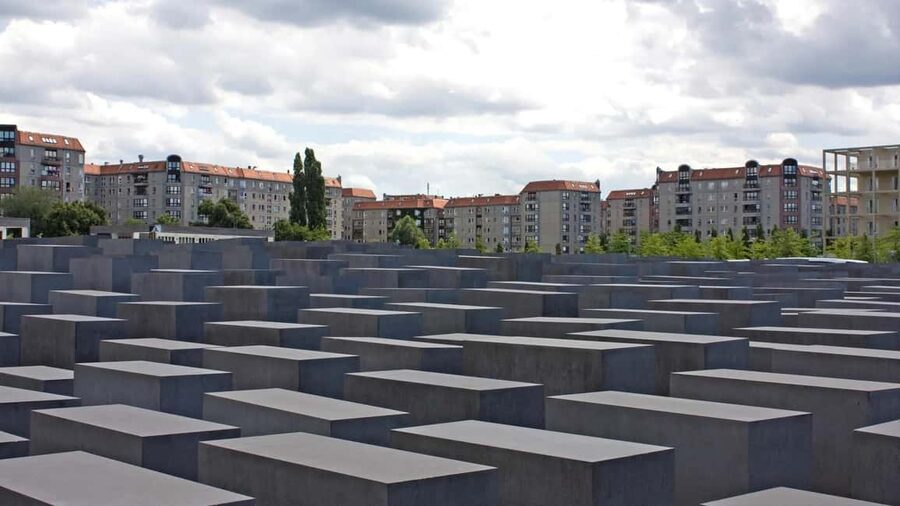
The next major stop is Berlin’s Holocaust Memorial, officially the Memorial to the Murdered Jews of Europe. The memorial’s rows of concrete slabs create an unsettling space that changes as you walk through it. From the outside, it can look orderly. Inside, the ground shifts and the slabs rise around you.
The tour allows about 20 minutes here. That is a useful amount of time for a guided introduction and a song, although you should not expect a full museum visit. The memorial’s underground information center is not listed as part of the activity, so plan a separate visit if you want more detailed personal stories and documentation.
This is one of the places where the musical idea needs care. The subject is solemn, and the best part of the stop is likely to be the link between the site, the historical explanation, and a restrained performance. The tour’s focus on music during periods of oppression gives Axel a way to discuss propaganda and the misuse of performance without treating the memorial as a stage.
I would give this stop your full attention. It is not a place to rush through for a photograph. The guide’s verbal context matters here, and the short format means you should listen closely while you have the group’s shared focus.
The Berlin Wall through songs and memory
The Berlin Wall stop shifts the story from Nazi dictatorship to the Cold War and the division between East and West Germany. The wall once cut through streets, neighborhoods, and families. Today, much of it is gone, so a guide helps you understand what the border meant even where only traces remain.
The exact stretch used during the walk is not specified, but the route includes a Berlin Wall sightseeing stop. You should expect outdoor interpretation rather than a long museum visit. The value comes from placing the wall in the wider story of divided Berlin and then hearing music connected to that period.
The focus on East German songwriters is a strong feature. Music under a restrictive government could carry ideas that were hard to express directly. A song might pass official checks yet still speak to frustration, identity, or a desire for change. That gives you a more human way to think about life behind the Wall.
This part may be especially useful if you know the Cold War mainly through big political events. Axel’s approach connects those events to culture and personal expression. The live performance can make the difference between hearing that East German artists resisted limits and sensing why a song might matter to people living under those limits.
More Live Music in the world:
- Vienna: Vivaldi’s Four Seasons Concert in Karlskirche
★ 4.7 · 14,951 reviews - Venice: La Fenice Opera House Entry Ticket with Audio Guide
★ 4.6 · 11,742 reviews - Sydney: Opera House Guided Tour with Entrance Ticket
★ 4.8 · 8,312 reviews - New Orleans Steamboat Natchez Jazz Cruise with Dinner Option
★ 4.0 · 7,533 reviews
Finishing at Checkpoint Charlie
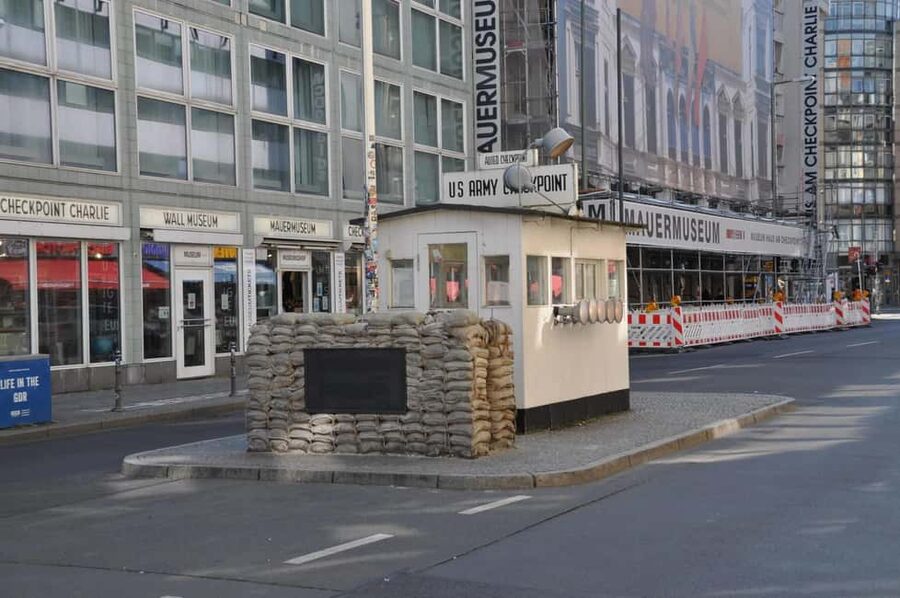
The walk ends at Checkpoint Charlie, the former crossing point between East and West Berlin. It became one of the most recognizable Cold War sites in the city, and its name still brings to mind border controls, escape attempts, soldiers, and the tension between the two political systems.
Checkpoint Charlie is a convenient ending because it completes the tour’s movement through Berlin’s 20th-century story. You begin with the Brandenburg Gate, pass through the memory of Nazi rule and the Holocaust, then reach the divided city of the Cold War.
The area is also a useful place to continue exploring on your own. The tour itself finishes there, so do not assume that extra museum time or transport is included. You can treat the final stop as an orientation point and decide what deserves a longer visit later.
The ending also suits the music theme. The tour has moved from official propaganda to cultural resistance and the personal meaning of a divided city. By Checkpoint Charlie, you have heard history presented through both place and sound rather than as a list of disconnected events.
Axel Glorvigen’s unusual guiding style
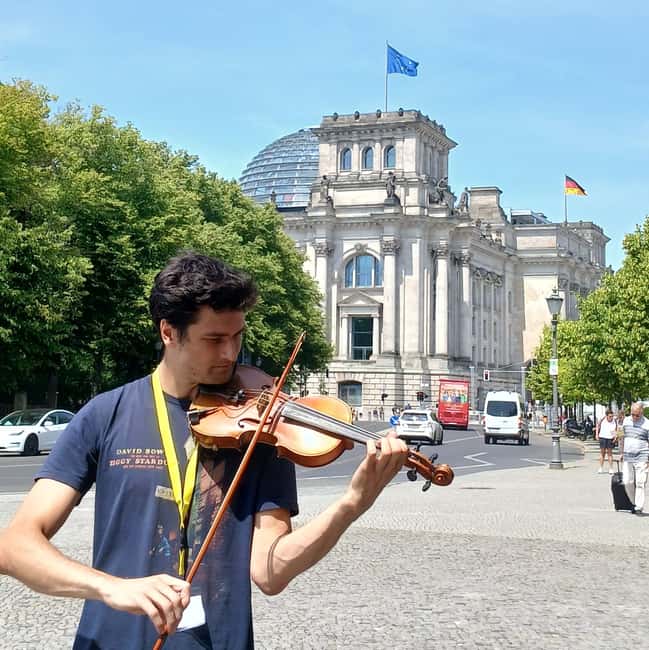
Axel Glorvigen is both guide and musician. The supplied details identify guitar, singing, and violin as part of the live element, while the meeting instructions tell you to look for a guide carrying a guitar.
That combination is the heart of the experience. Axel does not simply provide background music while you walk. The songs are meant to relate to the landmark and the story being discussed. The result is closer to a guided performance than to a standard walking tour with a few jokes added.
His strongest qualities appear to be his command of Berlin’s history and his ability to match a song to the subject. The direct feedback about the tour repeatedly praises his musicianship, the thoughtful concept, and the connection between the songs and the stops. One useful detail is that the music is described as varied, rather than limited to one style.
You should also set your expectations correctly. This is not a formal concert with a stage, sound system, or long musical set. It is a walking tour where short live performances help explain the city. If you want detailed architectural commentary on every building, another tour may suit you better. If you want history delivered through stories and music, Axel’s format is a good fit.
What the $12 price really covers
At $12 per person, this is an inexpensive way to spend two and a half hours in central Berlin. The cost includes the walking tour and live music, and the route does not require buses, trains, boats, or taxis. That keeps the total cost simple.
The value is strongest if you want an introduction to the central sights without paying for a longer specialist experience. You get a route through four major historical locations, a live guide in English, and a concept that is more distinctive than a basic landmarks walk.
The low price also means you should not expect every attraction to be entered. The listed stops are sightseeing and outdoor visits, and no museum admission is included. If you want interiors, exhibitions, or extensive time at each site, you will need to arrange those separately.
I see this as a good first-day activity. It can help you get your bearings in the city center while showing you which sites deserve a second look. It also works well for anyone who wants a memorable overview without committing to a full-day program.
Timing, walking, and accessibility
The tour lasts 2.5 hours and is fully walked. That is long enough for a useful overview but short enough to fit around lunch, another appointment, or an evening plan.
Wear comfortable shoes. The practical advice here is not just a formality. You move between major sites on foot, and the route includes outdoor sightseeing rather than seated transport. Check the weather before setting out and bring suitable protection if rain or cold is expected.
The activity is listed as wheelchair accessible. Since it is a walking route through central Berlin, you may still want to confirm current conditions if you have particular mobility needs, but the published information indicates that wheelchair users can take part.
The tour is offered in English with a live English-speaking guide. That makes it best suited to people who can follow spoken historical explanation while walking and listening to live music.
Cancellation is flexible: you can cancel up to 24 hours before the start for a full refund. You can also reserve now and pay later, which helps if your Berlin schedule is still taking shape.
Who will enjoy this tour most
I would recommend it most strongly to:
- First-time visitors who want the key central sights in one compact route.
- Music lovers who enjoy seeing how songs relate to politics and place.
- Adults and older children who can stay engaged during a 2.5-hour walk.
- Visitors who prefer outdoor sightseeing to a long museum session.
- People who want a lower-cost introduction before choosing more detailed tours.
- Anyone interested in Nazi Germany, the Cold War, East German culture, or Bowie’s Berlin period.
It may be less suitable if you dislike walking, need frequent indoor breaks, or want a highly detailed specialist discussion of one historical era. The musical format is the main reason to book, so it will not add much if you would rather have a strictly academic or architecture-focused tour.
Should you book the Berlin musical history walk?
Book it if you want Berlin’s central sights presented with personality and if live music helps you connect with history. The strongest reasons are Axel’s combination of guitar and guiding, the clear route from Pariser Platz to Checkpoint Charlie, and the unusual links between landmarks, propaganda, resistance, and artistic life.
Skip it if you want museum entry, a transport-based tour, or a long, detailed treatment of each site. This is an outdoor overview, not a complete study of Berlin.
For $12, the risk is small, and the format is genuinely different. Bring good shoes, check the weather, meet Axel by the Starbucks at Pariser Platz, and come ready to listen as well as look.
FAQ
Where does the tour start?
It starts at Pariser Platz in front of the Starbucks. The guide will be carrying a guitar.
Where does the tour finish?
The tour finishes at Checkpoint Charlie.
How long does the activity last?
The walking tour lasts 2.5 hours.
What language is the tour in?
The live tour is conducted in English.
What sights are included?
The route includes the Brandenburg Gate, Holocaust Memorial, Berlin Wall, and Checkpoint Charlie.
Is live music included?
Yes. The tour includes live guitar, singing, and violin connected to the history of each stop.
Does the tour require transportation?
No. The experience is fully walked, so you do not need transport for the tour itself.
Is the tour wheelchair accessible?
Yes. The activity is listed as wheelchair accessible.
What should I bring?
Bring comfortable walking shoes and check the weather before you go. You can cancel up to 24 hours in advance for a full refund, and the reserve now, pay later option is available.
Just added to the listings in the world
- Beijing: Night Tour Of Peking Opera Show / Transfer★ 4.3 · 5 reviews
- Barcelona: Jam Session – Jazz, Cocktails and Tapas★ 4.8 · 19 reviews
- Barcelona: Taste 5 Spanish Wines paired with Live Music★ 5.0 · 3 reviews
- Beijing Culture Event: Tea Ceremony, Music Show, Calligraphy★ 5.0 · 5 reviews
- Bangkok: ThreeSixty Jazz Lounge at Millennium Hilton★ 4.0 · 8 reviews
- Barcelona: Solo Piano Intimate concerts in Barcelona★ 4.9 · 9 reviews
- Bangkok: Party Boat Cruise with DJ and Live Music★ 4.3 · 3 reviews
- Bali Phinisi Cruise: Sunset Dinner with Live Music & Buffet★ 3.7 · 18 reviews
Live Music, compared.
Vivaldi’s Four Seasons Concert in Karlskirche
Read our review →
La Fenice Opera House Entry Ticket with Audio Guide
Read our review →
Opera House Guided Tour with Entrance Ticket
Read our review →
New Orleans Steamboat Natchez Jazz Cruise with Dinner Option
Read our review →
Budapest Danube Cruise and Dinner Options, Live Music and Dance
Read our review →
3-Course-Dinner Cruise on the Seine with live music
Read our review →
Classical Concert in the World-Famous Musikverein
Read our review →
Browse the lists this tour appears in