
REVIEW · GERMANY
City tour (including visit to the Frauenkirche) and Semper Opera Tour
Dresden’s story comes into sharp focus on this tour: medieval tournament grounds, a church rebuilt after wartime destruction, a porcelain mural stretching along an old palace wall, and an opera house rebuilt more than once. Guide Dagmar Renger brings the city’s past to life with local detail, humor, and a clear sense of affection for Dresden.
I like the inside visit to the Frauenkirche and the separate Semperoper tour, since both interiors can be hard to understand from the outside. I also like the small maximum group size, the listening system that lets you hear while taking photos, and the fact that children up to 16 go free. The main caution is that the quality depends heavily on the guide and group size, and one part of the published feedback found the Semperoper presentation too large and too much like a classroom lesson.
Key points to know before booking
- Two different Dresden experiences: A walking tour covers the old town, followed by a guided look inside the Semperoper.
- Frauenkirche entry included: You visit the church interior as part of the open church, with explanations of its design and reconstruction.
- Dagmar Renger leads the city walk: Her style is described as authentic, enthusiastic, funny, and packed with historical detail.
- A useful four-hour schedule: The walk runs from 10:30 a.m. to 12:30 p.m., followed by an hour for lunch before the opera visit.
- Semperoper timing can change: Rehearsals and opera-house scheduling may alter the second part of the experience.
- Good value for families: The listed price is $32.02 per person, and admission is free for anyone up to 16.
Dresden in one walk, from knightly contests to royal grandeur

The tour begins at Dresden Information on Neumarkt at 10:30 a.m. From there, you walk through the compact old town on a route that connects the city’s royal, religious, military, and artistic past.
This is not a tour built around one blockbuster sight. Its strength is the way the stops fit together. You see the places, hear how they relate, and get help reading details that can be easy to miss when you explore on your own. The guide also uses pictures and spoken explanation, with a small audio system so you can keep listening while looking around.
The walk lasts about two hours. You should be ready to remain on your feet, move between several sights, and keep to the group’s pace. Most people can participate, and the meeting point is close to public transportation.
More Live Music in the world:
- Vienna: Vivaldi’s Four Seasons Concert in Karlskirche
★ 4.7 · 14,951 reviews - Venice: La Fenice Opera House Entry Ticket with Audio Guide
★ 4.6 · 11,742 reviews - Sydney: Opera House Guided Tour with Entrance Ticket
★ 4.8 · 8,312 reviews
Stallhof and Neumarkt: Dresden’s old center takes shape
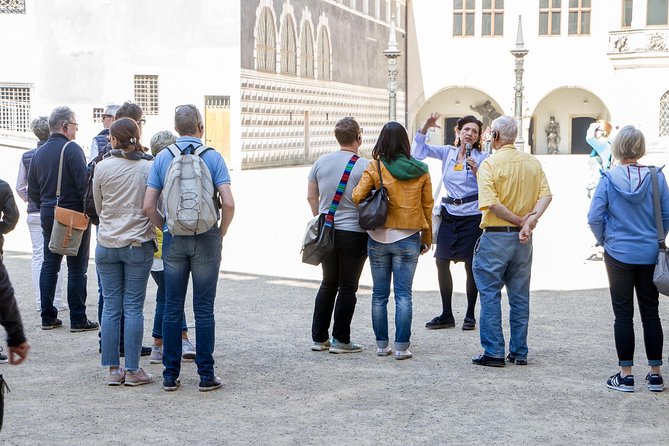
The first stop is the Stallhof, Dresden’s oldest fairground. This was the setting for knightly tournaments, so it offers an early clue to the city’s courtly past. The visit is brief, about 10 minutes, but the location helps you picture Dresden before its grand opera houses and formal promenades became the main attractions.
From there, the walk continues to Neumarkt. The square is known for its rebuilt historic center and patrician palaces. This is a useful place to hear how Dresden has reconstructed its old core rather than treating the city center as a collection of isolated monuments.
I appreciate that the tour does not rush straight to famous interiors. A short stop at the Stallhof and Neumarkt gives you a framework for the rest of the walk. You begin to see Dresden as a royal residence and public stage, not simply as a group of photogenic buildings.
The stops are short, so you will not receive a long, specialist lecture at every location. Instead, the guide links each place to a broader story. That approach suits you if you want orientation and context before exploring museums on your own.
The Frauenkirche: reconstruction you can see from inside
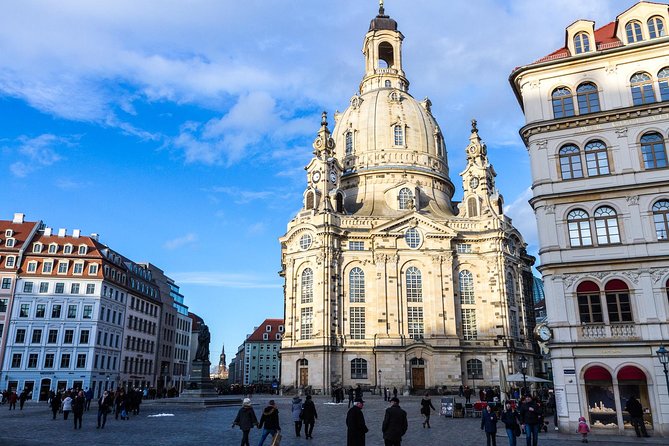
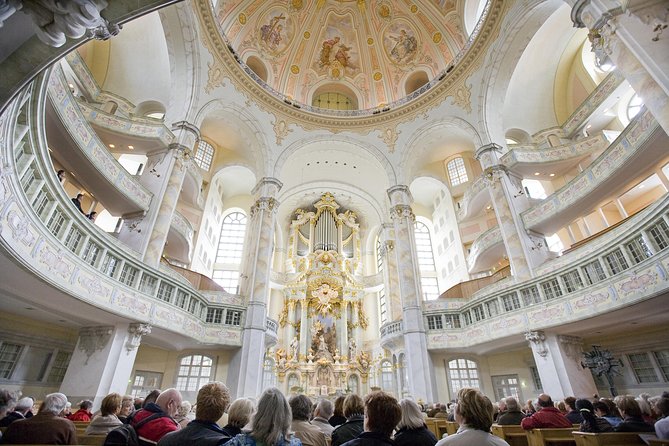
The Frauenkirche is the emotional center of the city walk. The tour includes exterior explanations and an inside inspection as part of the open church. The visit lasts about 15 minutes, with attention to the interior design and the church’s historical reconstruction.
From the outside, the building is one of Dresden’s defining sights. Inside, the reconstruction becomes easier to understand because you can see the scale, color, and arrangement of the restored space for yourself. The guide points out details that may not be obvious if you simply walk in, take a photograph, and leave.
Several of the strongest comments about this experience focus on the explanations at the Frauenkirche. That makes sense. Dresden’s wartime destruction and later rebuilding are not side notes here. They shape the city you are looking at today, and the church gives that story a powerful physical setting.
The church visit is part of the open church rather than a separate special admission event. Religious services or church rules can affect what is possible inside, so you should treat the interior visit as subject to the normal operation of the church. The tour does include the visit as planned, but quiet behavior and respect for worship remain important.
The Procession of Princes: 25,000 tiles and a royal family
Next comes the Procession of Princes, a remarkable mural made from about 25,000 Meissen porcelain tiles. The image shows Saxon rulers and offers one of Dresden’s clearest examples of how art, political power, and local industry meet in the old town.
This is the kind of sight that benefits from a guide. On your own, you might notice the long wall and take a picture. With an explanation, you can better understand why porcelain was used, why the mural matters, and how the Saxon princely family is presented.
The stop lasts around 10 minutes. That is enough to see the mural and hear its main story, but not enough for a detailed art lecture. I see that as a fair trade on a half-day tour, since the route still has several major stops ahead.
Another night with a band on stage:
- New Orleans Steamboat Natchez Jazz Cruise with Dinner Option
★ 4.0 · 7,533 reviews - Budapest Danube Cruise and Dinner Options, Live Music and Dance
★ 4.5 · 7,428 reviews - Paris: 3-Course-Dinner Cruise on the Seine with live music
★ 4.7 · 7,248 reviews - Vienna: Classical Concert in the World-Famous Musikverein
★ 4.6 · 6,673 reviews
The Zwinger: Dresden’s grand public stage
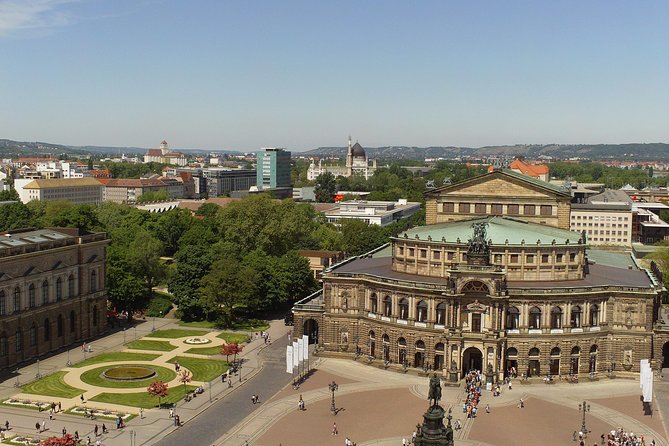
The Dresden Zwinger is the next major stop, with about 15 minutes set aside for the visit. It is described as the city’s most famous fairground, and its broad ceremonial spaces show how Dresden’s rulers used architecture for display, entertainment, and public celebration.
The Zwinger can feel confusing when you first arrive. Its courtyards, pavilions, galleries, and decorative details form a large complex, and a guide can help you understand what you are seeing rather than leaving you to wander without a plan.
You should not expect a full museum visit here. The schedule takes you through the setting and its significance, while the museums inside the Zwinger would require a separate visit. If you want to see the collections at a thoughtful pace, save them for another part of your Dresden stay.
The brief stop works well for a first look. You get the architectural setting and a sense of its role in Dresden’s public life, then continue before the walk becomes too focused on one site.
Brühl’s Terrace: the Elbe and Dresden’s changing face
At Brühl’s Terrace, the former fortress wall becomes a broad promenade with views toward the Elbe, the flood plains, and Dresden’s new town. The stop lasts roughly 10 minutes.
This is the most open part of the route. After the dense architectural detail of the old town, you get room to look outward and understand the city’s position along the river. The views also help separate Dresden’s historic center from the newer districts across the water.
You will have time for photographs, but not an extended riverside pause. Keep your camera ready and listen as the guide explains how the former defensive structure became a public promenade. It is a small but useful change of pace before the lunch break.
The one-hour lunch break makes the schedule manageable
The city tour ends at about 12:30 p.m. You then have an hour of individual time for lunch before the Semperoper tour begins at 1:30 p.m. That break is practical. Four hours of walking and indoor touring without a pause would feel cramped, while an hour gives you time to eat and reset.
The supplied schedule gives an overall duration of approximately four hours, with the program ending around 2:45 p.m. The city walk itself is listed as two hours, and the Semperoper visit as 45 minutes, so the exact finish can shift. Rehearsals and the opera house schedule may also change the timing of the second part.
You finish at the Semperoper on Theaterplatz, not back at the original meeting point. That is convenient if you plan to continue around Theaterplatz, visit another central sight, or use public transportation from the opera-house area.
Inside the Semperoper: architecture, music, and changing plans
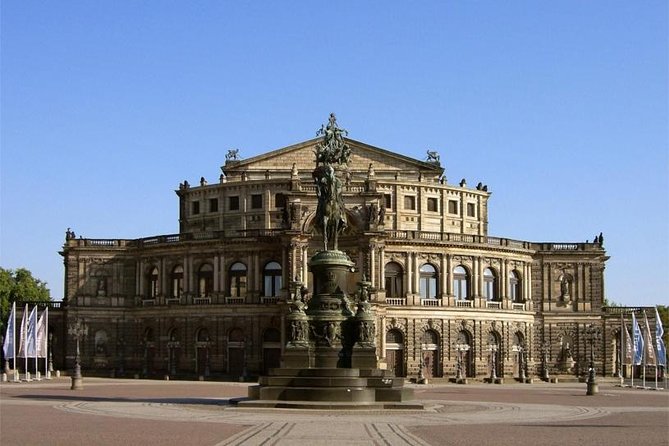
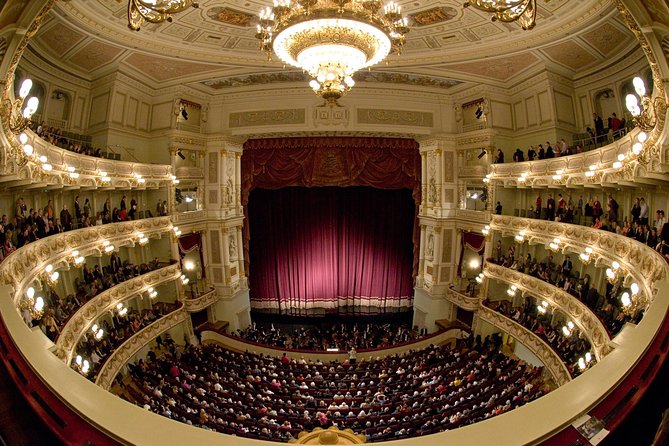
The final part is a guided tour of the Semperoper, one of Dresden’s most famous buildings. The visit lasts about 45 minutes and includes the atmospheric foyers, glazed vestibules, and the auditorium.
The value here is not only the decoration. The tour focuses on the building’s unusual construction history and its connection to music. That helps you read the opera house as a working cultural building shaped by design, rebuilding, and performance rather than as a beautiful room made only for photographs.
The foyers and glazed entrance areas give you a sense of how the building handles movement and ceremony. The auditorium provides the visual high point, with a more formal sense of splendor than the exterior alone suggests. You will learn why the opera house matters to Dresden’s musical identity and how its physical story has changed over time.
The timing of this portion deserves attention. The operator may move the Semperoper visit to another date or time when rehearsals and the house schedule require it. If the opera tour is the main reason you want to book, check the confirmed schedule carefully and contact the provider if you need a different time.
The experience can also vary with the size of the group. The maximum is 15 people, which should be more manageable than a large coach group, but the actual feel depends on the day and the guide assigned. One piece of feedback found the opera-house portion disappointing because the group felt too large and the presentation too much like school. That is a fair warning for anyone who prefers quiet, highly visual touring with little narration.
What the guide adds to the experience
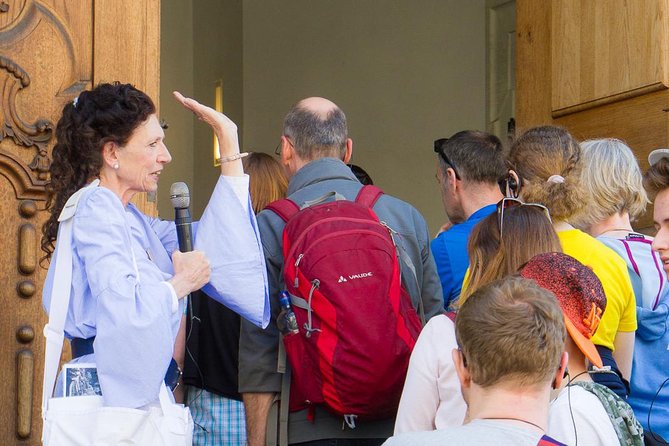
The strongest feature of the tour is the human explanation. Dagmar Renger is named as the guide in the praise for the city walk, and the descriptions of her approach are consistent: authentic, committed, enthusiastic, and able to make local history personal.
The best moments appear to come from her specific explanations of Dresden and the Frauenkirche. She is described as using funny and charming asides, along with details not normally found in a standard guidebook. That kind of local storytelling can turn a familiar square into a place with a sequence of events and personalities.
The feedback is not uniformly positive. One person found the city walk acceptable but thought the storytelling was dull and the group too large, especially during the Semperoper visit. You should book this with the understanding that a guided tour is partly a question of fit. If you enjoy spoken history and a strong guide, the experience may be rewarding. If you prefer to move independently and pause for long periods, the fixed route and presentation style may feel restrictive.
The audio system helps, but this is still a walking tour
The tour provides a comfortable guidance system so you can hear while walking, taking photographs, or stepping back to examine a building. That is a useful feature in Dresden’s busy central areas, where standing close to the guide is not always possible.
It also means you are less likely to miss an explanation while looking up at a façade or composing a photograph. Still, the system does not change the basic nature of the experience. You are walking from stop to stop, listening, and keeping up with the group.
Wear comfortable shoes and leave room for the lunch break. The route itself is compact, but the tour includes several outdoor stops and a substantial amount of standing.
Is $32.02 good value for this Dresden combination?
At $32.02 per person, the price is reasonable for a four-hour program that combines a city walk, entry to the Frauenkirche as part of the open church, and admission to the Semperoper. The opera-house admission is specifically included, which matters because it is the portion most difficult to reproduce without a scheduled visit.
The strongest value comes from combining two different formats. The old-town walk helps you understand the city’s layout and major monuments, while the Semperoper tour gives you access to a grand interior with a separate architectural and musical story.
For families, the price becomes more attractive because children up to 16 are free. That can make this a practical first-day activity for a mixed-age group, especially if you want an organized introduction without booking several separate admissions.
The price is less compelling if you only want a quick exterior orientation or plan to visit the Semperoper independently at another time. You are paying for the guide’s interpretation and the convenience of putting the major sights into one morning and early afternoon, not for a long stop at each monument.
Free cancellation is available up to 24 hours before the start time. Changes or cancellations made less than 24 hours in advance are not accepted for a refund.
Who should book this four-hour Dresden tour?
I would choose this experience if you have limited time in Dresden and want the old town explained in a single morning. It is also a good fit if you care about the Frauenkirche’s reconstruction, want to see the Semperoper interior, and prefer a guide to connect the sights.
Families may find the free admission for children up to 16 especially useful. The audio system helps groups stay together without forcing everyone to stand shoulder to shoulder around the guide.
You should think twice if you dislike structured narration, want long museum visits, or need a guaranteed opera-house time. The program can change with rehearsals and the opera schedule, and the speaking style may not suit every listener.
Should you book it?
Book this tour if you want a compact introduction to Dresden built around the city’s most important central sights. The Frauenkirche interior, the Procession of Princes, the Zwinger, Brühl’s Terrace, and the Semperoper give you a strong first look at Dresden’s architecture, royal past, wartime destruction, and rebuilding.
I would be most comfortable recommending it to first-time visitors, families, and anyone who values a lively local guide. Go in expecting a guided history walk rather than a leisurely private tour. If Dagmar Renger is leading and the Semperoper schedule works for you, the $32.02 price offers a useful amount of Dresden in one well-organized half-day.
FAQ
Where does the tour start?
It starts at Dresden Information, Neumarkt 2, 01067 Dresden, Germany.
What time does the tour begin?
The tour starts at 10:30 a.m.
How long is the experience?
The experience lasts approximately four hours. The city walk runs from about 10:30 a.m. to 12:30 p.m., followed by a one-hour break and the Semperoper tour.
Where does the tour end?
It ends at the Semperoper, Theaterplatz 2, 01067 Dresden, Germany.
Is the Frauenkirche included?
Yes. The city walk includes exterior explanations and an inside visit as part of the open church.
Is admission to the Semperoper included?
Yes. The listed price includes admission to the Semperoper tour.
How much does the tour cost?
The listed price is $32.02 per person.
Are children charged?
Admission is free for children up to 16 years old.
Can the Semperoper tour time change?
Yes. The program depends on rehearsals and the Semperoper’s schedule. The organizer provides information if the opera-house tour time or date differs.
What is the maximum group size?
The activity has a maximum of 15 travelers.
Is the tour accessible by public transportation?
Yes. The meeting point is near public transportation.
Can I cancel for a full refund?
Yes. You can cancel at least 24 hours before the start time for a full refund. Cancellations or changes made less than 24 hours before the start time are not accepted for a refund.
Just added to the listings in the world
- Beijing: Night Tour Of Peking Opera Show / Transfer★ 4.3 · 5 reviews
- Barcelona: Jam Session – Jazz, Cocktails and Tapas★ 4.8 · 19 reviews
- Barcelona: Taste 5 Spanish Wines paired with Live Music★ 5.0 · 3 reviews
- Beijing Culture Event: Tea Ceremony, Music Show, Calligraphy★ 5.0 · 5 reviews
- Bangkok: ThreeSixty Jazz Lounge at Millennium Hilton★ 4.0 · 8 reviews
- Barcelona: Solo Piano Intimate concerts in Barcelona★ 4.9 · 9 reviews
- Bangkok: Party Boat Cruise with DJ and Live Music★ 4.3 · 3 reviews
- Bali Phinisi Cruise: Sunset Dinner with Live Music & Buffet★ 3.7 · 18 reviews
Live Music, compared.
Vivaldi’s Four Seasons Concert in Karlskirche
Read our review →
La Fenice Opera House Entry Ticket with Audio Guide
Read our review →
Opera House Guided Tour with Entrance Ticket
Read our review →
New Orleans Steamboat Natchez Jazz Cruise with Dinner Option
Read our review →
Budapest Danube Cruise and Dinner Options, Live Music and Dance
Read our review →
3-Course-Dinner Cruise on the Seine with live music
Read our review →
Classical Concert in the World-Famous Musikverein
Read our review →
Browse the lists this tour appears in