
REVIEW · AUSTRIA
Vienna Private Walking Tour including State Opera
Vienna’s grandest sights are packed into this three-hour private walk, beginning near the State Opera and ending at mighty Stephansdom. You move through Roman, Habsburg, imperial, musical, and modern Austrian history without changing transport or losing time to city traffic.
I like the route’s strong sense of place, especially the link between the opera, Mozart Monument, Hofburg, and the old streets of the center. I also like the private format, which lets a good guide adjust the pace and leave time for looking rather than rushing from one stop to the next.
The main caution is the opera promise. The included visit may be limited to the lobby, and a fuller opera tour may cost extra. The tour has also received mixed feedback, including a serious complaint about one guide’s political and historical comments, so I would confirm your guide, opera access, and discussion style before paying.
Key points at a glance
- State Opera access may be limited: The advertised opera visit can mean entry to the lobby only, while a fuller guided tour may require a separate ticket.
- A compact Habsburg route: In three hours, you connect the Hofburg, Michaelerkirche, Graben, Peterskirche, and Stephansdom.
- Private groups up to 15: The $323 group price works best when shared by a larger party, not by one or two people.
- Music is part of the story: Expect context on Mozart, Haydn, Beethoven, Schubert, the Strauss family, Brahms, Mahler, and Vienna’s opera tradition.
- Two guide languages: Tours are offered in English or German, with the exact guide assigned to your booking.
- Comfortable shoes matter: This is a walking tour through central Vienna and is not suited to people with mobility impairments.
Starting at the State Opera
The tour begins at Stephansplatz 8A, close to Vienna’s cathedral, although the experience itself focuses first on the State Opera. That arrangement is worth checking when you book, since the meeting point and first sightseeing stop are not the same landmark.
The Vienna State Opera was built in the 1860s as the Vienna Court Opera. Its name changed in 1920, during the formation of the early Austrian Republic. That small change in wording reflects a major political shift, from imperial court culture to a new republican Austria.
Inside, you can connect the building with works such as La Traviata, La Clemenza di Tito, and Verdi’s Don Carlo. The company has also been led by major conductors, including Gustav Mahler, Herbert von Karajan, and Claudio Abbado.
That is the appeal of starting here: the opera is not just a pretty nineteenth-century building. It gives your guide a way to explain how music, monarchy, public ceremony, and Vienna’s international identity fit together.
Still, keep your expectations precise. The available information says the State Opera visit is included, but a direct account describes the stop as a visit to the lobby. Another booking required a separate payment for the opera tour. I would treat the included access as a short look inside unless the operator confirms a full backstage or interior tour in writing.
More Live Music in Vienna:
- Vienna: Vivaldi’s Four Seasons Concert in Karlskirche
★ 4.7 · 14,951 reviews - Vienna: Classical Concert in the World-Famous Musikverein
★ 4.6 · 6,673 reviews - Vienna: Mozart Concert at the Musikverein – Golden Hall
★ 4.6 · 5,194 reviews
Mozart, music, and the imperial center
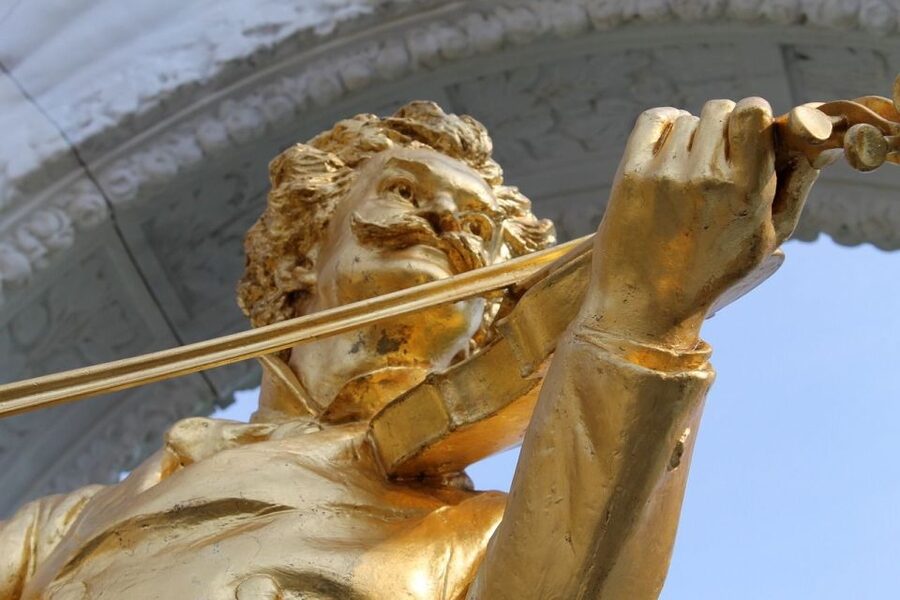
From the opera, the route brings Vienna’s musical past into the open air. The Mozart Monument provides a natural pause for stories about Wolfgang Amadeus Mozart and Vienna’s place in European classical music.
The tour also sets Mozart within a much wider circle. Your guide may discuss Josef Haydn, Ludwig van Beethoven, Franz Schubert, Johann Strauss the elder and younger, Johannes Brahms, and Gustav Mahler. That list covers court composers, concert hall favorites, dance music, symphonic work, and opera.
I like this musical angle because it helps you see Vienna as more than an imperial capital. The city’s identity was shaped by people who wrote for churches, aristocratic patrons, public audiences, theaters, and grand celebrations.
The quality of this part depends heavily on the guide. One German-speaking guide, Franziska Pfisker, is identified in a complaint about the tour, while another German-language guide was praised for competence and for making the three hours pass quickly. Since individual guides can shape the entire experience, ask for the guide’s name and language before the day of your walk if that information is available.
Hofburg and Michaelerkirche
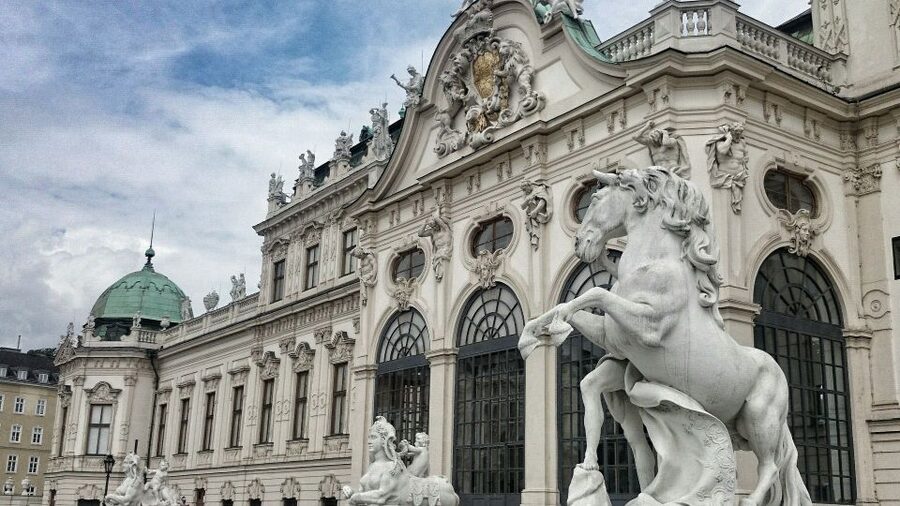
The Hofburg is the route’s major political landmark. For centuries, it served as the opulent home of the Habsburg Empire, the dynasty that ruled territories across central Europe and helped shape the Holy Roman Empire and later Austro-Hungarian Empire.
At the Hofburg, you are not simply looking at palace facades. You are standing in the former center of a state that grew through dynastic marriages, military power, court ceremony, and administrative control. A three-hour walk cannot cover every Habsburg ruler or every political crisis, but it can give you a useful framework for understanding why Vienna looks the way it does.
The Michaelertror gate leads toward Michaelerkirche, or St. Michael’s Church. It served as the official church of the emperors for many years. The church adds a useful religious layer to the palace story, showing how worship, monarchy, and public power occupied the same small area.
Around the square, the route includes ancient Roman ruins, sections of medieval walls, and remains of the old Burg Theatre. These fragments are easy to miss if you walk alone with your eyes fixed on palace facades. A guide’s value here is not just naming the remains, but pointing out how different periods sit on top of one another.
Roman Vienna beneath the imperial city
Vienna’s older story reaches back to Roman Vindobona. The route presents the city as a place that developed in layers, from a Roman military settlement to a medieval town, Habsburg capital, imperial center, and modern Austrian city.
You may see Roman ruins in the center of the square, along with medieval defensive remains. These are modest physical traces compared with the Hofburg, but they change your understanding of the center. Vienna was not created all at once for the Habsburgs. The dynasty inherited and reshaped an urban site with much older foundations.
The tour also covers the Holy Roman Empire, the Austro-Hungarian Empire, the world wars, and the birth of the Second Republic. That is a lot for three hours. If your main interest is twentieth-century political history, ask the guide how much time will be devoted to the wars and postwar period.
The broad time span is useful for a first visit, but it also creates a tradeoff. You will get a connected overview rather than a detailed study of any single era. I would choose this walk to understand the city’s basic story, not to explore one subject at academic length.
Another night with a band on stage:
- Vienna: Classical Concert in St. Anne’s Church (Annakirche)
★ 4.6 · 3,414 reviews - Vienna: Mozart and Strauss Concert at Schönbrunn
★ 4.5 · 2,967 reviews - Vienna: Classical Concert at Mozart’s First House
2,423 reviews - Vienna Classical Concert at St. Peter’s Church
★ 4.5 · 2,039 reviews
Graben and the old city streets
The route continues along Graben, one of central Vienna’s best-known streets. Its name and history reach back to the Roman period, when the area was associated with a defensive ditch.
The street also connects with the medieval city and the story of Richard the Lionheart entering Vienna. That detail gives the route a welcome human scale. Instead of hearing only about emperors and institutions, you get a reminder that Vienna’s streets have carried rulers, armies, merchants, and ordinary daily life for centuries.
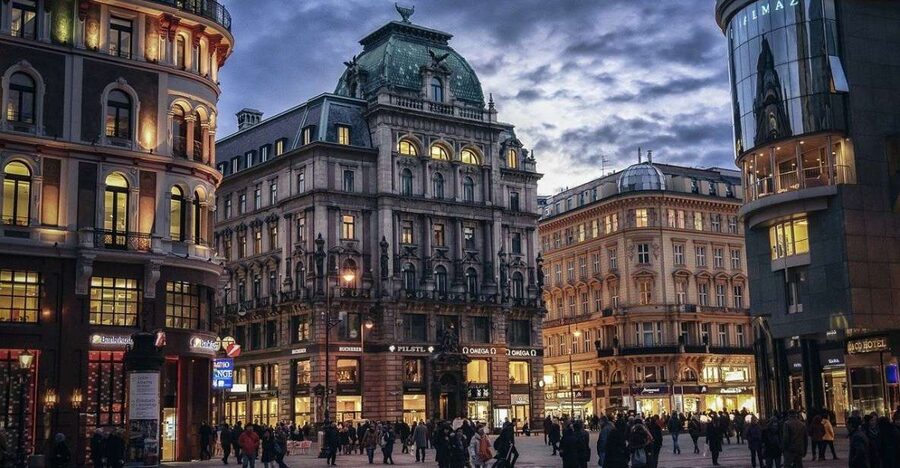
Graben is also a good place to notice how Vienna’s monumental center works. Imperial architecture, churches, shops, and public space sit close together. The street is not a museum corridor. It remains part of the city’s working center, which makes a guided walk more useful than a quick photograph from a passing vehicle.
Expect a fair amount of standing while the guide explains details. Comfortable shoes are essential. The tour is not designed for people with mobility impairments, and the walking format may be tiring if you need frequent seating or have difficulty with uneven historic streets.
Peterskirche and Stephansdom
Peterskirche, or St. Peter’s Church, is another major stop. The site is described as having been associated with a church since the fourth century, giving it one of the oldest religious connections on the route.
The present building contributes a different mood from the enormous Hofburg. Churches such as Peterskirche help explain how faith shaped Vienna’s public life and architecture. Your guide can place it within the city’s religious development before leading you onward to Stephansplatz.
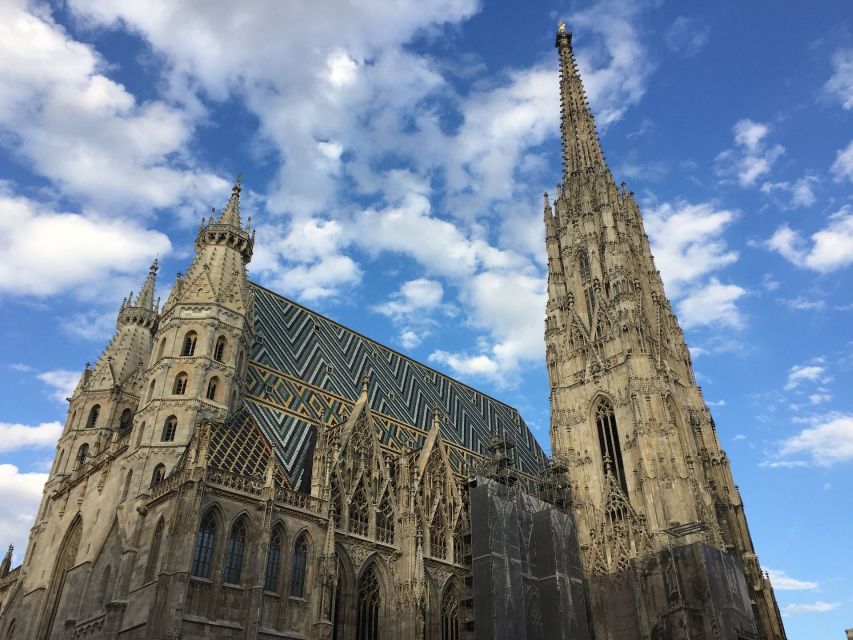
Stephansdom is the visual climax of the walk. Vienna’s cathedral is a Roman-Gothic masterpiece and one of the tallest churches in the world. Its scale makes it an effective end point for a tour that begins with Roman Vindobona and moves through medieval, imperial, musical, and modern Vienna.
The meeting point is at Stephansplatz, so confirm where your guide expects you to gather and where the walk will finish. The supplied details identify Stephansplatz 8A as the meeting location, while the route description ends at the cathedral. That should be simple, but a clear meeting instruction prevents an unnecessary scramble in the busy center.
How much does the private format add?
The listed price is $323 for a private group of up to 15 people. At the maximum group size, that works out to about $21.53 per person. For a couple, however, the same price is a significant expense.
The private format makes the most sense for a family, group of friends, or small organization that wants one guide and one shared pace. You can ask questions without competing with a large public group, and a guide may be able to spend more time on your interests.
The value depends on what is actually delivered. If you receive a strong three-hour city overview with thoughtful history and confirmed opera access, the price can be reasonable for a full group. If the opera portion is only a quick lobby visit and your group is small, the cost is harder to justify.
Entrance fees are not included. This point matters most at the State Opera. Ask exactly what the $323 covers, whether the lobby visit is guaranteed, and what extra amount would be needed for a full opera tour.
Guide quality and the tone of the tour
The best account of the walk describes a competent guide who made the three hours feel short and allowed time to look around. That is exactly what I would want from this experience. Vienna’s center rewards pauses, since details on facades and street corners are easy to miss when a guide talks without giving you time to see them.
There is also a serious warning about guide standards. One booking reported that the scheduled opera visit did not happen after the time was moved from 11 a.m. to 2 p.m. The same account objected to political comments about immigrants, the mayor, social housing, and the treatment of Jewish victims while visiting the Jewish quarter.
I cannot tell you that this experience will be repeated, but it is enough to make a pre-tour check worthwhile. Ask for a neutral historical presentation, confirm the guide’s name, and contact the provider promptly if the program changes. Sensitive subjects such as Nazi persecution and the Holocaust require accurate language and care. The phrase used in that account, people came to their end, was rightly criticized as too soft for systematic murder.
The tour covers difficult periods, including both world wars and the birth of the Second Republic. A good guide should explain those subjects clearly and respectfully, without turning the walk into a political argument.
Who should book this walk?
I would consider this tour if you have only a short time in Vienna and want a private introduction to the historic center. It suits first-time visitors who want the Habsburg story, classical music, Roman remains, major churches, and the opera connected in one route.
It also suits groups of several people. At $323 for up to 15, the per-person cost improves sharply as your party grows. English and German are available, so it can work well for families or friends who want a guide in one of those languages.
I would be more cautious if the State Opera is your main reason for booking. The available evidence points to lobby access in at least one case, with a fuller opera tour requiring an extra payment. If you want a proper opera-house visit, contact the provider first and confirm exactly what you will see.
The route is also not a good match if you have mobility limitations. It is a three-hour city walk, and comfortable footwear is specifically advised.
Practical details before you book
The tour lasts three hours and runs as a private group. Starting times depend on availability, so check the schedule rather than assuming the walk begins in the morning.
English and German are the available guide languages. The provider is Travmonde OÜ. You can cancel up to 24 hours before the start for a full refund, and the reserve-now, pay-later option lets you hold the booking without paying immediately.
The published score is 3.2 out of 5 from seven ratings, which signals an uneven experience rather than a clear recommendation. The strongest positive feedback centers on the guide’s competence, an easy pace, and time to admire the sights. The weakest points concern the unclear opera inclusion, a changed start time, a missed opera visit, and one guide’s inappropriate comments.
Should you book it?
Book this walk if your group wants a private introduction to central Vienna and values a broad historical story more than a specialist museum visit. The route is well chosen, the maximum group size is generous, and the link between Roman Vindobona, the Habsburgs, music, churches, and modern Austria gives you useful bearings for the rest of your stay.
Book only after confirming the State Opera arrangement. If the answer is lobby access only, decide if that is enough for you. I would also request the guide’s name and confirm that the tour will treat the Nazi period, Jewish history, and modern politics with care.
For a larger group with flexible expectations, it can be good value. For two people booking mainly for a full opera tour, the price and uncertain access make another option worth considering.
FAQ
Where does the tour meet?
The meeting point is Stephansplatz 8A, 1010 Vienna, Austria.
How long does the walking tour last?
The tour lasts three hours.
Is the State Opera visit included?
A visit to the State Opera is included in the activity details, but the available information indicates that this may mean a lobby visit only. A fuller guided opera visit may require a separate fee.
Does the price include entrance fees?
No. Entrance fees are not included, so confirm any extra charge for opera access before booking.
How much does the private tour cost?
The price is $323 for a private group of up to 15 people.
Which languages are available?
The live guide is available in English or German.
Is the tour suitable for people with mobility impairments?
No. The experience is listed as unsuitable for people with mobility impairments.
Can I cancel the booking?
Yes. You can cancel up to 24 hours in advance for a full refund. The reserve-now, pay-later option allows you to book without paying immediately.
Just added to the listings in Vienna
- Vienna: Sunday Brunch Danube Cruise & Live Music★ 4.2 · 42 reviews
- Vienna Supreme Orchestra at Palais Niederösterreich★ 4.8 · 10 reviews
- Vienna: Concert by the Vienna Baroque Orchestra★ 4.6 · 56 reviews
- Vienna: Romantic Classics Piano, Violin, and Cello Concert★ 4.7 · 60 reviews
- Vienna: Musical Tickets THE PHANTOM OF THE OPERA★ 4.9 · 132 reviews
- Vienna: Mozart Concert with Dinner and Carriage Ride★ 4.8 · 25 reviews
- Vienna: Classical Concert in the historic 1837 Strauss-Hall★ 4.5 · 39 reviews
- Vienna: 3.5-Hour Danube Cruise with Live Music & BBQ Buffet★ 4.2 · 19 reviews
Live Music, compared.
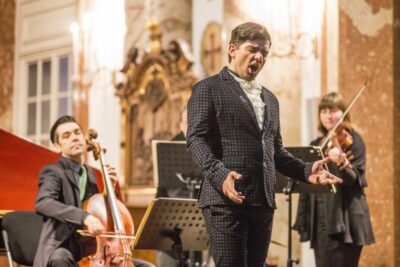
Vivaldi’s Four Seasons Concert in Karlskirche
Read our review →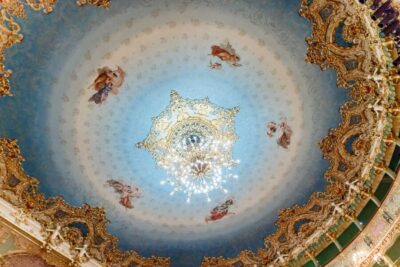
La Fenice Opera House Entry Ticket with Audio Guide
Read our review →
Opera House Guided Tour with Entrance Ticket
Read our review →
New Orleans Steamboat Natchez Jazz Cruise with Dinner Option
Read our review →
Budapest Danube Cruise and Dinner Options, Live Music and Dance
Read our review →
3-Course-Dinner Cruise on the Seine with live music
Read our review →
Classical Concert in the World-Famous Musikverein
Read our review →
Browse the lists this tour appears in