
REVIEW · AUSTRIA
Concert at House of Music Vienna: Mozart, Strauss & the Masters
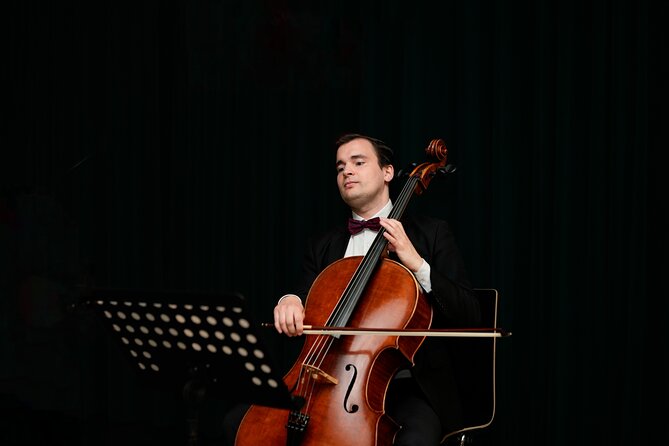
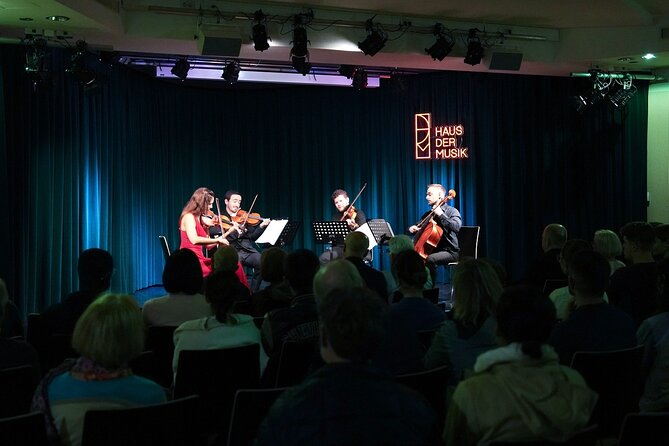
Vienna’s musical tradition feels most immediate in a small room, with four string players close enough for you to watch every bow stroke. This concert at Haus der Musik brings Mozart, Haydn, Beethoven, Schubert, and Strauss together in a compact program near the State Opera.
I like the central location, which makes this easy to fit after dinner or a day of sightseeing. I also like the short format: about an hour of music, long enough to feel worthwhile but not so long that a first classical concert becomes hard work.
The main consideration is the intimate room itself. You are not getting the scale of a grand concert hall, and one piece of feedback found the repertoire less exciting than expected. This is best viewed as a friendly introduction to Viennese classical music, not a major symphony performance.
Key points at a glance
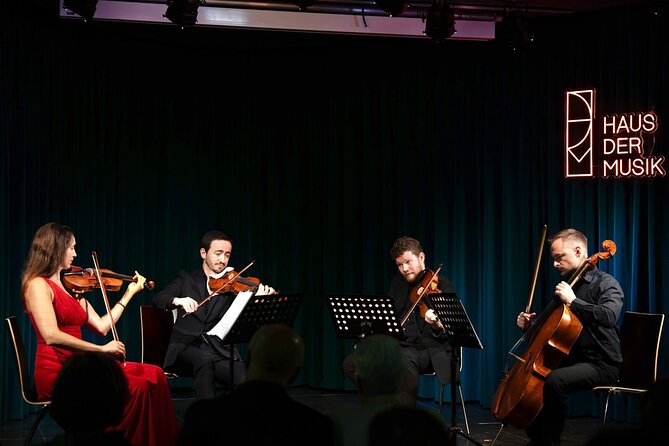
- Four musicians, close at hand: Watch a professional string quartet perform in a small, intimate setting.
- A useful Viennese sampler: The program draws from Mozart, Haydn, Beethoven, Schubert, and Strauss.
- About 55 to 70 minutes: The advertised program is 70 minutes, while the performance may run closer to an hour.
- Easy central setting: Haus der Musik is near the Vienna State Opera, public transportation, restaurants, and shops.
- Good first concert choice: The familiar music, short length, and welcoming atmosphere suit newcomers to classical music.
- Simple ticket value: Admission to the concert is included for about $35 per person, but museum entry, drinks, food, and transport cost extra.
What the Haus der Musik concert is really like
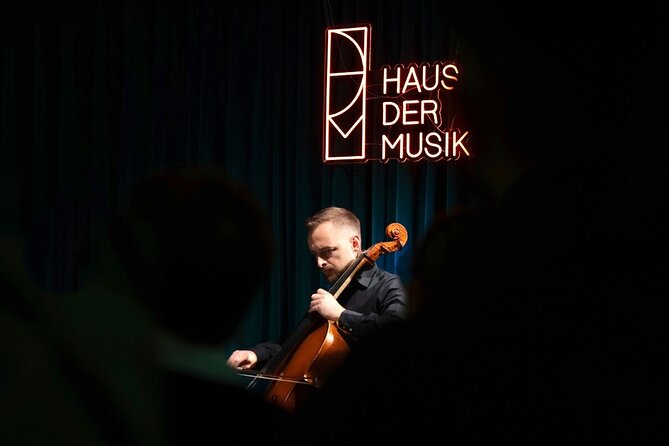
This is a straightforward evening of live music rather than a full museum visit or a large formal concert production. You enter Haus der Musik and attend a performance by the Wiener Klassik Ensemble, a professional string quartet focused on Viennese classical music.
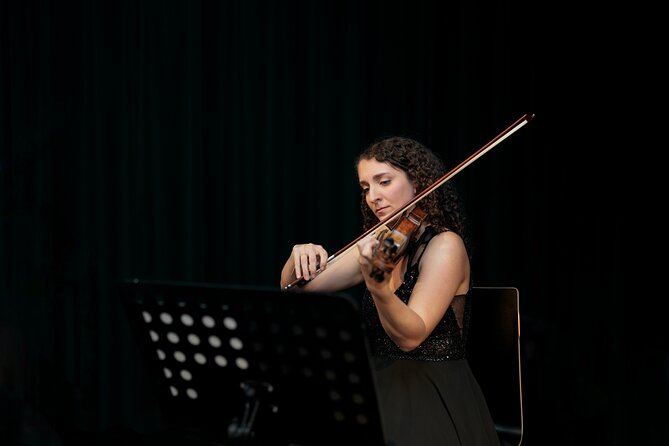
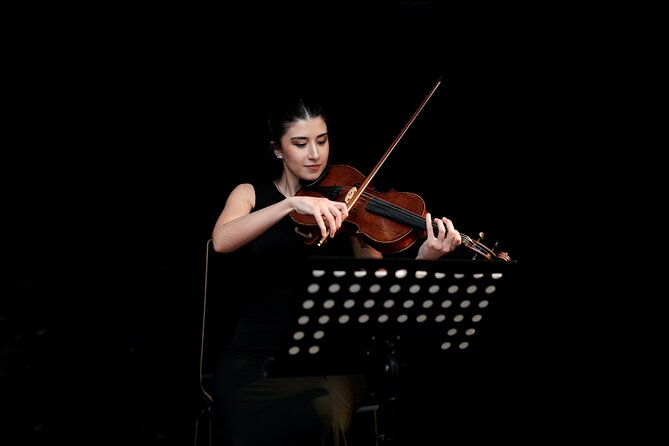
The setting matters. In a large hall, you may admire the music from a distance. Here, the musicians are close, and you can follow the physical work of the performance: bows moving together, fingers shifting, and the players watching one another for timing. That closeness was a major part of the appeal for many people, especially those attending a classical concert for the first time.
The mood is elegant but not stiff. The welcome is offered in English and German, and the evening has a friendly tone. Some performances include brief background information about the composers and pieces, which helps you understand what you are hearing without turning the concert into a lecture.
The lineup is built around string instruments. Accounts of the performance describe quartets using violins, viola, and cello, though the exact arrangement may vary. The important point is that you should expect a small ensemble, not an orchestra with brass, woodwinds, percussion, and a large chorus.
More Classical Concerts in Austria
- Vienna: Vivaldi’s Four Seasons Concert in Karlskirche
★ 4.7 · 14,951 reviews - Vienna: Classical Concert in the World-Famous Musikverein
★ 4.6 · 6,673 reviews - Vienna: Mozart Concert at the Musikverein – Golden Hall
★ 4.6 · 5,194 reviews
The music: five major Viennese names in one hour
The program gives you a quick musical tour through composers closely connected with Vienna and its classical tradition.
Mozart provides the light, polished side of the evening. His music can sound effortless, but a string quartet reveals how much precision sits beneath that ease. Fast passages need to be crisp, while slower sections depend on careful balance between the instruments.
Haydn brings another important part of the story. He helped shape the string quartet as a serious musical form, so hearing his work played by four musicians is especially fitting. His pieces often combine clear structure with playful turns, giving the program some variety.
Beethoven adds more weight and tension. Even in a short concert, his music can change the mood of the room, moving from calm passages into something more forceful or dramatic. You may find his work the most demanding part of the program, but it also shows why he remains central to Vienna’s musical identity.
Schubert contributes lyricism. His melodies can feel intimate and direct, which suits a small venue. This is the part of the program where the quartet’s blend matters most, since the music depends less on spectacle and more on sustained feeling.
Strauss gives the evening its most recognizably Viennese flourish. His name is tied to waltzes and the musical image of Vienna, so including him makes the program feel connected to the city outside the concert room. The mix of famous names also gives you several entry points. If one composer does not speak to you, another may.
The program is designed for both curious newcomers and people who already know classical music. You may hear well-known melodies, but the performance still gives you a chance to notice details that recordings often hide.
Why the small room can work in your favor
The room is not presented as a major concert hall, and that is both its limit and its strength. You lose some grandeur, but you gain proximity.
I like this format for a first concert because you do not need to know the rules of classical music. You can sit, listen, and watch the ensemble work. The close view makes the performance easier to follow, even if you cannot name every piece.
The small audience also helps create a personal atmosphere. You may be greeted at the door and shown into the performance space, rather than simply finding your way through a huge theater. One account described the crowd as small and the setting as intimate, which is useful to know if you prefer quiet rooms over packed cultural events.
There is a tradeoff. If you want the deep sound and ceremony of a grand Viennese hall, this may feel modest. A string quartet can produce remarkable volume and color, but it does not recreate the force of a full orchestra. One assessment found the musicians good but the repertoire boring and the room less like a conventional concert. That is a fair warning for serious classical listeners seeking a challenging or unusual program.
For most people, though, the room makes the musicians easier to appreciate. You are buying closeness rather than scale.
A practical look at the hour
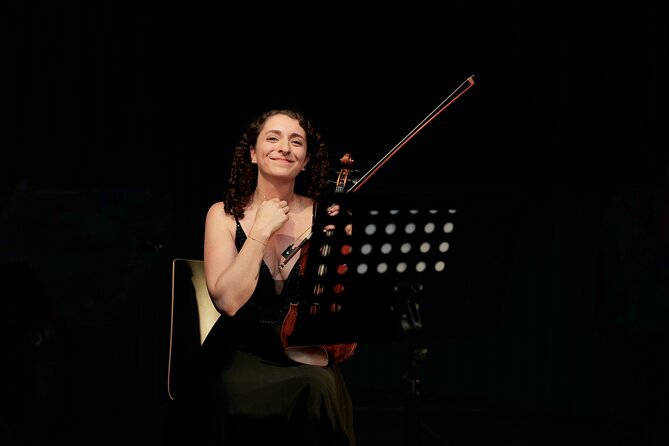
The advertised experience lasts about 70 minutes. Several accounts describe the music itself as closer to 55 minutes or an hour, so you should plan for roughly one hour of concert time rather than a long evening production.
That length is one of the strongest features. You can place it between dinner and another evening activity, or use it as a calm finish after a busy day in Vienna. It is long enough to feel like a real concert and short enough to suit children, older family members, and people unsure how much classical music they want.
The timing also makes this a sensible last-night activity. You do not need to commit half an evening to it, and the central setting leaves you close to restaurants and shops afterward. A concert at the end of a tiring sightseeing day can provide a welcome change of pace, though you may want to arrive with enough energy to listen attentively.
Do not assume that the program will contain only the most famous melodies. The music is selected from major composers and includes recognizable works, but the exact pieces are not specified here. If you want a particular Mozart concerto, Strauss waltz, or Beethoven quartet, this is not the right ticket to buy without checking the current program first.
More Classical Concerts in Vienna
- Vienna: Classical Concert in St. Anne’s Church (Annakirche)
★ 4.6 · 3,414 reviews - Vienna: Mozart and Strauss Concert at Schönbrunn
★ 4.5 · 2,967 reviews - Vienna: Classical Concert at Mozart’s First House
2,423 reviews - Vienna Classical Concert at St. Peter’s Church
★ 4.5 · 2,039 reviews
Location near the Vienna State Opera
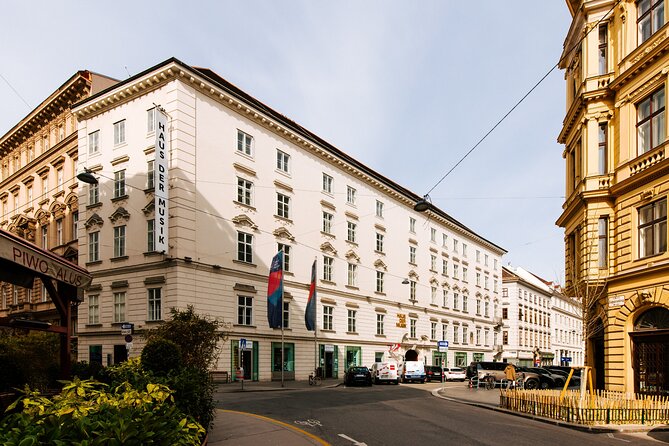
Haus der Musik is in the heart of Vienna, just steps from the State Opera. That location gives the concert real practical value.
You can combine it with a walk through central Vienna, dinner nearby, or an evening around the opera district. Public transportation is close, and no private transfer is needed. Transport is not included, but the central position makes getting there relatively simple.
The location also helps if your schedule is tight. You do not need to travel out to a distant concert venue or build a separate half-day around the event. Plan your route carefully, but the city-center setting makes this easier to add to a larger Vienna itinerary.
Remember that your ticket covers the live concert, not entry to the Haus der Musik museum. The building may tempt you to allow extra time for its exhibits, but museum admission is separate. If you want to visit both, check the museum’s admission arrangements rather than assuming your concert ticket includes it.
Is $35 a fair price?
At about $35 per person, this is a reasonable price for a central Vienna concert lasting around an hour. The value comes from the combination of a professional ensemble, a convenient venue, and a program filled with major composers.
You are not paying for a full theater production, orchestra, meal, or guided city tour. Food, drinks, transport, and museum admission are separate. That keeps the ticket simple, but it also means your total evening cost will rise if you add the museum or dinner.
For a short cultural activity, I consider the price fair, especially if you want live music without committing to a formal opera or an expensive concert hall seat. It is also easier to justify if you are traveling with someone who may not be a classical music expert. The hour-long format lowers the risk of paying for an experience that feels too demanding.
The value is weaker if your main goal is musical discovery. The program favors well-known composers and familiar Viennese appeal. A specialist may prefer a longer performance, a larger ensemble, or a more ambitious selection.
Who will enjoy this most?
I would recommend this concert to you if you want a taste of Vienna’s classical tradition without making it the central event of your trip.
It fits especially well for:
- First-time classical concertgoers who want a manageable introduction
- Couples seeking a refined evening activity near the State Opera
- Families and multigenerational groups who prefer a short program
- Visitors who enjoy famous composers but do not need a rare or experimental repertoire
- Anyone planning a final-night activity close to central restaurants and shops
- Music lovers who enjoy watching performers at close range
It may not be the best match if you want a grand hall, a full orchestra, opera singers, or a highly specialized program. The intimate room gives you a close view, but it cannot provide the scale of a major concert venue.
The concert also suits people who want some context without a long guided explanation. Background information about the composers and pieces may be included, and the welcome is multilingual in English and German. No individual guide is named, so you should not book this expecting a private host or a personal music lecture.
Helpful timing and booking advice
Confirmation is provided when you book, and the ticket is mobile, so you can keep it on your phone. Free cancellation is available if you cancel at least 24 hours before the start time. Changes or cancellations made inside that window are not accepted for a refund.
The experience is often booked about 10 days ahead. That does not guarantee that every date sells out, but it is a sensible reason to reserve early if your Vienna schedule is fixed.
Give yourself time to reach Haus der Musik and locate the concert entrance. The venue is central, but central Vienna has plenty of streets, entrances, and distractions. You may be greeted and escorted to the theater, according to the practical arrangements described for the performance.
There is no transport service, meal, or drink included. Plan dinner separately, and do not confuse admission to the museum with admission to the concert. Most people can participate, and the venue is near public transportation.
How it fits into a Vienna itinerary
This concert works best as a focused evening stop, not as a full-day plan.
You could visit central sights during the day, eat near the State Opera, and then attend the performance. You could also schedule the concert before dinner, leaving time afterward for a walk through the center. The short running time gives you flexibility that a full opera or long symphony may not.
I would avoid pairing it with a rushed schedule on the other side of the city. Although the venue is easy to reach by public transportation, the experience depends on arriving calm enough to listen. Vienna rewards slower pacing, and this is a good place to practice it.
If you are visiting Haus der Musik museum too, allow separate time and budget for that visit. The concert ticket alone does not provide museum admission.
Should you book the Mozart, Strauss and the Masters concert?
Book it if you want a convenient, friendly introduction to Vienna’s classical music. The professional quartet, central venue, familiar composers, and roughly one-hour format make this a practical choice for many first-time concertgoers.
I would be more cautious if you expect a grand concert hall or a bold, demanding repertoire. The room is small, the program can feel familiar, and the exact duration may be closer to 55 minutes than the advertised 70. Those limits are clear, but they are also why the experience works so well as a compact part of a Vienna evening.
For about $35, you receive a live performance in a central setting with musicians close enough to watch. If that sounds better to you than spending several hours in a formal hall, this is a sensible booking.
FAQ
Where does the concert take place?
The concert takes place at Haus der Musik in Vienna, near the Vienna State Opera.
How long does the concert last?
The advertised program lasts about 70 minutes. Some accounts describe the performance as lasting around 55 minutes or one hour.
Which composers are included?
The program includes works by Mozart, Haydn, Beethoven, Schubert, and Strauss.
What kind of musicians perform?
The Wiener Klassik Ensemble performs as a professional string quartet specializing in Viennese classical music.
Is the Haus der Musik museum included?
No. Admission to the Haus der Musik museum is not included in the concert ticket.
Is transport included?
No. Transport is not included, though the venue is near public transportation.
Are food and drinks included?
No. Food and drinks are not included.
Is the ticket available on a phone?
Yes. The experience provides a mobile ticket.
Is the concert suitable for people new to classical music?
Yes. The short program, familiar composers, and intimate setting make it suitable for people attending a classical concert for the first time.
Can I cancel for a full refund?
Yes, if you cancel at least 24 hours before the experience start time. Cancellations or changes made less than 24 hours before the start time are not refunded or accepted.
Just added to the listings in Vienna
- Vienna: Sunday Brunch Danube Cruise & Live Music★ 4.2 · 42 reviews
- Vienna Supreme Orchestra at Palais Niederösterreich★ 4.8 · 10 reviews
- Vienna: Concert by the Vienna Baroque Orchestra★ 4.6 · 56 reviews
- Vienna: Musical Tickets THE PHANTOM OF THE OPERA★ 4.9 · 132 reviews
- Vienna Private Walking Tour including State Opera★ 3.2 · 7 reviews
- Vienna: Romantic Classics Piano, Violin, and Cello Concert★ 4.7 · 60 reviews
- Vienna: Mozart Concert with Dinner and Carriage Ride★ 4.8 · 25 reviews
- Vienna: Classical Concert in the historic 1837 Strauss-Hall★ 4.5 · 39 reviews
Classical Concerts, compared.
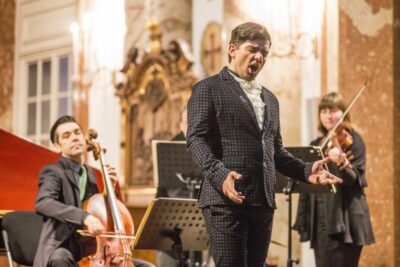
Vivaldi’s Four Seasons Concert in Karlskirche
Read our review →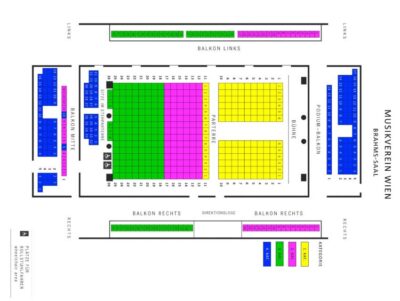
Classical Concert in the World-Famous Musikverein
Read our review →
Mozart Concert at the Musikverein – Golden Hall
Read our review →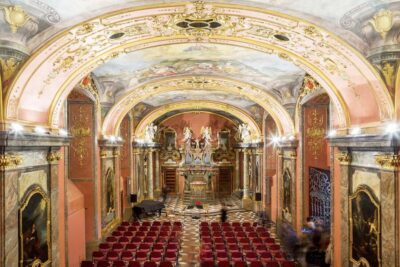
Entry Ticket Classical Concert at the Mirror Chapel
Read our review →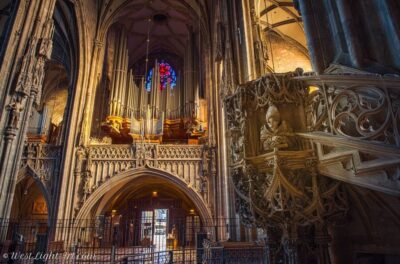
Classical Concert at St. Stephen’s Cathedral
Read our review →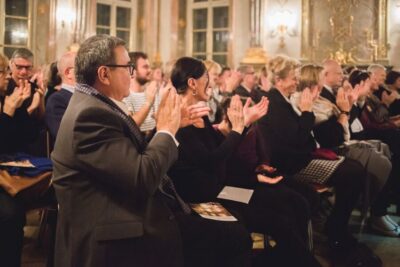
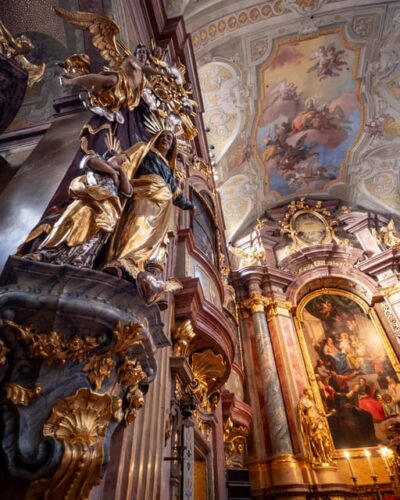
Classical Concert in St. Anne’s Church (Annakirche)
Read our review →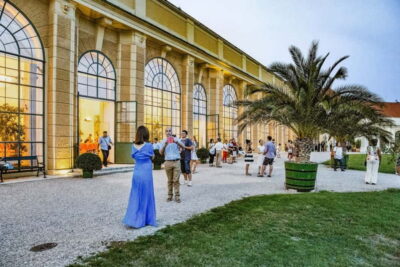
Mozart and Strauss Concert at Schönbrunn
Read our review →Browse the lists this tour appears in