
REVIEW · FRANCE
Harlem in Paris : the Birth of Jazz in France (Small Group Walking Tour)
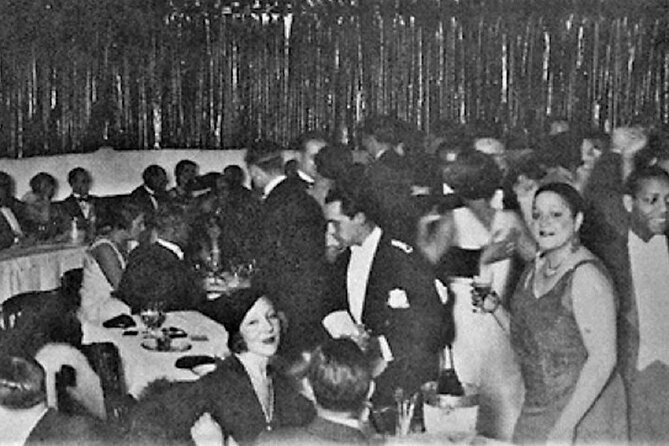
Paris’s jazz story begins in the streets around Pigalle, not in a concert hall. On this private walking tour, Ellen connects former clubs and cafés with the Black American performers who made 1920s Paris a haven for jazz, from Josephine Baker’s daring debut to Louis Armstrong’s dinners and Eugene Bullard’s nightclub empire.
I like the music, photographs, and video clips that turn vanished clubs into real places again. I also like the focus on lesser-known figures such as Valaida Snow and Eugene Bullard, not just the usual names. The main drawback is that many clubs are now closed, vacant, or changed beyond recognition, so you must use your imagination.
Key points to know
- Pigalle’s Black jazz story: Follow the links between Harlem performers, Parisian cabarets, and the birth of jazz culture in France.
- Ellen’s visual presentation: Expect an indoor introduction with photos, recordings, videos, and historical documents before the walk.
- A compact route: The tour covers about 2 kilometers through Pigalle and lasts roughly two and a half hours.
- Famous and forgotten figures: Meet Josephine Baker, Louis Armstrong, Django Reinhardt, Bricktop, Valaida Snow, Alberta Hunter, and Eugene Bullard.
- Private group setting: Only your party participates, giving the guide room to adjust the pace and answer questions.
- Good value for the right audience: At $107.84 per person, this suits visitors who care about jazz, Black history, and Paris beyond the standard sights.
Why Pigalle became Paris’s Harlem
The tour opens a part of Paris that is easy to miss. Pigalle is now known for nightlife, theaters, restaurants, and the Moulin Rouge area, but in the years after the First World War it also became a meeting point for Black American musicians, dancers, singers, club owners, and artists.
The title Harlem in Paris is useful shorthand, but it does not mean that Pigalle was simply an American neighborhood transplanted to France. The point is cultural exchange. Performers from Harlem brought jazz, blues, dance, and new ideas about stage performance. Paris gave many Black artists a degree of artistic freedom and public attention that was harder to find in the United States at the time.
You begin at Artemisia Montmartre, 11 Rue Fromentin, at 2 p.m. The indoor opening matters because the story involves a large cast of people and places. Ellen uses a tablet or presentation format with old photographs, recordings, songs, videos, and documents. This is not just a quick briefing before a walk. The introduction can take about an hour, depending on how the visit is paced.
That setup is especially helpful if you do not already know the difference between early jazz, blues, hot jazz, and the later French Gypsy jazz tradition. The presentation gives you names and sounds to carry into the streets. It also helps you picture the clubs as working music venues rather than ordinary buildings with a famous story attached to them.
More Jazz Shows in Paris:
- New Orleans Steamboat Natchez Jazz Cruise with Dinner Option
★ 4.0 · 7,533 reviews - New Orleans Steamboat Natchez Jazz Cruise
★ 4.5 · 5,334 reviews - New Orleans: Evening Steamboat Jazz Cruise + Optional Dinner
★ 4.3 · 4,548 reviews
Josephine Baker at Place Blanche
The first major figure is Josephine Baker, whose former club was near Place Blanche. Baker arrived in France in 1925 with the New York Syncopated Orchestra and a young clarinet player named Sidney Bechet. She soon headlined the Revue Nègre at the Théâtre des Champs-Élysées.
She was only 18. The show featured 13 dancers and 12 musicians, but Baker quickly became its central attraction. Her performance was daring, erotic, and completely unlike the polished stage routines Parisian audiences expected. The French press and public turned her into an instant star, later calling her the Black Venus.
The stop gives useful context to her later life in France. Baker became a French citizen and remained connected to the country until her death in 1975. She was not simply a visiting entertainer. She built a long life here and became part of French public culture.
The club itself is no longer a working venue, so do not expect an interior visit or a preserved jazz room. You are looking at a location and listening to the story attached to it. Ellen’s photographs and recordings help fill in the missing scenery.
Louis Armstrong, sausage, and Django Reinhardt
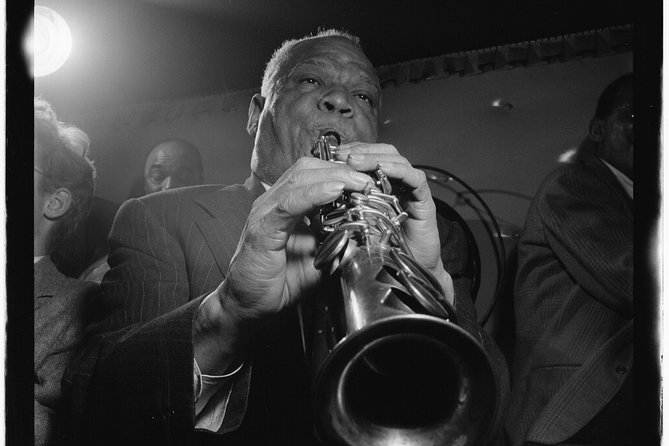
On Rue Mansart, the tour turns to the more ordinary side of jazz history. Louis Armstrong would eat at a bistro here after rehearsals at a nearby recording studio. He discovered choucroute, the Alsatian combination of sausage and cabbage, and met Django Reinhardt.
That detail is valuable because it brings the story down from the level of legends. Armstrong was not only a famous trumpet player passing through grand theaters. He also had favorite food, regular places, and encounters with local musicians.
Django Reinhardt represents an important French connection. A Romani guitarist, he became one of the key figures in Gypsy jazz, a style that developed through the meeting of American jazz and European musical traditions. The stop shows how jazz in Paris was never a one-way import. French and European musicians reshaped what they heard.
You spend about 10 minutes here. That is enough for a focused story, but not enough for a long musical lecture. If you want a full study of Reinhardt’s guitar technique or Armstrong’s recordings, this tour will leave you wanting more. That is a good sign for a short visit, but it is worth knowing that the experience is an introduction rather than an academic course.
Zelli’s and the remarkable life of Eugene Bullard
Rue Pierre-Fontaine brings you to the former site of Zelli’s, one of the most fashionable and adventurous jazz cabarets in 1920s Paris. The club was known for avant-garde jazz and drew a lively audience.
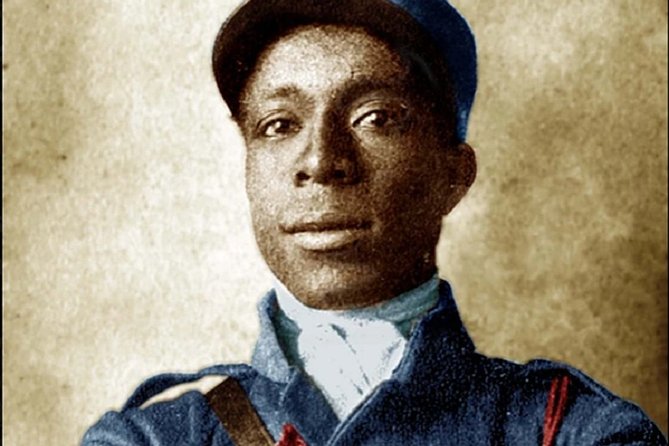
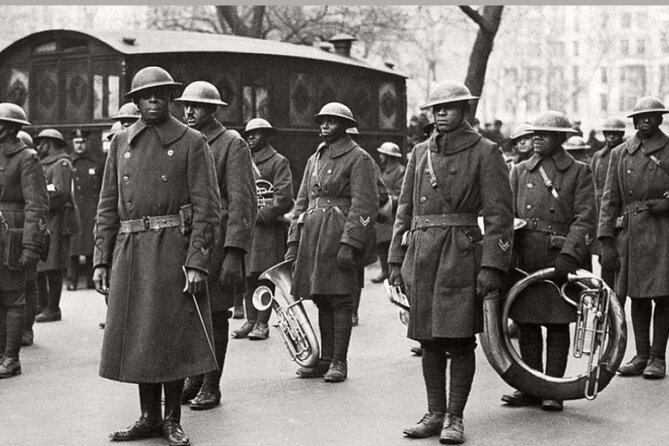
Here the tour introduces Eugene Jacques Bullard, one of its most striking figures. Bullard was the son of a formerly enslaved man from Martinique. During the First World War, he fought for France and became the first African American fighter pilot in history.
Bullard flew 30 missions and brought down two German aircraft. France promoted him to corporal and gave him the nickname Black Jacques. After the war, he learned drums and found work at Zelli’s. He eventually became the club’s manager.
With support from Joe Zelli, Bullard opened his own club, the Grand Duc. It combined hot jazz with soul food and became one of the city’s popular nightspots. His story links military service, music, business, and Black life in Paris in a way few standard sightseeing tours cover.
This is one of the strongest sections of the walk because the building site becomes a doorway into several subjects at once. You hear about the club scene, French military history, Black entrepreneurship, and the practical work involved in running a nightclub.
Again, the site may look much less dramatic today than it did in Bullard’s time. You will need to imagine the music, crowds, and food. The audio and visual material helps, but the tour cannot recreate a club that no longer operates.
More Live Music in Paris:
- Paris: 3-Course-Dinner Cruise on the Seine with live music
★ 4.7 · 7,248 reviews - Paris: 4-Course Dinner Cruise on Seine River with Live Music
★ 4.5 · 3,827 reviews - Paris: Gourmet Dinner Cruise on Seine River with Live Music
★ 4.5 · 2,531 reviews - Paris: Opera Garnier and Seine River Cruise Tickets
★ 4.5 · 957 reviews
The women who ruled the clubs
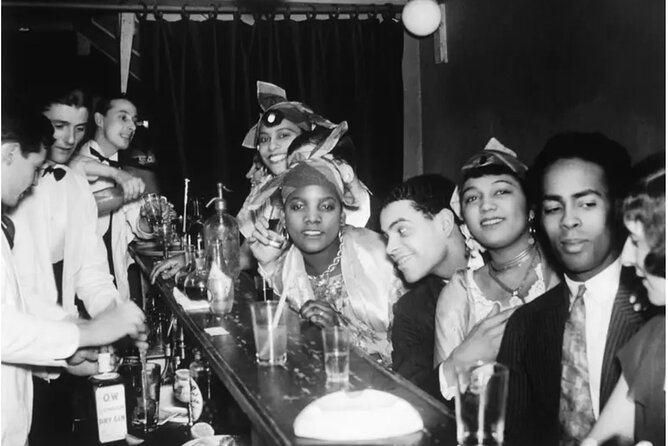
At another stop near Place Blanche, Ellen focuses on women who helped shape Parisian nightlife. This is more than a short add-on to the Josephine Baker story. It gives the tour a broader view of who made the jazz scene work.
Bricktop arrived in Paris with only $24. She built a career and became known as the Queen of Pigalle. Her social circle included royalty, celebrities, and leading artists. Her success shows how a Black American woman could use personality, business sense, and performance culture to gain influence in a foreign city.
Then comes Valaida Snow, a musician whose career deserves far more attention. Louis Armstrong called her the second-best trumpet player in the world. She also played seven other instruments, sang, danced, and performed across Europe.
Snow’s story takes a darker turn during the Second World War. She was arrested by the Nazis in Denmark in 1940 and later freed in a prisoner exchange. She returned to the United States deeply damaged by the experience, but eventually resumed her jazz career.
The story is moving because it does not end with fame. It shows the cost of war and imprisonment, especially for a performer whose identity and career had been tied to movement across borders. The tour gives you enough detail to remember Snow as a person, not simply a name on a list of musicians.
This section lasts about 20 minutes, longer than several of the other stops. That extra time makes sense. Bricktop and Snow show that the Paris jazz scene was not only a story of male bandleaders and famous trumpet players.
Alberta Hunter and the vanished club
On Rue Victor Massé, you hear about Alberta Hunter. The club associated with this stop is closed, a casualty of the Covid period, so the experience again takes place outside rather than inside a functioning venue.
Hunter lived through the Jazz Age in both Harlem and Paris. She was an accomplished blues singer, but in the 1940s she left music and worked as a nurse for 20 years. At age 83, she was persuaded to return to singing.
Her second career became a major success. She returned to the stage with the same distinctive voice and became a star again. For me, this is one of the most encouraging stories on the route. It challenges the usual idea that a performer’s best years must come early in life.
The stop also points to a larger theme: these artists had careers outside the neat period labels we give them. They were not frozen in the 1920s. They worked, changed direction, survived war and prejudice, and sometimes found new audiences decades later.
What the indoor presentation adds
The walking route alone would be interesting, but the visual material makes the experience more useful. You see historical photographs and hear recordings while standing near the places where the musicians performed.
That contrast is the heart of the tour. A modern street may offer little physical evidence of a famous club. A tablet showing the former venue, paired with a recording from the era, gives you a better sense of what has disappeared.
The presentation also suits mixed groups. A jazz expert may recognize Armstrong and Reinhardt but know little about Bullard, Snow, or Hunter. Someone new to jazz can follow the story through faces, sounds, and short sections rather than trying to absorb a long lecture.
The format is not right for everyone. If you want a nonstop outdoor walk, the opening presentation may feel too long. One person found that less than half the tour was spent walking, while other descriptions place the indoor introduction at about an hour and the outdoor route at about an hour. The advertised duration is approximately two hours and 30 minutes, so plan for a substantial seated portion.
Walking conditions, group size, and pace
The outdoor route covers about 2 kilometers through Pigalle. It is a manageable distance, and the route has been described as easy to walk with a stroller. Most people can participate, and service animals are allowed.
The tour begins at Artemisia Montmartre and ends at Place Pigalle. Since the end point is different from the start, plan your onward route rather than assuming you will return to Rue Fromentin. The area is served by public transportation.
The experience is listed as a private activity, so only your group participates. That is a useful advantage if you want to ask questions or pause over a story. It also means the price is easier to assess by group size. At $107.84 per person, the cost is high for a short city walk if you are mainly paying for steps and scenery. It becomes more reasonable if you value the research, music, visual material, and private format.
Group discounts are available. If you are traveling with family or friends, check how the final cost changes before booking.
Who will get the most from this tour
You should consider this tour if you enjoy jazz, blues, Black history, Parisian nightlife, or cultural stories that sit outside the main sightseeing route. It is particularly good for visitors who want to understand how American performers affected French culture rather than simply visit another famous monument.
Families can also make it work. The music and photographs help keep the subject concrete, and the route is not long. Still, the presentation includes war, racism, imprisonment, and difficult personal histories, so parents should decide if the subject suits their children.
The tour is less suited to you if you are looking for live jazz, preserved club interiors, food, or a broad tour of Black writers and artists in Paris. James Baldwin, for example, is not part of this experience because the focus is jazz and the performers connected to the 1920s and later music scene.
Food and drinks are not included. You may be seated at a hotel or café setting during the introduction, but do not book this expecting a meal or a tasting.
Weather and cancellation details
The walk requires good weather. If poor weather cancels the experience, you are offered another date or a full refund. The same applies if the minimum number of participants is not reached.
You can cancel for a full refund up to 24 hours before the 2 p.m. start time. Changes or cancellations made less than 24 hours before departure are not accepted for a refund.
The tour is offered in English. Confirmation is provided when you book, and the meeting point is clearly specified as Artemisia Montmartre at 11 Rue Fromentin.
Should you book Harlem in Paris?
Book it if you want a thoughtful, music-led look at Pigalle and you are happy to combine an indoor presentation with a modest walking route. Ellen’s preparation, the audio clips, and the stories of performers such as Valaida Snow, Eugene Bullard, and Alberta Hunter give the experience more substance than a simple list of former club addresses.
Skip it if you want a long outdoor tour, functioning jazz clubs, live music, or a lower-cost introduction to Montmartre. The buildings often provide only a setting, and some venues have disappeared entirely.
For the right audience, the price buys access to a carefully assembled story rather than a standard sightseeing circuit. You leave with a better sense of how Black American performers helped reshape Parisian nightlife, and with several names worth exploring after you return home.
FAQ
How long does the Harlem in Paris tour last?
The experience lasts approximately two hours and 30 minutes.
Where does the tour begin and end?
It begins at Artemisia Montmartre, 11 Rue Fromentin, 75009 Paris, and ends at Place Pigalle.
What time does the tour start?
The scheduled start time is 2 p.m.
Is the tour private?
Yes. Only your group participates in the activity.
Is food or drink included?
No. Food and beverages are not included.
What happens if the weather is poor?
If the experience is canceled because of poor weather, you are offered a different date or a full refund.
Just added to the listings in Paris
- Create unique jewelry from top Parisian designer Bijoux Blues★ 4.0 · 2 reviews
- Area ,Opera, Jewellery,Fashion,Palais Royal walking tour★ 5.0 · 47 reviews
- Opera Garnier with private guide★ 4.5 · 21 reviews
- Paris Opera Garnier Private Tour★ 5.0 · 42 reviews
- Sunset Picnic with View of Eiffel Tower and Live Music★ 5.0 · 15 reviews
- Private Opera Garnier Theater 2-Hour Tour in Paris★ 5.0 · 45 reviews
- Opera Garnier Mysteries Private Guided Tour with Skip-the-Line Entrance★ 5.0 · 49 reviews
- 2 Hour Private Opera Garnier Guided Tour★ 5.0 · 11 reviews
Jazz Shows, compared.
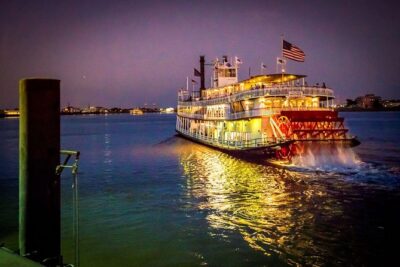
New Orleans Steamboat Natchez Jazz Cruise with Dinner Option
Read our review →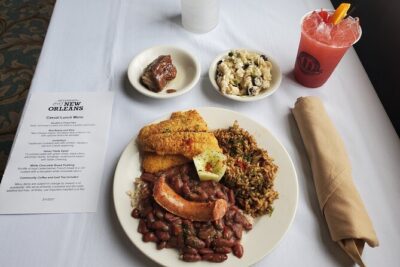
New Orleans Steamboat Natchez Jazz Cruise
Read our review →
Evening Steamboat Jazz Cruise + Optional Dinner
Read our review →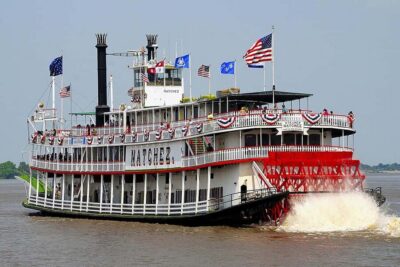
Daytime Steamboat Jazz Cruise + Optional Lunch
Read our review →
Jazz Boat Popular Live Jazz Dinner Cruise
Read our review →
Catamaran Cruise with optional Live Jazz Music
Read our review →
Paddlewheeler Creole Queen Jazz Dinner Cruise in New Orleans
Read our review →Browse the lists this tour appears in