
REVIEW · CHINA
Jinjiang Theater:Eight-Face Changing-Legendary Sichuan Opera
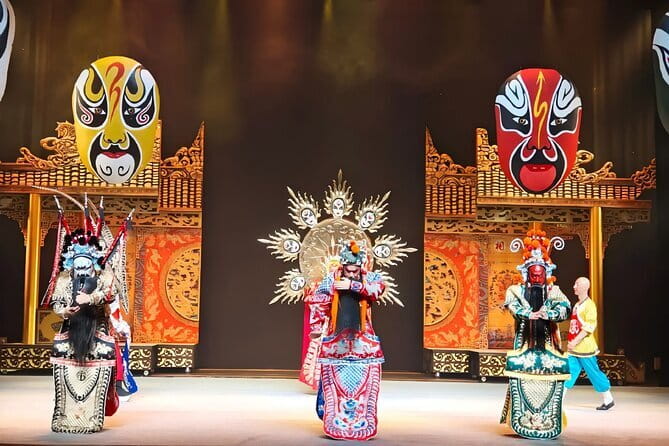
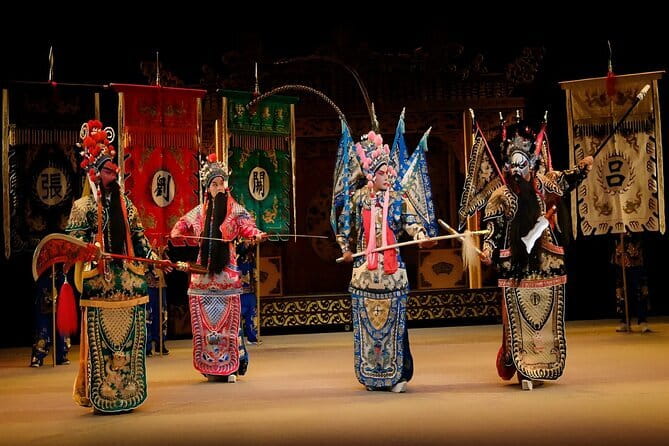
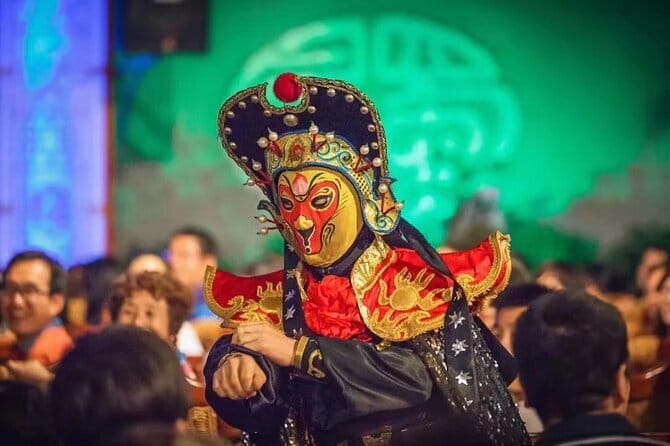
The star here is eight-face changing, a Sichuan opera feat presented as part of a larger 70-minute stage show. Masks shift in an instant, fire flashes across the stage, and traditional opera shares the bill with puppets, acrobatics, dance, and tea culture. The story follows Little Sanqing, a young performer who suffers betrayal and hardship before mastering the craft.
I like the easy central location near Tianfu Square, and I like that the ticket includes a bowl of covered-bowl tea at Yuelai Tea House next door before the curtain. The main consideration is that seats are randomly assigned within your ticket section, so you cannot choose your exact view.
Key points to know before you book
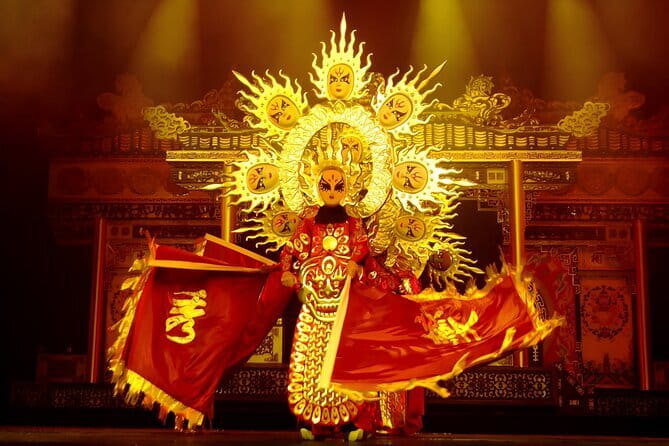
- Eight-face changing: Watch the special performance that gives the show its name, with eight masks changed in one continuous act.
- A story rooted in Chengdu: The drama takes place at Sanqinghui, the historic site where Jinjiang Theater now sits.
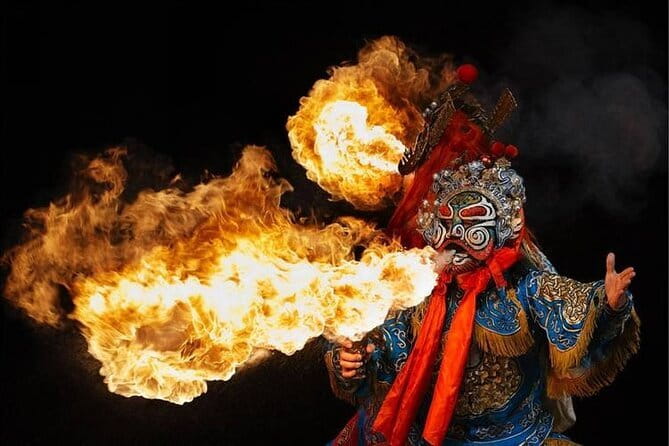
- More than face-changing: Expect opera excerpts, fire breathing, hand shadows, puppets, fan and sleeve dances, and acrobatics.
- Tea comes with the ticket: Present your ticket serial number or QR code at Yuelai Tea House one hour before the show.
- Central theater location: Jinjiang Theater is at No. 54 Huaxing Street, near Tianfu Square.
- Family-friendly format: One adult ticket includes one child under 1.2 meters without a separate seat.
Why the eight-face act is only part of the appeal
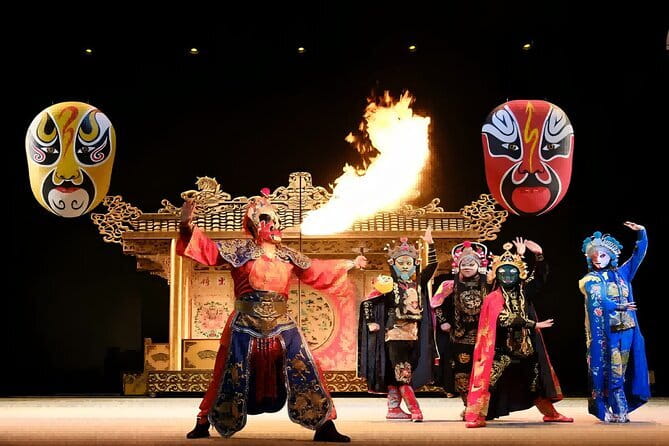
Many people come to Sichuan opera hoping to see face-changing. That is sensible. The technique is fast, mysterious, and hard to explain until you see it happen on stage. This production adds a special eight-face version, making the central trick more elaborate than the usual short demonstration.
Still, I would not treat the show as a single magic act. The program is built as a broad introduction to Sichuan opera and related stage arts. You get singing, recitation, stylized movement, martial arts, costume changes, fire breathing, and comic or acrobatic pieces. The result is closer to a compact cultural showcase than a full-length opera with one continuous plot.
That format works well if you want a first look at Chengdu’s performance traditions without giving up an entire evening. It also suits families and mixed-age groups, since the program keeps changing its visual language. A quiet opera scene may give way to hand shadows, a drum-kicking routine, or a bright dance number within minutes.
The tradeoff is that the many short sections can feel less focused than a traditional opera presented from beginning to end. You will see a lot, but you may not get a detailed explanation of every character, gesture, or musical form.
More Chinese Opera Shows in Chengdu:
- Chengdu: Sichuan Opera Shu Feng Yan Yun Evening Show Ticket
★ 4.7 · 185 reviews - Chengdu Sichuan Opera Show Ticket – Shu Feng Ya Yun
★ 4.4 · 73 reviews - Chengdu: Sichuan Opera Show Ticket – Shu Feng Ya Yun
★ 4.8 · 30 reviews
Little Sanqing and the story behind the masks
The main narrative follows Little Sanqing, a serious opera student practicing at Sanqinghui in Chengdu. His master eventually agrees to take him as a disciple, giving the young performer a path into the stage world.
Little Huanhua falls in love with him, but their relationship is threatened by Young Master Ma. He takes Little Huanhua away by force and orders his men to burn Little Sanqing’s face. Forced into hiding, Little Sanqing wears a mask and continues training in secret.
That plot gives the face-changing technique a human reason to exist. The masks are not only a trick for the audience. In the story, they become part of Little Sanqing’s survival and his determination to become an artist. After years of hardship, he perfects the eight-face change in one continuous performance.
Little Huanhua later finds him, and the two return to the stage together. The story is melodramatic, as you might expect from a traditional theater tale, but it gives the evening a thread to follow between the individual acts. It also presents the performers’ long struggle to preserve and develop Sichuan opera.
The setting matters, too. Sanqinghui is presented as one of the historic birthplaces of Sichuan opera, and the modern Jinjiang Theater occupies that location. You are not watching the show in an abstract concert hall. The theater’s setting connects the production to Chengdu’s own stage tradition.
What happens during the 70-minute program
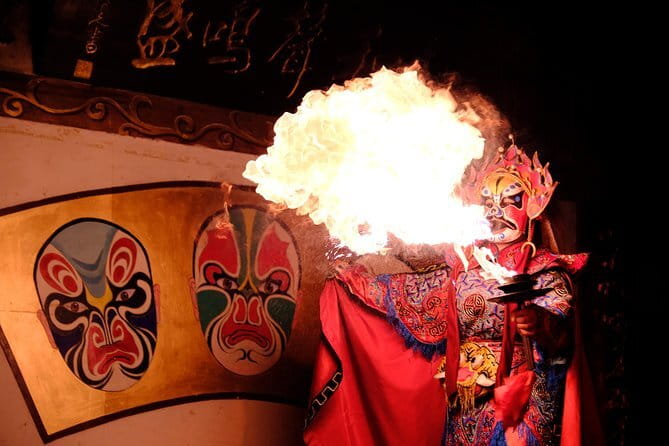
The performance moves through a series of set pieces. Exact pacing can vary, but the published program gives you a clear idea of the evening’s range.
Three Heroes Fight Lü Bu
The program opens with a Sichuan opera excerpt based on the famous confrontation involving the Three Heroes and Lü Bu. This section introduces the formal movement and martial energy of the genre.
Sichuan opera does not rely only on realistic fighting. Performers use stylized gestures, precise footwork, costume movement, and rhythmic action to suggest combat. If you are new to Chinese opera, watch the hands, eyes, sleeves, and turns as closely as the larger fight scenes.
More Live Music in Chengdu:
- Sichuan Culture Opera Show in Chengdu
★ 4.5 · 69 reviews - Chengdu Sichuan Opera Evening Show Ticket-Shu Feng Yan Yun
★ 5.0 · 15 reviews - Chengdu: Sichuan Opera Show ShufengYayun & Covered Bowl Tea
★ 4.2 · 14 reviews - Shu Feng Ya Yun Sichuan Opera Ticket
★ 5.0 · 13 reviews
Hand shadow art and market-style magic
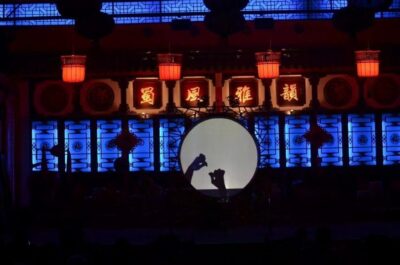
Hand shadow art brings a quieter kind of skill to the program. Simple movements create recognizable shapes through light and shadow, offering a change from the colorful stage action.
The production also uses acrobatics and magic in the spirit of old market performances. These sections help show how popular entertainment and formal opera have long shared techniques and audiences. They are especially useful for keeping the show accessible when you do not understand spoken Chinese.
Umbrella kicking and other acrobatics
Umbrella kicking is one of the more playful physical acts. Performers use control, balance, and timing to keep the umbrella in motion while maintaining the rhythm of the routine.
Other acrobatic pieces include multi-person drum kicking. The point is not simply to show strength. The performers must coordinate movement, percussion, and spacing, giving the act a strong visual pulse.
You may also see balancing acts and aerial silk dance as part of the broader stage design. These additions increase the spectacle, but they also move the production away from a strict opera recital. That is helpful if you prefer variety, but less ideal if you want only traditional opera.
Hidden knife and releasing Pei
The hidden knife act is listed as a Sichuan opera specialty, while Releasing Pei is presented as another opera excerpt. These shorter segments give you more examples of the genre’s special skills and dramatic conventions.
Not every piece will be easy to follow without translation. The show is designed around visual action, so you can still understand the mood and basic conflict even when the words are unfamiliar. An English-speaking host or greeter is available, but that does not mean every sung line receives a full English explanation.
Fire breathing and rolling lantern
Fire breathing is one of the evening’s most direct crowd-pleasers. It also shows how Sichuan opera combines disciplined stage technique with danger and surprise.
Rolling Lantern is a traditional specialty linked to comic physical performance. Its appeal comes from controlled movement and timing rather than a long story. Together, these acts give the program a lively middle section before it returns to larger theatrical pieces.
Puppets, face-changing, and the eight-face finale
The puppet show, The Beauty of Life, offers another change in scale. Puppet theater shares the stage with opera because both depend on gesture, rhythm, costume, and visual storytelling.
The standard face-changing specialty follows, then comes the exclusive eight-face changing performance. This is the point to watch carefully. The masks appear to change instantly, and the technique is performed with such speed that you may miss part of it if you look away.
The act is best understood as a traditional stage skill rather than a puzzle you are expected to solve. The production does not invite you backstage or explain the mechanics. Its success depends on keeping the method hidden while making the transformation clear.
Three costume changes and dance
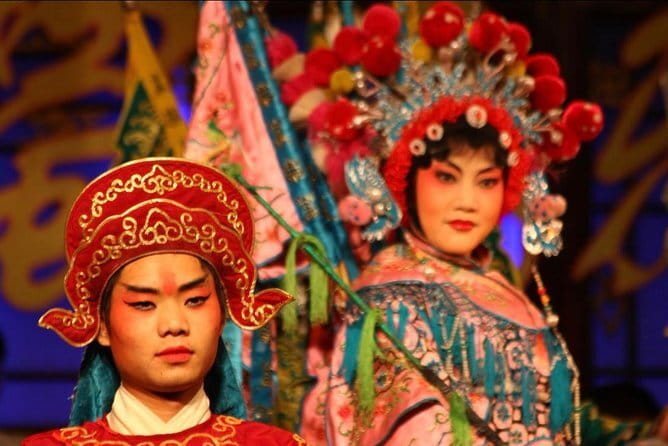
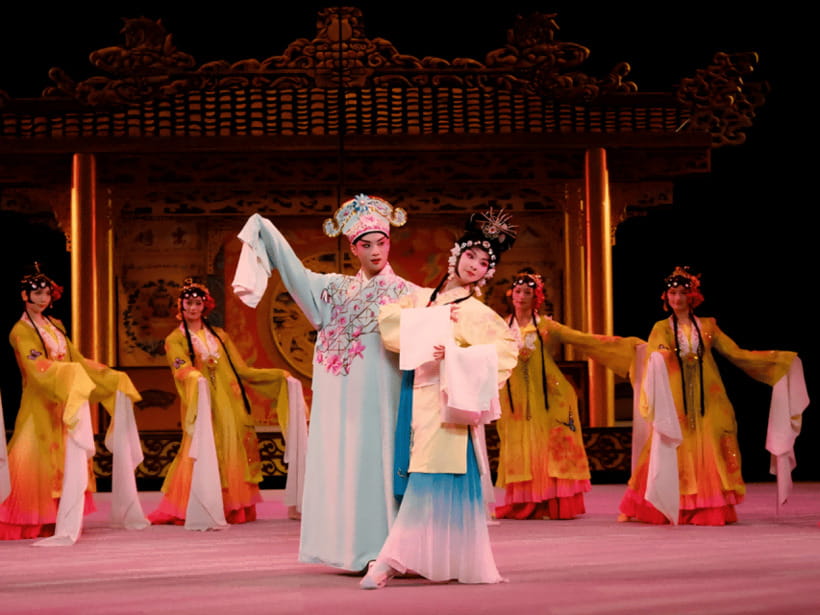
The program also includes three costume changes, a traditional fashion show, water sleeve dance, and ghost immortal dance. These sections show how Sichuan opera uses fabric, posture, and silhouette as part of character.
Water sleeves are long fabric extensions attached to the costume sleeves. Their sweeping motion can express mood, elegance, or dramatic force. The ghost immortal dance shifts the tone again, using stylized movement and theatrical imagery rather than realistic dance.
By the end, you have seen a compressed tour of the stage forms associated with Sichuan opera. You should not expect every act to receive equal time. The benefit is variety. The drawback is that some pieces may leave you wanting a longer performance.
Tea before the curtain at Yuelai Tea House
The included tea is a small but worthwhile part of the experience. One hour before the performance, take your ticket serial number or QR code to Yuelai Tea House, located right next to Jinjiang Theater, and receive a bowl of traditional covered-bowl tea.
This is not just a free drink added to the booking. Gaiwan tea is part of Sichuan social life and tea-house culture. The covered bowl lets you hold the saucer and lid together while drinking, using the lid to keep leaves away from your mouth. It gives you a simple connection to a local custom before the stage show begins.
Allow time to find the tea house and redeem the drink. Your ticket details are essential. The serial number or QR code is required for the tea, and the theater also requires the ticket information for entry.
You should check your email before leaving for the theater. Look for the ticket serial number, QR code, seat number, address instructions, contact information, and ticket collection directions. Without these details, you cannot enter the theater. If the email has not arrived, contact the service provider before the performance.
Location and timing near Tianfu Square
Jinjiang Theater is at No. 54 Huaxing Street in Luoma City, Jinjiang District, Chengdu. Its central position near Tianfu Square makes it easier to fit into a day of sightseeing than a theater far outside the city center.
The show lasts 70 minutes. Starting times vary, so check availability for the date you want. I would arrive early enough to collect or confirm your ticket, redeem the tea, and get settled without rushing.
The activity begins and ends at the theater. No transport, hotel pickup, meal, or optional activity is included. That keeps the arrangement simple, but you are responsible for reaching Huaxing Street on your own.
Seats are assigned randomly within the designated ticket area. You receive a selected seat category, not a choice of exact seat. If seeing every mask movement clearly is important to you, read the seat category carefully before booking and keep your expectations realistic.
Is the 20 dollar ticket good value?
At about $20 per person, the ticket offers a lot of variety in a short time. It includes the theater entry, a selected seat, and covered-bowl tea next door. You are also seeing a production that combines several traditional forms rather than paying only for a brief face-changing demonstration.
The value is strongest if you want a convenient introduction to Chengdu culture. You get opera, acrobatics, puppetry, fire breathing, costume changes, and dance in one 70-minute program. The central location can also save time and planning effort during a busy city visit.
The value is less clear if you already know Sichuan opera well or want a long, serious presentation of one complete opera. The show is built for broad appeal, with quick transitions and strong visual effects. It is not a scholarly lecture or a full traditional opera performed without modern additions.
A complimentary tea adds a useful local touch, though it should not be the main reason you book. Think of it as part of the pre-show setting rather than a separate tea ceremony.
Who will enjoy this show most?
I would recommend it to first-time visitors to Chengdu who want an easy introduction to Sichuan opera. The program gives you the famous face-changing act while also showing the singing, movement, costumes, and special skills that support it.
Families should find the changing acts appealing, especially the puppets, fire breathing, acrobatics, and colorful dances. Children under 1.2 meters can enter free with one adult ticket, but the child does not receive a separate seat. Children over 1.2 meters require a full-price ticket.
The show also suits couples and independent visitors who want a short evening activity near central Chengdu. The Chinese and English host or greeter can help with basic arrangements, but the performance itself remains primarily Chinese-language and visual.
I would be more cautious if you dislike theatrical effects, cannot sit through rapid changes between acts, or expect a detailed English translation. Face-changing is the headline, but it shares the stage with many other forms.
Practical rules to remember
Do not bring alcohol or drugs, and do not take food into the theater. Video recording is not allowed during the performance, so keep your phone away once the show begins.
This rule matters here. Face-changing depends on stage secrecy and the artists’ rights to their work. You can take in the act more fully when you are not trying to film a transformation that happens in a fraction of a second.
The ticket is tied to the email information you receive. Save the QR code and serial number on your phone, and keep the seat number available. If you did not receive the email, contact SUKHA Travel before going to the theater.
Free cancellation is available up to 24 hours in advance, and you can reserve now and pay later. Those options help if your Chengdu schedule is still shifting.
Should you book Jinjiang Theater?
Book this experience if you want a short, central, visually varied introduction to Sichuan opera with the famous eight-face technique at its center. The tea, historic setting, and mix of acrobatics, puppetry, fire breathing, and dance make the $20 price reasonable for a first visit.
Skip it if your main goal is a complete opera with extensive translation or a carefully chosen seat. For most visitors, though, Jinjiang Theater offers an efficient way to see why face-changing is only one part of Sichuan opera’s appeal.
FAQ
How long does the Jinjiang Theater performance last?
The performance lasts 70 minutes. Starting times vary, so check availability for the date you plan to attend.
Where is Jinjiang Theater?
Jinjiang Theater is at No. 54 Huaxing Street, Luoma City, Jinjiang District, Chengdu, Sichuan Province, near Tianfu Square.
What does the ticket include?
The ticket includes theater entry, a selected seat, and one complimentary bowl of covered-bowl tea at Yuelai Tea House next to the theater.
How do I collect the included tea?
Show your ticket serial number or QR code at Yuelai Tea House one hour before the performance begins. The tea house is located right next to Jinjiang Theater.
Do I need a QR code to enter?
Yes. You need the ticket serial number, QR code, and seat number provided by email to enter the theater. Contact the service provider if you do not receive these details.
Are seats assigned in advance?
Seats are randomly assigned within the designated ticket area. You do not select the exact seat.
Can children attend for free?
One adult ticket includes one child under 1.2 meters free of charge, but the child does not occupy a separate seat. Children over 1.2 meters require a full-price ticket.
Can I record the performance?
No. Video recording is not allowed, and food is also prohibited inside the theater.
Just added to the listings in Chengdu
- Classsic sichuan Opera at sichuan Provincial Theater★ 5.0 · 4 reviews
- Shu Feng Ya Yun Sichuan Opera Ticket★ 5.0 · 13 reviews
- Sichuan Opera Show with Hotel Pickup★ 5.0 · 3 reviews
- Skip the Line: Sichuan Opera Chengdu Ticket★ 4.0 · 8 reviews
- Sichuan Opera with face-changing at Sichuan opera theater★ 4.5 · 6 reviews
- Chengdu Signature Opera Face Changing and Tea★ 5.0 · 7 reviews
- Jinjiang Theater: Eight-Face Changing-Legendary Sichuan Opera★ 5.0 · 6 reviews
- Chengdu Sichuan Opera Evening Show Ticket-Shu Feng Yan Yun★ 5.0 · 15 reviews
Chinese Opera Shows, compared.
Sichuan Opera Shu Feng Yan Yun Evening Show Ticket
Read our review →
Chengdu Sichuan Opera Show Ticket – Shu Feng Ya Yun
Read our review →
Traditional Cultural Show Peking Opera Tickets
Read our review →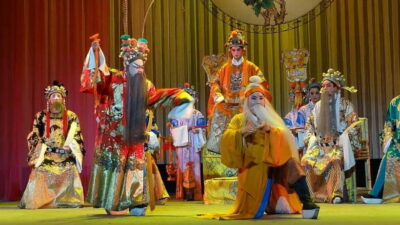
Beijing LiYuan Theatre VIP Seats Opera Show with Private Transfer Service
Read our review →Sichuan Opera Show Ticket – Shu Feng Ya Yun
Read our review →
Chengdu Sichuan Opera Evening Show Ticket-Shu Feng Yan Yun
Read our review →Browse the lists this tour appears in