
REVIEW · FRANCE
Paris: Classical Music Concert in Saint-Julien-le-Pauvre
Paris does many things well, but classical music in a medieval church is hard to beat. At Saint-Julien-le-Pauvre, the Ensemble Royal and two guest soloists perform familiar works by Vivaldi, Mozart, Handel, and Saint-Saëns in a small stone setting beside Notre Dame.
I like the short 65-minute format, which fits neatly into a busy sightseeing day, and the close-up setting, where the solo violin and soprano can carry real emotional force. The Latin Quarter location also makes dinner or an evening walk easy.
The main drawback is simple: old churches are not concert halls. Some seats have a limited view of the musicians, and several people found the chairs uncomfortable. Announcements may also be difficult to understand through the microphone.
Key points at a glance
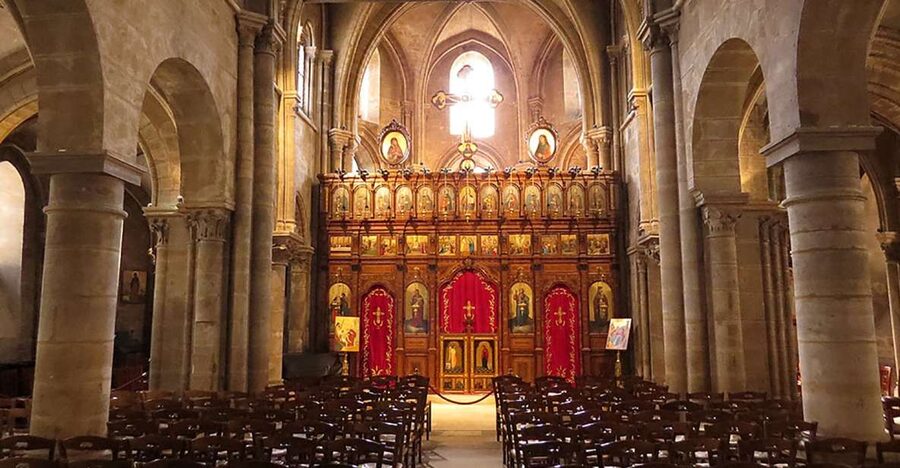
- A medieval setting: Saint-Julien-le-Pauvre is one of Paris’ oldest religious buildings, with the stone acoustics and quiet character you hope for in a church concert.
- Familiar classical favorites: Hear selections including Vivaldi’s Spring and Summer, Mozart’s Lacrimosa, Handel’s Largo, and Saint-Saëns’ The Swan.
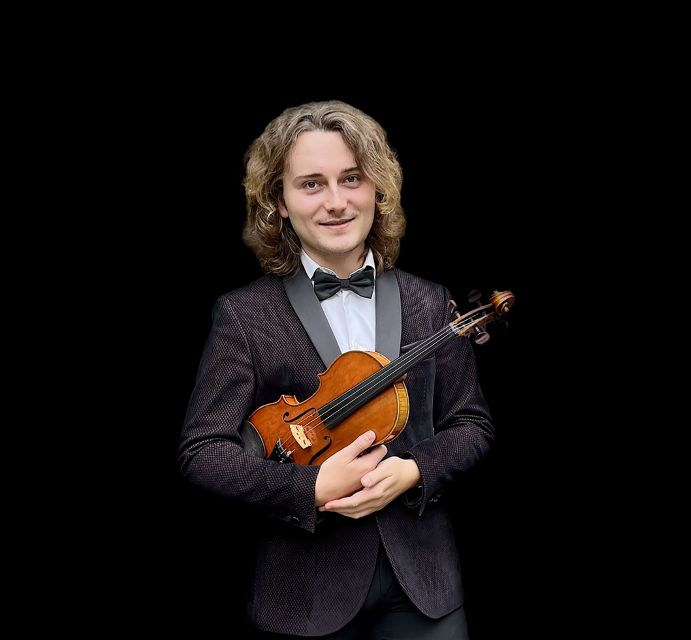
- A featured violin soloist: Dorian Rambaud has been associated with especially memorable performances of Vivaldi’s Four Seasons.
- Two guest soloists: The program adds vocal and instrumental color beyond the ensemble, with soloists such as soprano Olga Voljnovic appearing in past performances.
- A practical evening length: The concert lasts about 65 minutes, though some performances have run longer.
- A useful Paris location: The church sits in the Latin Quarter, close to Notre Dame, restaurants, traditional streets, and other central sights.
Why this small church concert works so well
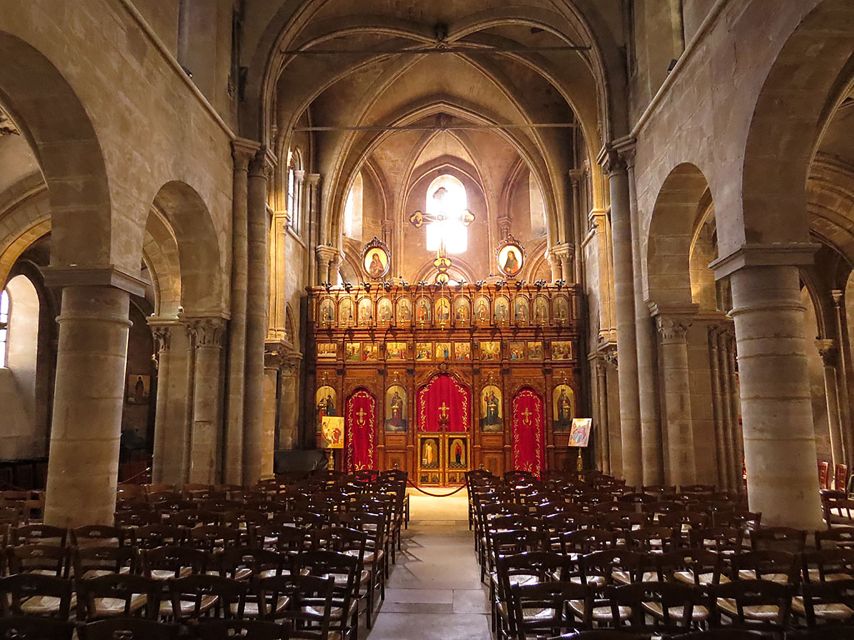
The setting does much of the work before the first note. Saint-Julien-le-Pauvre is a small, ancient church near the Seine and Notre Dame, not a grand opera house with sweeping balconies and polished modern lighting. Its medieval character is more modest and personal.
You enter a place built for worship, not spectacle. Stone walls, old architectural details, and a hushed interior give the concert a sense of occasion without requiring formal dress or a long evening.
I especially like the way the venue changes familiar music. You may already know Vivaldi’s Four Seasons or Mozart’s Requiem, but hearing those pieces in an old church gives the sound a different weight. The music seems to belong to the room.
The church is also small enough to make the performance feel close. You are not watching tiny figures far across a stage. Depending on your seat, you can see the musicians’ playing and the soloist’s movements clearly.
That closeness has limits. A church is shaped for sound, not perfect sightlines. One person seated at the back noted that the music was easy to hear but the performers were harder to see. If watching the violinist matters as much as listening, arrive with enough time to settle into a favorable seat if seating is not assigned.
More Classical Concerts in the world:
- Vienna: Vivaldi’s Four Seasons Concert in Karlskirche
★ 4.7 · 14,951 reviews - Vienna: Classical Concert in the World-Famous Musikverein
★ 4.6 · 6,673 reviews - Vienna: Mozart Concert at the Musikverein – Golden Hall
★ 4.6 · 5,194 reviews
The program: Vivaldi, Mozart, Handel, and Saint-Saëns
The music is designed to please a broad audience. This is not a program built around obscure modern works or a long lecture about musical theory. You get recognizable pieces with clear melodies and strong emotional contrast.
Vivaldi’s Spring and Summer usually gives the evening its most energetic stretch. The solo violin has room to lead, and the piece rewards close listening as the ensemble shifts between brisk passages and softer moments.
The violin soloist is a major part of the experience. Dorian Rambaud has been singled out for striking performances of Vivaldi, and one past concertgoer described his playing as the highlight of the evening. The exact soloist can vary by performance, so check the date-specific information when booking.
Mozart’s Lacrimosa, from the Requiem, brings a darker mood. In a stone church, the solemnity of the music feels particularly natural. You do not need to know the full Requiem to appreciate the piece. Its slow, mournful lines are direct and accessible.
Handel’s Largo from Xerxes offers a calmer pause. It is a good example of why this type of concert works for mixed groups. A serious classical listener gets recognizable repertoire, while someone with only a casual interest in classical music can follow the melody without preparation.
Saint-Saëns’ The Swan adds another gentle change of pace. The program may also include other selections, and performances can vary. Past programs have featured Vivaldi’s Four Seasons and an operatic Ave Maria, so do not assume every date will contain exactly the same works.
The inclusion of two guest soloists matters. A solo violin gives the program speed and sparkle, while a soprano adds the human voice, with its direct emotional pull. Olga Voljnovic has appeared as a guest soprano in past performances, alongside Dorian Rambaud.
What the 65-minute format feels like
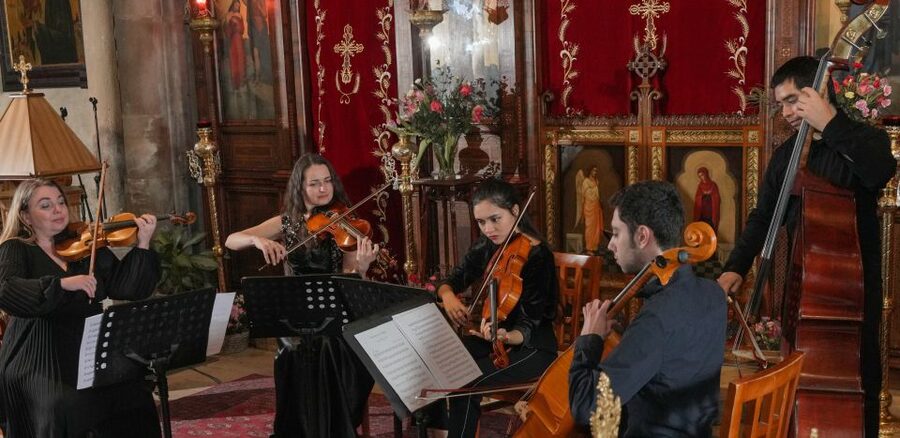
The advertised duration is 65 minutes. That is long enough to feel like a real concert, but short enough to fit around a day at the Louvre, a Notre Dame visit, or dinner in the Latin Quarter.
I consider this one of the strongest practical features. Paris evenings can become tiring after hours of walking, and a full symphony performance may be too much for a packed schedule. This concert gives you a focused musical experience without taking over the night.
Some performances have lasted closer to 90 minutes, so the actual length can vary. Treat the 65 minutes as the planning figure and leave extra time if you have a restaurant reservation immediately afterward.
The pace should suit first-time concertgoers. You sit, listen, and let the room do its work. There is no complicated transfer, guided walk, or multi-stop schedule to manage.
The program’s familiar titles also make it a safe choice if your group has mixed tastes. You can enjoy the sound without knowing the history of every composer. If you already attend classical concerts often, the appeal is less about discovering rare repertoire and more about hearing well-known pieces in a memorable place.
Arriving at Saint-Julien-le-Pauvre
The meeting point is directly in front of the church. Staff members meet you there and direct you to your seat.
Pay close attention to the building. A church across the road can look more traditionally churchlike, and one person nearly went to the wrong entrance. Saint-Julien-le-Pauvre can be easy to miss if you are hurrying through the Latin Quarter, so give yourself time to identify the correct building.
The location is one of the best parts of the plan. After Notre Dame, you can walk over for the concert. Before the music, you can explore the nearby streets. Afterward, the Latin Quarter offers plenty of restaurants and traditional Parisian atmosphere.
The central location does not mean the church feels noisy once you are inside. The performance gives you an hour of calm in one of the city’s busiest sightseeing areas.
The host or greeter can communicate in French or English. The activity is listed as wheelchair accessible, though the church’s historic design may still make it sensible to ask about the exact seating arrangement when booking if you have particular mobility needs.
More Live Music in the world:
- Venice: La Fenice Opera House Entry Ticket with Audio Guide
★ 4.6 · 11,742 reviews - Sydney: Opera House Guided Tour with Entrance Ticket
★ 4.8 · 8,312 reviews - New Orleans Steamboat Natchez Jazz Cruise with Dinner Option
★ 4.0 · 7,533 reviews - Budapest Danube Cruise and Dinner Options, Live Music and Dance
★ 4.5 · 7,428 reviews
Sound, sightlines, and seating
The acoustics are a major strength. Several performances have been praised for clear sound, which is not always guaranteed in a stone church. Some historic venues create a muddy echo, but Saint-Julien-le-Pauvre appears to handle the ensemble and soloists well.
You should expect a natural church acoustic rather than studio-perfect sound. The music may linger in the room, especially during slower pieces. That lingering quality helps Mozart and Saint-Saëns, though fast passages can feel less sharply separated from one note to the next.
The small space keeps the sound personal. A soprano does not need to fight the scale of a large auditorium, and the violin can remain expressive without being amplified into something harsh.
Sightlines depend on where you sit. From the back, you may hear the performance perfectly while seeing less of the musicians. If visual access is important to you, arrive early and ask the staff about the best available position.
The chairs are another modest concern. One older visitor found the seating uncomfortable. For most people, 65 minutes should be manageable, but if you need extra support, this is worth keeping in mind.
The announcements may also be less clear than the music. At least two people had trouble understanding the spoken introduction because the microphone made the voice fuzzy. This is a minor issue if you mainly want the concert itself, but it can frustrate you if program explanations are important.
How much value do you get for $46?
At $46 per person, this is not the cheapest way to hear music in Paris. It is also not simply a ticket to hear an ensemble in an ordinary room. You are paying for three things at once: live musicians, a historic venue, and a central location that saves time.
The value is strongest if you already plan to spend time around Notre Dame and the Latin Quarter. You can combine sightseeing, dinner, and the concert without crossing the city. That makes the ticket feel more reasonable than a performance requiring a separate trip across town.
The short length helps, too. You receive a concentrated program rather than committing to an entire night. For a couple or small group looking for one special Paris activity, the cost can compare well with other evening entertainment.
The value is less clear if you want a full-scale orchestral concert, a formal concert hall, or a long program with extensive interpretation. This is an intimate church performance built around popular classical works. It should not be judged by the standards of the Philharmonie de Paris.
You also receive no food or drink, so plan those separately. That is easy in this neighborhood, where restaurants are close, but your evening budget should include dinner if you want to make a full night of it.
Who will enjoy this most
I would recommend this concert to several kinds of people:
- First-time classical concertgoers who want familiar music and a welcoming setting.
- Couples looking for a quiet Paris evening that feels more personal than a large tourist show.
- Notre Dame visitors who want to add a cultural activity nearby.
- Music lovers on a short schedule who cannot spare an entire evening.
- Families with older children or teenagers who may respond better to recognizable pieces than to a long formal program.
- Visitors seeking a slower hour after a hot or crowded day of sightseeing.
It is less suitable if you need guaranteed front-row views, highly supportive seating, or a detailed spoken explanation of every selection. It may also disappoint you if you prefer experimental repertoire or a large orchestra with heavy brass and percussion.
The emotional side of the performance should not be underestimated. A well-played soprano piece or solo violin passage can feel more immediate when you are close to the performers and surrounded by old stone. Several concertgoers described leaving in a reflective mood, and that makes sense: the format gives the music room to settle rather than rushing you toward the next attraction.
Pair the concert with the Latin Quarter
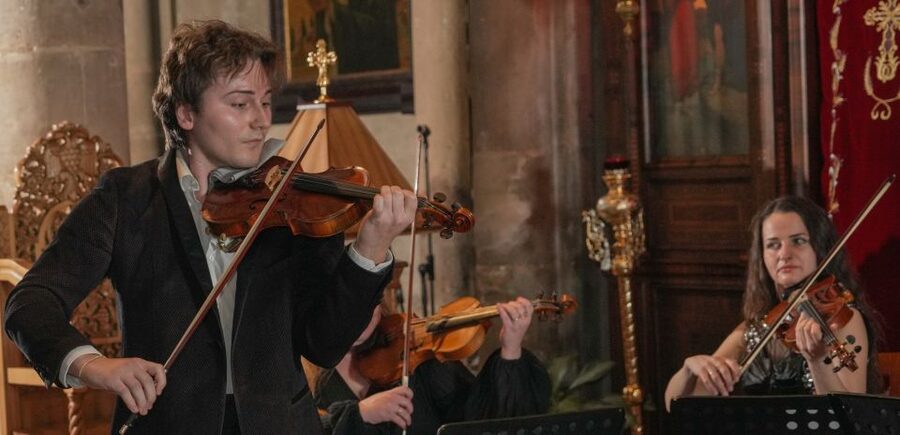
This is not an experience that ends when you leave the church. The setting gives you an easy evening plan.
You can visit Notre Dame nearby, walk through the older streets of the Latin Quarter, then attend the concert. Or reverse the order and finish with dinner after the music. The neighborhood has many traditional restaurants, so you do not need to arrange a complicated transfer.
I like the second option for most people. A 65-minute concert followed by a relaxed meal lets the evening continue without watching the clock. It also gives you a chance to talk about the performance while the music is still fresh.
The church’s location makes this especially useful on a first Paris visit. You can place the concert between major sights instead of treating it as a separate excursion. That saves energy and leaves room for the kind of wandering that often becomes a favorite part of a Paris day.
Booking and planning advice
Cancellation is free up to 24 hours before the activity for a full refund. You can also reserve now and pay later, which helps if your schedule is still shifting.
Check the available starting times for your date. The duration is listed as 65 minutes, but some performances have run longer, so leave breathing room before your next fixed plan.
Meet the staff in front of Saint-Julien-le-Pauvre, not at a nearby church. The warning matters because the surrounding buildings can look similar when you are approaching quickly.
I would arrive with enough time to find the entrance and ask about seating. This is especially useful if you want a clear view of the musicians or need accessible seating.
The concert is offered with French and English hosting. Do not expect every announcement to be perfectly audible, though. The spoken introductions may be less clear than the music itself.
Should you book it?
Book this concert if you want familiar classical music in an unusually intimate Paris setting. The strongest reasons are the medieval church, the excellent acoustics, the talented soloists, and the easy Latin Quarter location.
I would choose it over a larger concert hall when I wanted atmosphere and convenience. I would choose something else if I needed flawless sightlines, padded seating, a full symphonic program, or extensive commentary.
For $46, it is a fair-value cultural evening, especially when you combine it with Notre Dame and dinner nearby. The music is the main event, but the old church is what makes the experience stick with you.
FAQ
How long does the concert last?
The listed duration is 65 minutes. Some performances have lasted longer, including one reported duration of about 90 minutes, so allow extra time afterward.
Where does the concert take place?
It takes place inside Saint-Julien-le-Pauvre church in Paris’ Latin Quarter, near Notre Dame.
What music is performed?
The program includes works such as Vivaldi’s Spring and Summer, Mozart’s Lacrimosa from the Requiem, Handel’s Largo from Xerxes, and Saint-Saëns’ The Swan. The exact program may vary by performance.
Who performs the concert?
The Ensemble Royal performs with two guest soloists. Past performances have featured violinist Dorian Rambaud and soprano Olga Voljnovic.
Is the concert suitable for someone new to classical music?
Yes. The program centers on well-known classical favorites rather than difficult modern works, making it approachable if you do not regularly attend classical concerts.
Is the venue wheelchair accessible?
The activity is listed as wheelchair accessible.
What languages are available?
The host or greeter can communicate in French and English. Spoken announcements during the concert may not always be easy to understand.
Are food and drinks included?
No. Food and drinks are not included, but the church is in the Latin Quarter, close to many restaurants.
Just added to the listings in the world
- Beijing: Night Tour Of Peking Opera Show / Transfer★ 4.3 · 5 reviews
- Barcelona: Jam Session – Jazz, Cocktails and Tapas★ 4.8 · 19 reviews
- Barcelona: Taste 5 Spanish Wines paired with Live Music★ 5.0 · 3 reviews
- Beijing Culture Event: Tea Ceremony, Music Show, Calligraphy★ 5.0 · 5 reviews
- Bangkok: ThreeSixty Jazz Lounge at Millennium Hilton★ 4.0 · 8 reviews
- Barcelona: Solo Piano Intimate concerts in Barcelona★ 4.9 · 9 reviews
- Bangkok: Party Boat Cruise with DJ and Live Music★ 4.3 · 3 reviews
- Bali Phinisi Cruise: Sunset Dinner with Live Music & Buffet★ 3.7 · 18 reviews
Classical Concerts, compared.
Vivaldi’s Four Seasons Concert in Karlskirche
Read our review →
Classical Concert in the World-Famous Musikverein
Read our review →
Mozart Concert at the Musikverein – Golden Hall
Read our review →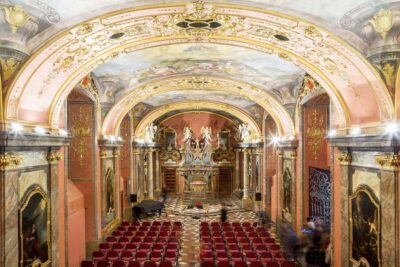
Entry Ticket Classical Concert at the Mirror Chapel
Read our review →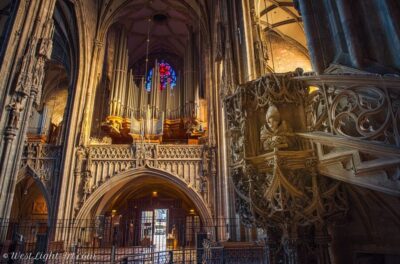
Classical Concert at St. Stephen’s Cathedral
Read our review →
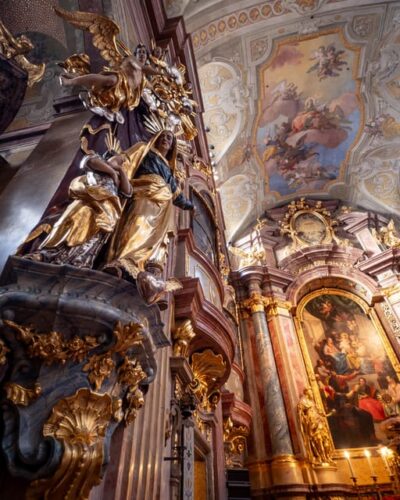
Classical Concert in St. Anne’s Church (Annakirche)
Read our review →
Mozart and Strauss Concert at Schönbrunn
Read our review →Browse the lists this tour appears in