
REVIEW · AUSTRALIA
Sydney: Opera House Guided Tour In Your Language
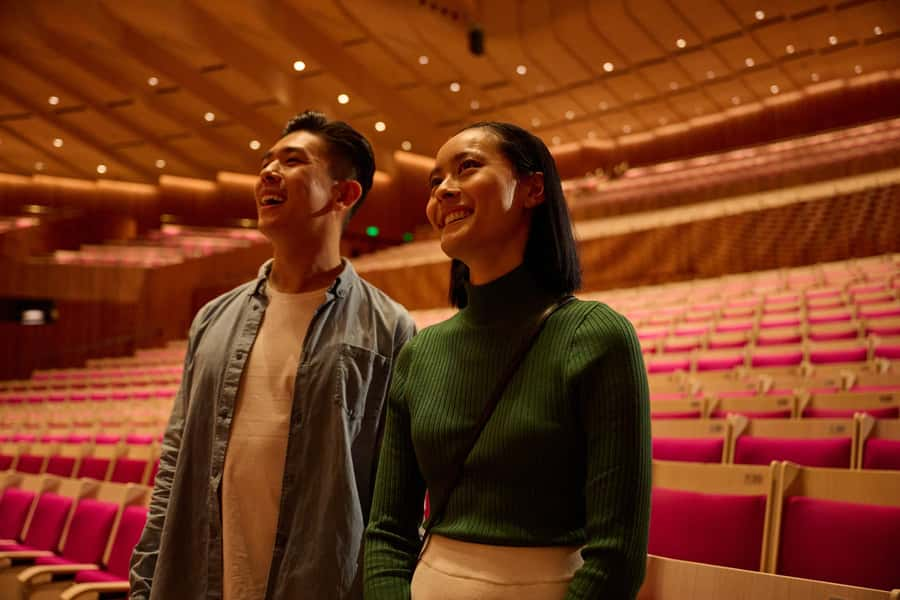
Sydney Opera House is more than a striking roofline. This tour takes you inside the working building, where Jørn Utzon’s daring design meets theater crews, rehearsals, foyers, and performance halls. You may even see a set being prepared or catch part of a rehearsal.
I like the choice of four language options, especially for visitors who want architectural details without translating in their heads. I also like the chance to enter theater and foyer areas that are not always open to casual sightseers, with photo positions beyond the usual outdoor viewpoints.
The main catch is the 300 stairs. This is a walking tour through an active performing arts venue, not a relaxed look from one flat room. Wheelchair users need to arrange an Access Tour directly with the Opera House instead.
Key Points to Know Before You Book
- The tour goes inside the working Opera House: You see halls, foyers, and theater spaces rather than only the famous exterior.
- Four language choices are available: Tours are offered in Chinese, Traditional Chinese, Korean, and Japanese.
- The route includes about 300 stairs: Comfortable shoes are essential, and the tour is not suitable for wheelchair users.
- The visit lasts 30 minutes to one hour: Check the available starting time, since the length and schedule can vary.
- You may see theater work in progress: A rehearsal or set construction may be taking place during your visit.
- The price is $24 per person: That is a reasonable fee for interior access and a live guide, especially if architecture matters to you.
Why Going Inside Changes the Opera House
From outside, Sydney Opera House is easy to reduce to a postcard: white sails, blue harbor, and a dramatic position at the end of Bennelong Point. The interior explains why the building caused such a stir.
As you move through the halls and foyers, you get a better sense of the building as a machine for live performance. The tour connects the public spaces with the practical work behind them. You might see crew members preparing a set or catch a rehearsal in progress. That possibility gives the visit a useful sense of place. This is not a sealed museum display. It is a venue still preparing for performances.
The guide explains the building’s story, materials, structure, and design. A recent Korean-language tour was praised for covering how the Opera House was built, the materials used, and the way its structure works. Those details matter because the building’s unusual shape can look simple from a distance. Inside, you start to understand how much planning sits behind those famous curves and shells.
The story itself has plenty of drama. Utzon’s design was remarkable, but the Opera House was not produced without conflict or delays. The tour frames the building’s difficult path in a way that helps you see it as more than a handsome shell. The architecture has a plot, and the plot includes ambitious ideas, technical problems, and major changes.
More Opera House Tours in Sydney:
- Sydney: Opera House Guided Tour with Entrance Ticket
★ 4.8 · 8,312 reviews - Sydney Opera House Official Guided Walking Tour
★ 4.5 · 3,770 reviews - Sydney: Sunrise Kayak, Opera House & Under Harbour Bridge
★ 5.0 · 869 reviews
Meeting at the Lower Concourse Welcome Center
Your starting point is the Welcome Center on the Lower Concourse level. Give yourself enough time to find it and check in before the scheduled departure. The practical lesson here is simple: do not arrive at the sails and assume you can join the group from anywhere.
The check-in point is below the main outdoor areas, so read the meeting instructions carefully before you arrive. One useful improvement would be clearer directions about checking in and where to wait after registration. You should confirm that you have checked in, rather than merely standing near the building’s entrance.
Small bags and prams can be left at the complimentary cloakroom. Large luggage cannot be stored, so this is not a good final stop before heading straight to the airport or train station with a full suitcase. Oversize luggage is not permitted, and baby strollers and baby carriages are listed as unsuitable for the tour. The information also refers to cloakroom space for small prams, so if you are traveling with one, check the exact arrangement before booking.
Beneath the Sails and Into the Foyers
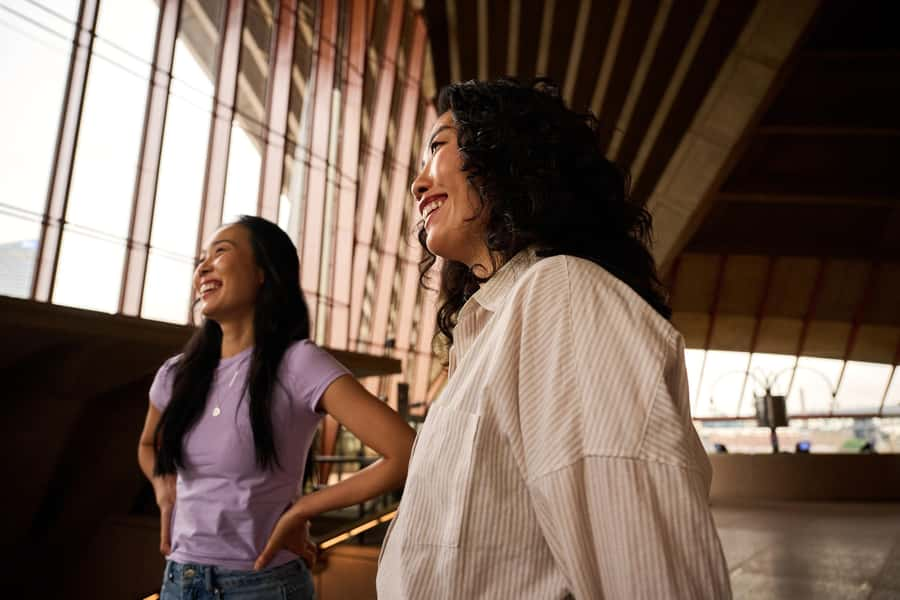
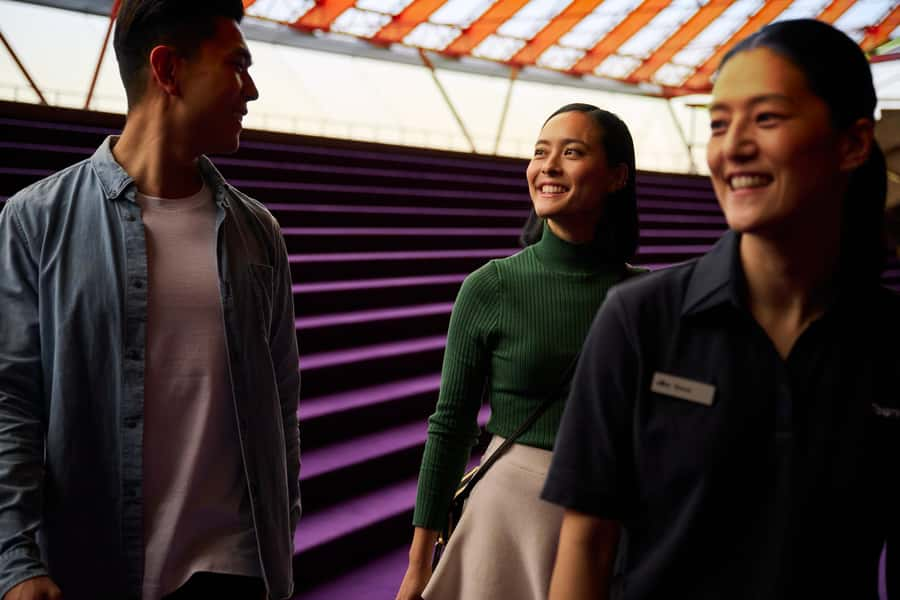
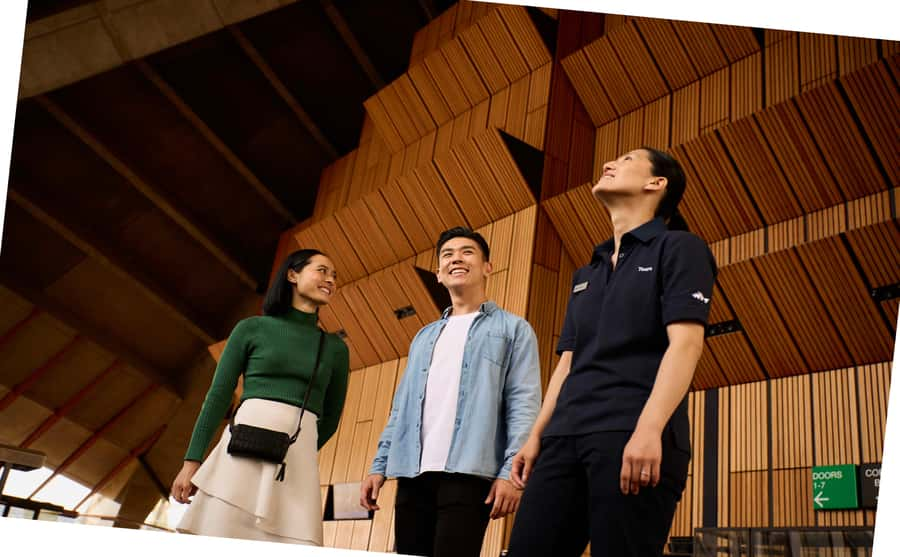
The first reward is the shift from the exterior to the inside. Beneath the roof, the Opera House feels less like a single sculpture and more like a set of connected performance spaces. Your guide leads you through public halls and foyer areas while explaining what makes the building a World Heritage-listed work of architecture.
The route is focused on what you can see and understand on foot. You are not simply standing in front of a model or listening to a short speech outside. You move through the building and see how its spaces support performances, audiences, and backstage work.
The foyers are especially useful for understanding scale. Outdoor photographs show the roof but not the relationship between the entrance spaces, halls, and theaters. Interior vantage points let you look back at the design from angles that are not normally available to people wandering around the site on their own.
The tour can also provide a welcome break from the crowds around the forecourt. That does not mean the building will be quiet. It remains an active venue, and access can depend on what is happening inside on the day of your visit. Still, the guided route gives your time a clear purpose and helps you notice details you might otherwise miss.
Entering the Iconic Theaters
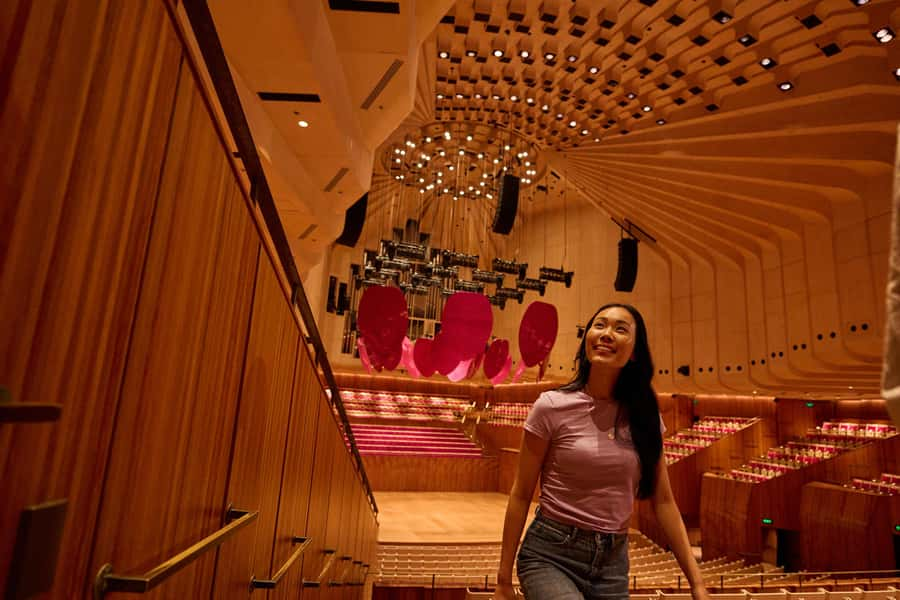
A major part of the appeal is the chance to step into iconic theater spaces and foyers. Exact access is subject to availability at the time of the tour, so you should not treat entry to one particular hall as guaranteed. The building may be preparing for a performance, rehearsing, or working on a set.
That limitation is also part of the charm. The Opera House is not just preserving its past. Its rooms have schedules, crews, and technical demands. A theater may look different depending on what is being installed or rehearsed. If you happen upon this work, you get a brief look at the building as a workplace rather than just a landmark.
The tour gives you context for the rooms you enter. You learn about the materials and construction, then see those ideas in place. The connection between explanation and physical space is the real value here. You are not just told that the building was difficult to construct. You get to observe the result of those design choices from inside.
Photos may be possible in some interior areas. One Japanese-language participant was pleased to get a photograph inside a hall, but access and photography opportunities can vary. Video recording is not allowed. Follow the guide’s instructions, since performance spaces may have special rules on the day.
More Guided Tours in Sydney:
- Sydney Opera House Backstage Guided Tour with Breakfast
★ 5.0 · 329 reviews - Sydney Opera House VIP Experience: Guided Tour, Dinner & Drinks
★ 4.5 · 61 reviews - Sydney: Opera House and Harbour Guided Kayak Tour
★ 5.0 · 27 reviews - Venice: La Fenice Opera House Entry Ticket with Audio Guide
★ 4.6 · 11,742 reviews
The Architecture Story, Explained in Plain Terms
The Opera House can be hard to read if you only see it from a distance. The roofs look like separate shells or sails, but the building’s structure and materials are more involved than the simple exterior image suggests.
Your guide discusses Utzon’s role and the design’s unusual ideas. You will hear about the building’s construction, materials, and structure, with the story placed in the setting where it happened. This is where the tour earns its fee for anyone who enjoys architecture. A photo can show the shape, but it cannot explain the decisions behind it.
I would not book this solely for a long lecture on Australian cultural history. The tour is short, and its focus is the building itself. You get a compact account of the design and the Opera House’s role as a place of performance, not an extended academic presentation.
That short format can work well. A 30-minute tour suits you if you have limited time before another Sydney activity. If your slot runs closer to an hour, you have more room for movement, explanations, and interior stops. Check the available time when booking instead of assuming every departure has the same duration.
What the Stair Count Means in Practice

The tour includes about 300 stairs. That is the most important physical detail in the booking information, and you should take it seriously. Wear comfortable walking shoes, especially if you have already spent the day walking around Sydney.
The stairs also explain why the route offers access to different interior viewpoints. You are moving through a large, layered building rather than visiting one ground-level room. The effort gives you a fuller look, but it makes the tour less suitable for anyone who tires easily on stairs.
Wheelchair users should not book this standard route. If you have mobility concerns, contact the Opera House at [email protected] about an Access Tour. That is the better route to arrange rather than hoping the regular group can be adapted at the meeting point.
The same advice applies to families with very young children. Baby strollers and carriages are not allowed on the tour. Small prams may be left in the cloakroom according to the included information, but you should confirm the arrangement if this affects your plans.
Is $24 a Fair Price?
At $24 per person, the tour is reasonably priced for Sydney, provided you want interior access and a guided explanation. You are paying for an entrance slot, a live guide in your chosen language, and access to parts of the building that are not available through an outdoor visit.
The value is strongest for first-time visitors who already plan to see the Opera House. The exterior is free to view, but the outdoor experience leaves many questions unanswered. This tour fills in the story and lets you see the public interior spaces from close range.
The price is less compelling if you only want photographs of the roof and harbor. You can get those views without a ticket. It is also less suitable if you dislike stairs, have a very tight schedule, or need guaranteed access to a particular theater.
Small-group availability can make the route easier to follow, especially when the guide is speaking in a language you prefer. The listed language options are Chinese, Traditional Chinese, Korean, and Japanese. Book only if you are fluent enough in the selected language to follow architectural and historical explanations comfortably.
Choosing the Right Language and Tour Length
The language choice is more than a convenience. Architecture involves terms about structure, materials, construction, and design. Hearing those ideas directly in Chinese, Traditional Chinese, Korean, or Japanese can make the short tour more useful than relying on partial understanding in English.
Be careful to distinguish Chinese from Traditional Chinese when selecting your option. Choose the language in which you can follow a fast-moving walking explanation without needing to translate every sentence.
The tour duration is listed as 30 minutes to one hour. That range suggests that the route may vary with the day’s access, venue activity, and available spaces. Check the starting times and allow a little breathing room around your booking. You may be moving between several areas, and the Opera House may have operating needs that affect the route.
The building’s access is subject to availability. That means the exact interior stops can change. I see this as a reasonable condition for a working theater, but it is important to know before you book. Anyone seeking one specific hall or a guaranteed photo should keep expectations flexible.
Practical Rules That Matter
The rules are easy to follow if you prepare:
- Wear comfortable shoes because of the 300 stairs.
- Leave large luggage elsewhere because the cloakroom cannot store it.
- Do not bring oversize luggage.
- Do not plan to record video.
- Check in at the Welcome Center on the Lower Concourse.
- Remember that tours do not operate on Christmas Day, New Year’s Eve, or before 11:00 AM on New Year’s Day.
- Allow for the possibility that a rehearsal or set work could affect access.
Cancellation is flexible if your plans are uncertain. You can cancel up to 24 hours before the tour for a full refund, and you can reserve now while paying later. Those terms are useful in Sydney, where weather, harbor activities, and changing schedules can reshape a day.
Who Will Get the Most From This Visit?
I would choose this tour if you want the Opera House explained in your own language and you care about how the building works. It is a particularly good fit for first-time visitors, architecture fans, and anyone who wants more than an exterior photo.
It also suits you if your schedule is tight. A 30-minute option can fit between other sights, while a longer departure gives you a little more time inside. The fee is modest enough to justify adding the tour to a Sydney itinerary when the Opera House is already on your list.
I would skip it if stairs are difficult for you, if you need wheelchair access, or if you are carrying large bags. I would also skip it if you only want the famous harbor view. In that case, enjoy the outdoor setting and spend the $24 elsewhere.
Should You Book the Sydney Opera House Tour?
Book it if you want the building’s story, not just its silhouette. The strongest parts are the language options, the interior access, the explanation of Utzon’s design, and the chance to see a working theater preparing for performances.
Go in with three expectations: the route involves 300 stairs, theater access can change, and video is not permitted. Wear good shoes, check in at the Lower Concourse Welcome Center, and leave your suitcase behind.
For $24, this is a practical way to turn a famous photo stop into a short architectural visit. It is not a full backstage tour or a guaranteed visit to every theater, but it gives you a closer look at one of Sydney’s most important buildings and explains why its design still commands attention.
FAQ
How much does the Sydney Opera House guided tour cost?
The tour costs $24 per person.
How long does the tour last?
The tour lasts between 30 minutes and one hour. Check the available starting times when booking.
Which languages are available?
Live guided tours are available in Chinese, Traditional Chinese, Korean, and Japanese. Book only if you are fluent in the selected language.
Where does the tour begin?
Check in at the Welcome Center on the Lower Concourse level of the Sydney Opera House.
How many stairs are on the tour?
The tour contains about 300 stairs. Comfortable walking shoes are recommended.
Can wheelchair users join the standard tour?
The standard tour is not suitable for wheelchair users. If you have mobility issues, contact the Sydney Opera House about arranging an Access Tour.
Can I cancel or pay later?
You can cancel up to 24 hours before the tour for a full refund. A reserve-now, pay-later option is also available.
Just added to the listings in Sydney
- Sydney Private Full-Day Tour: Opera House, Bondi Beach & Secrets★ 5.0 · 10 reviews
- Sydney LED Lit Kayak Tour of the Opera House and Bridge★ 5.0 · 3 reviews
- Opera Tickets: Turandot at Sydney Opera House★ 4.0 · 4 reviews
- Sydney Opera House Architectural Tour★ 5.0 · 73 reviews
- Sydney Opera House VIP Experience: Guided Tour, Dinner & Drinks★ 4.5 · 61 reviews
- Sydney City Tour | Bondi, Opera House, Bridge & Highlights★ 5.0 · 2 reviews
- Private Sydney Tour Including Sydney Opera House, Bondi and Manly★ 5.0 · 64 reviews
- RENT at the Sydney Opera House★ 4.5 · 21 reviews
Opera House Tours, compared.
La Fenice Opera House Entry Ticket with Audio Guide
Read our review →
Opera House Guided Tour with Entrance Ticket
Read our review →
Sydney Opera House Official Guided Walking Tour
Read our review →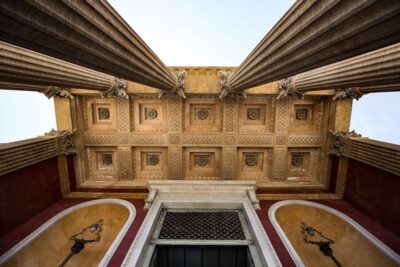
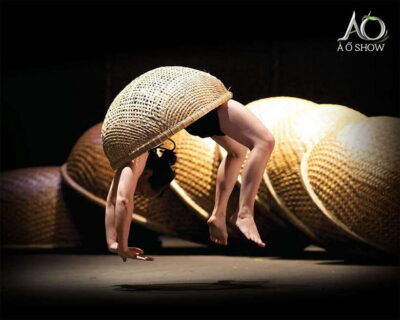
A O Show Bamboo Circus at Saigon Opera House
Read our review →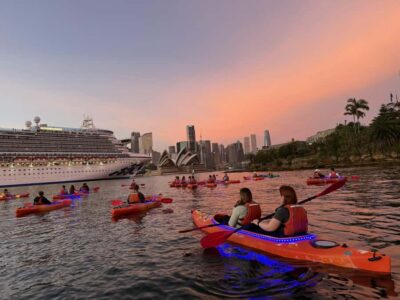
Sunrise Kayak, Opera House & Under Harbour Bridge
Read our review →
Browse the lists this tour appears in