REVIEW · AUSTRIA
Vienna: Classical Concert in St. Anne’s Church (Annakirche)
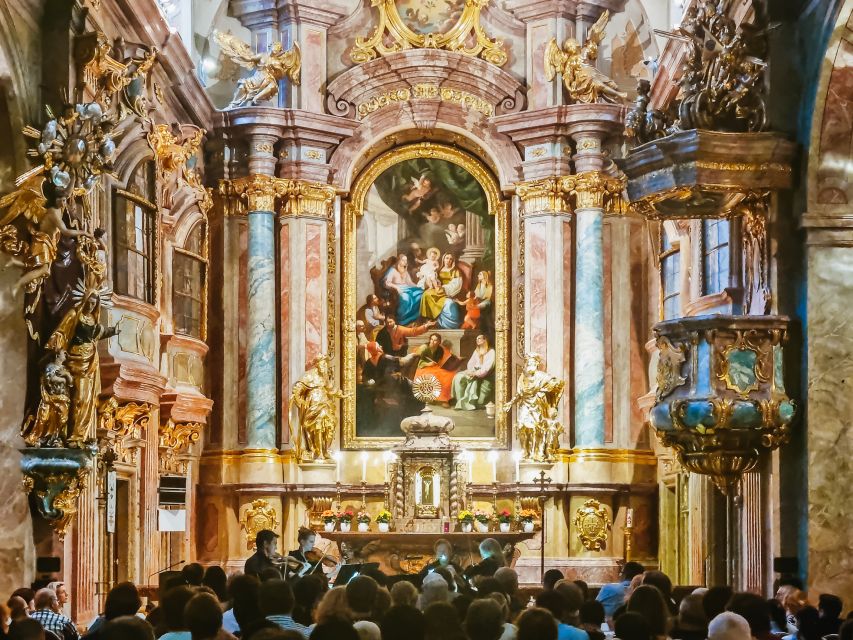
Vienna’s musical past feels unusually close inside St. Anne’s Church, where a small string ensemble plays Mozart, Haydn, Beethoven, or Schubert just a few steps from the audience. I like the honest scale of the evening: this is not a grand opera production, but a focused 70-minute concert in an ornate Baroque church. I also like hearing period instruments, which give the music a lighter, more historical color.
The main drawback is free seating. If you want to see the musicians clearly, arrive 30 to 40 minutes before the 8:00 PM start. Late arrivals, chatting, or a badly placed seat can take the edge off an otherwise lovely evening. The church can also feel warm in summer, so bring water.
Key points to know before you book
- Mozart and Schubert in their home city: Hear complete classical works in Vienna, the city associated with Mozart, Haydn, Beethoven, and Schubert.
- Period instruments: The musicians use instruments modeled on, or dating from, the 18th-century musical world.
- A small, intimate venue: St. Anne’s Church puts you close to the performers rather than far away in a large concert hall.
- Arrive early for front seats: Seating is unassigned, and the best views go to those who arrive well before the concert.
- A short evening commitment: The 70-minute program fits neatly after dinner or into a busy sightseeing day.
- Strong value at $38: You get the concert, a printed program, and a memorable central Vienna setting without opera-house prices.
Why St. Anne’s Church makes the concert special
The church is the star before the first note is played. St. Anne’s Church, or Annakirche, sits on Annagasse 3b in Vienna’s pedestrian center, only about three minutes from the Vienna State Opera. It is also roughly five minutes on foot from the Karlsplatz and Stephansplatz underground stations, so you can reach it without a complicated evening journey.
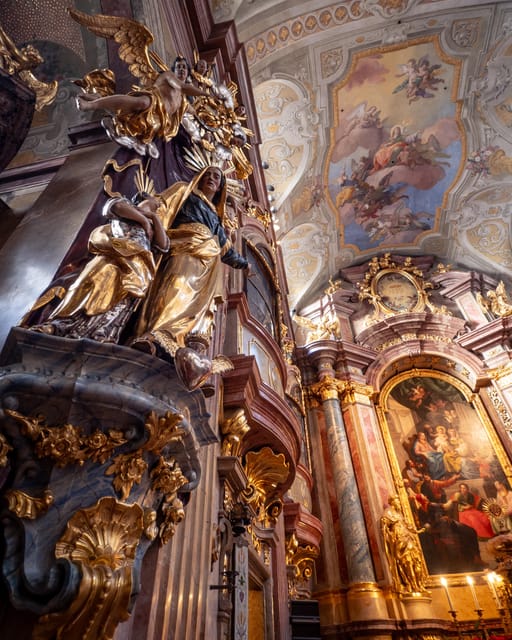
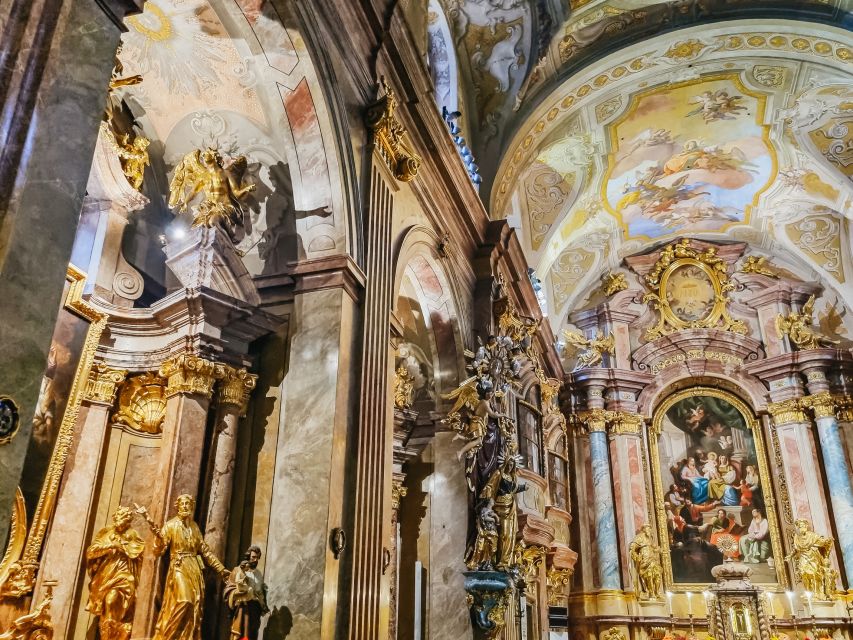
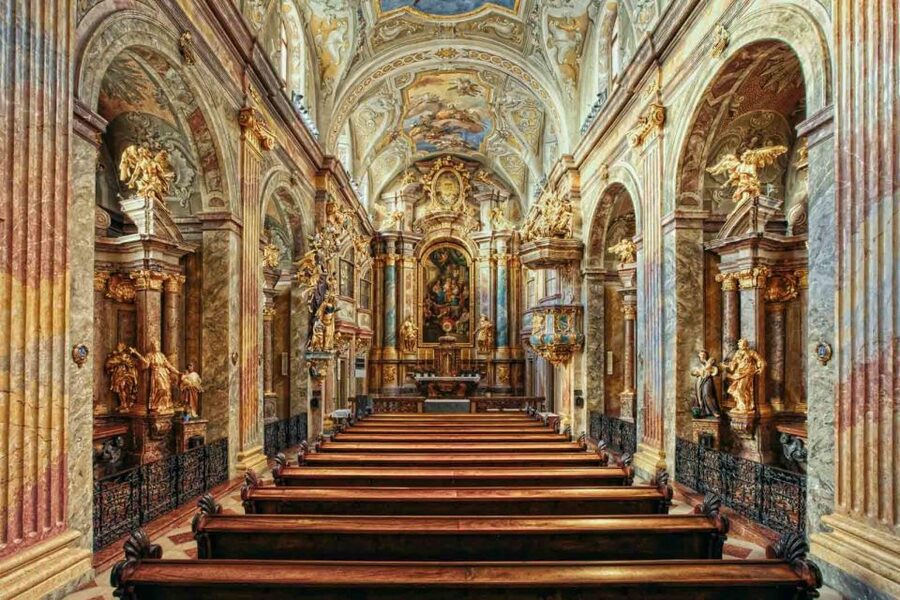
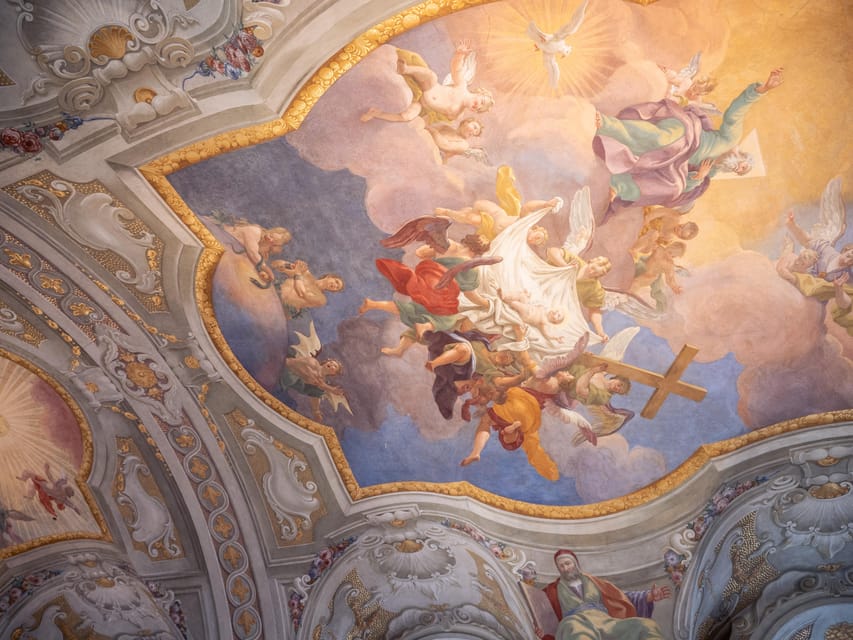
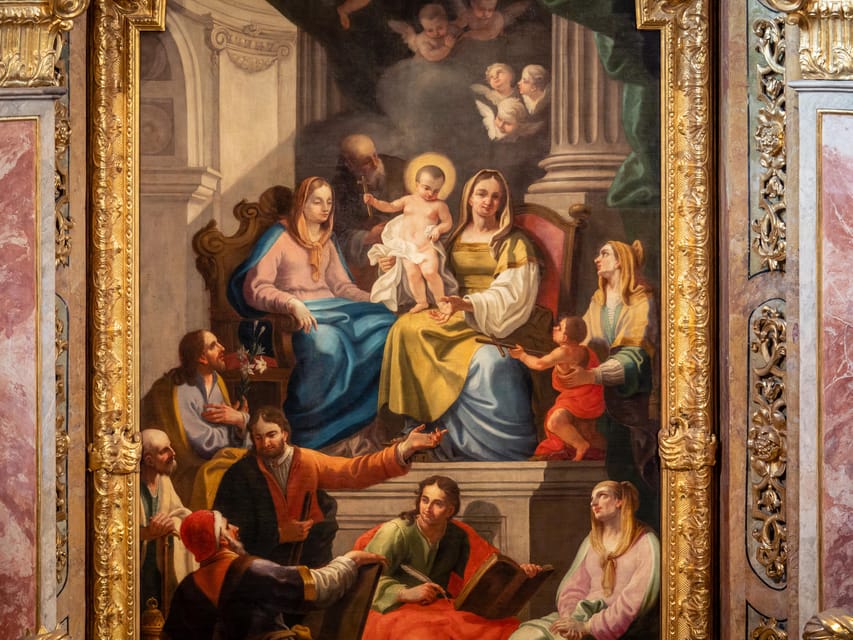
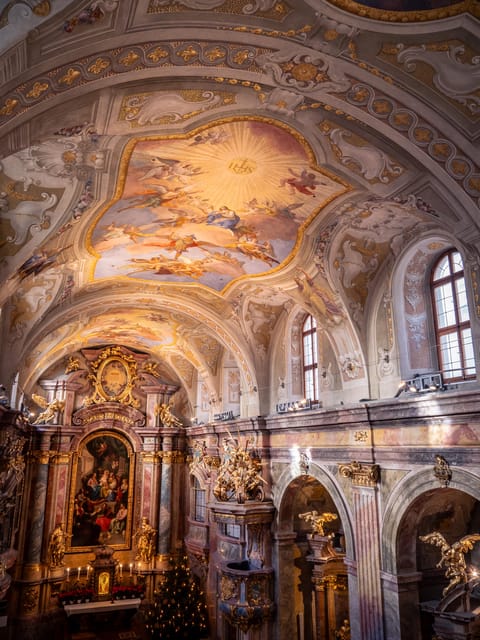
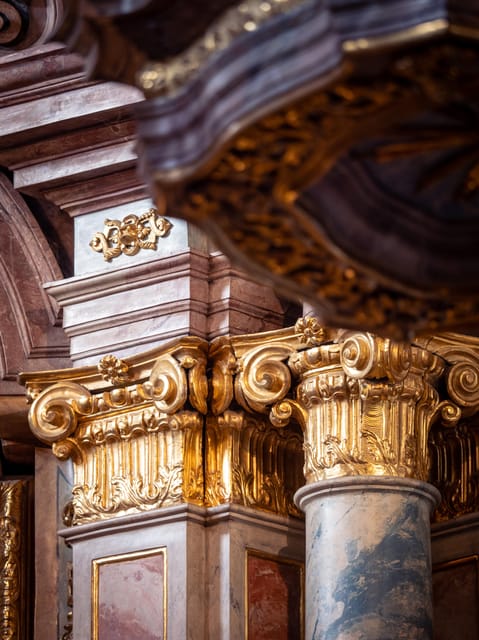
Inside, the church has the compact, highly decorated feel of a Baroque jewel box. Gold ornament, ornate details, and blue marble balconies create plenty to look at while you wait. Careful lighting adds to the mood without leaving the interior too dark. I would give yourself a few minutes to look around before the music begins, since the church itself is part of the experience.
The scale matters. You are not sitting in a vast hall where the performers become distant figures. The string players are close enough for you to watch their bows, hands, and quiet communication. That visual connection makes the music easier to follow, especially if you do not know much about classical music.
The acoustics are another major reason to choose this setting. The church gives the strings a clear, rounded sound, with enough reverberation to make the music feel full without swallowing every detail. An energetic Haydn movement can ring through the room, while a slower passage gains a gentle warmth from the walls.
Church acoustics are not perfect for everyone. The same resonance that adds atmosphere can soften quick musical exchanges. You will also hear the occasional cough or movement more clearly in a small, quiet room. Still, the balance between intimacy and sound quality is one of the evening’s strongest features.
More Church and Cathedral Concerts in Austria
- Vienna Classical Concert at St. Peter’s Church
★ 4.5 · 2,039 reviews - Vienna: Classical Concert in St. Anne’s Church (Annakirche)
★ 4.5 · 1,000 reviews - Vienna: Christmas & New Year’s Concert in St. Peter’s Church
★ 4.6 · 763 reviews
The 70-minute program: what you actually hear
The program is built around the First Viennese School and its close musical relatives. Depending on the evening, you may hear complete works by Mozart, Haydn, Beethoven, or Schubert. The program can also include other music connected to the classical tradition, such as Mendelssohn, as one particularly praised program did.
This is important: you are not simply getting a string quartet playing a string of familiar pop arrangements. The format centers on serious chamber music written for string instruments. That gives the concert more substance than a quick greatest-hits performance, while still keeping the evening accessible.
A Haydn quartet can bring sharp humor, clean rhythms, and sudden changes of mood. Mozart offers balance and grace, with melodies that can sound effortless until you pay attention to the musicians’ precision. Beethoven may feel more forceful and dramatic. Schubert often brings a more lyrical, inward quality.
You do not need a background in music to enjoy the program. I suggest listening for a few simple things instead of trying to identify every technical detail. Notice how one instrument introduces an idea, how another takes it up, and how the group changes volume and pace together. From your seat, you can see this conversation happen.
The program is not announced in full in the information provided, so check the date when booking if a particular composer matters to you. The headline names are Mozart, Haydn, Beethoven, and Schubert, but the exact combination can vary.
Period instruments and the sound of old Vienna
The musicians perform on period instruments, or instruments designed to recreate the sound and playing conditions of the late 18th and early 19th centuries. Some programs use 18th-century instruments, including bows and gut strings rather than the modern versions common in today’s orchestras.
You should not expect the sound to be dramatically strange. Instead, the effect is usually subtler. The strings can feel more transparent, with a different attack and a less heavy tone than a modern ensemble. Fast passages may have a crisp, lively quality, while slower music can sound delicate and direct.
That historical choice adds value because it connects the music to its original setting. Mozart and Haydn were not writing for a modern concert hall with amplified sound. Hearing their music on instruments closer to those of their period, inside an old church, gives the evening a stronger sense of place.
The musicians are drawn from renowned Viennese orchestras, and the performance is presented as a professional chamber concert rather than a casual street-style show. You can expect four string players in the ensemble, based on the concert format described for the experience. The focus stays on ensemble playing, not on theatrical presentation.
I particularly like this approach for first-time classical concertgoers. You get a real work, real instruments, and a compact setting. You do not need to commit to a three-hour opera or learn the conventions of a large concert house first.
Seating, timing, and the best way to arrive
The concert begins at 8:00 PM and lasts about 70 minutes. That makes it easy to pair with dinner in central Vienna, though you should allow time to eat before the performance rather than cutting it close. The concert itself is short enough to leave room for an evening walk afterward.
Seats are free and unassigned. This is the one practical detail that affects the experience most. If seeing the musicians is important to you, arrive 30 to 40 minutes early. That advice comes directly from the seating arrangement and from the way the church fills for popular performances.
A front seat gives you the best view of the players’ hands and instruments. It may also put you close enough to notice the ensemble’s small physical cues. Seats farther back still provide a clear view of the church and a balanced listening position, but the musicians may look smaller.
Some side seats are softer and more comfortable than the regular seating. If comfort matters more than a straight-on view, look for one of these places. At the same time, sitting on the side can change the sound slightly and give you a less direct view of the group.
Late arrivals can be distracting in a small church. So can phone screens, flash photography, or conversation. Recording the performance is not allowed, and you should silence your phone before the lights settle. The quiet setting rewards good concert manners from everyone.
The church is heated during the cold months, which makes this a useful winter activity. In summer, the interior can feel warm. Carry water, especially if you have spent the day walking around Vienna.
More Church and Cathedral Concerts in Vienna
- Vienna: Classical Concerts in the Minorite Church Ticket
★ 4.6 · 658 reviews - Concert at Vienna’s St. Stephen’s Cathedral
★ 4.0 · 432 reviews - Christmas and New Year Concert at St. Peter’s Church in Vienna
★ 4.5 · 155 reviews - Vienna: A Little Night Music – Concert at Capuchin Church
★ 4.8 · 145 reviews
Location and the rest of your evening
Annakirche is in one of Vienna’s most convenient central areas. From the State Opera, it is only a three-minute walk. The nearby pedestrian streets make the approach pleasant, and the surrounding area has cafés and restaurants for a pre-concert meal or a late drink.
The location also works well after a day of sightseeing. You can visit the Hofburg area, walk around the historic center, or stop near Stephansplatz before making your way to Annagasse. The church is close to both Karlsplatz and Stephansplatz underground stations, so you have practical public transport options.
I would not treat this as a full tour of the church. The main event is the concert, and there is no guide or lecture listed. You may have time to admire the interior before the performance, but the experience is designed for listening rather than a detailed architectural explanation.
That is a plus for some people and a limitation for others. If you want a history lesson about Baroque Vienna, choose a dedicated church or city tour as well. If you want to sit quietly in a beautiful historic interior and hear music, the format is just right.
Is $38 a fair price?
At $38 per person, this concert offers good value for a central Vienna evening. The price includes the ticket and a free concert program. You are paying for live chamber music, professional performers, a historic venue, and a convenient location near major sights.
Vienna has more expensive classical options, especially at major concert halls and opera venues. Those productions may offer a larger orchestra, more elaborate staging, or a more formal setting. St. Anne’s Church offers something else: closeness, atmosphere, and a modest time commitment.
The value is strongest if you care about the setting as much as the music. You are not only buying 70 minutes of sound. You are spending the evening beneath Baroque decoration, with the church’s acoustics shaping the performance.
There are cheaper ways to hear music in Vienna, including free or low-cost events at certain times of year. But the combination of a professional string ensemble, period instruments, a central location, and a guaranteed seat is hard to dismiss at this price.
The concert is also a sensible choice if you cannot get tickets to the Vienna State Opera or prefer not to spend an entire evening at an opera. It gives you a genuine classical experience without the dressy scale or longer running time of a major production.
Who will enjoy this most?
I would recommend this for first-time classical concertgoers, couples looking for a quiet evening, and anyone who wants a cultural activity that fits neatly into a packed Vienna itinerary. You can enjoy the program without recognizing every piece or knowing anything about music theory.
It also suits experienced listeners who care about period performance and chamber music. The close seating lets you watch the players work together, and the church adds a sound that a modern hall cannot copy.
Families with older children may find the 70-minute length manageable, but the quiet atmosphere requires patience. Children who need to move around may struggle more here than at a casual outdoor performance.
You should think twice if you need a guaranteed front-row seat, dislike church seating, or want a large-scale spectacle. This is a small concert in an ornate religious building. Its appeal is concentration, not showmanship.
The biggest praise goes to three things: the musicians’ skill, the church’s beauty, and the acoustics. Those are exactly the areas where this experience delivers. The main cautions are modest, but real: free seating, possible distractions, and warmth during summer performances.
Should you book the St. Anne’s Church concert?
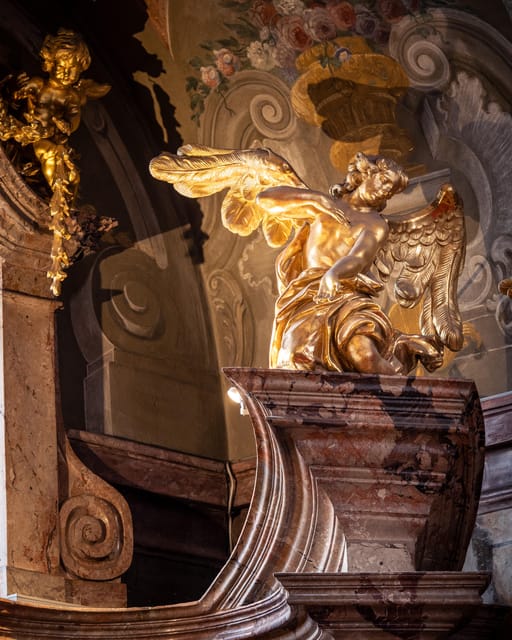
I would book it if you want an affordable and polished classical music evening in central Vienna. Arrive around 7:20 PM for a good chance at front seating, take time to examine the blue marble balconies and gold details, and expect a serious chamber program rather than familiar tunes arranged for tourists.
The experience is especially worthwhile when you want to finish a busy sightseeing day quietly. You get period instruments, strong musicianship, excellent acoustics, and one of Vienna’s most atmospheric small venues for $38.
Skip it only if you require assigned seating, a detailed guided explanation, or the scale of a full opera-house production. For everyone else, this is a smart, compact way to hear the music of Vienna in a setting that feels connected to it.
FAQ
Where is St. Anne’s Church located?
St. Anne’s Church is at Annagasse 3b in central Vienna. It is about a three-minute walk from the Vienna State Opera and roughly five minutes from the Karlsplatz and Stephansplatz underground stations.
What time does the concert begin?
The concert begins at 8:00 PM.
How long does the concert last?
The concert lasts approximately 70 minutes.
Which composers may be included?
The program includes complete works by Mozart, Haydn, Beethoven, or Schubert. The exact program can vary by performance.
Are the musicians using period instruments?
Yes. The performance uses period instruments or instruments designed to recreate the sound of the classical era, including 18th-century instruments on some programs.
Is seating assigned?
No. Seating is free and unassigned. Arrive 30 to 40 minutes early if you want a better chance of sitting near the front.
Is the church heated in winter?
Yes. St. Anne’s Church is heated during the cold months.
What does the ticket include?
The ticket includes entry to the concert and a free concert program.
More Classical Concerts in Vienna
- Vienna: Classical Concert at Mozart’s First House
2,423 reviews - Vienna Mozart Concert in Historical Costumes at the Musikverein
★ 4.5 · 888 reviews - Vienna: Classical Concert at Eschenbach Palace
★ 4.8 · 787 reviews - Classical concert Vivaldi 4 seasons in Karlskirche Vienna
★ 4.5 · 610 reviews
More Classical Concerts in Austria
- Vienna: Vivaldi’s Four Seasons Concert in Karlskirche
★ 4.7 · 14,951 reviews - Vienna: Classical Concert in the World-Famous Musikverein
★ 4.6 · 6,673 reviews - Vienna: Mozart Concert at the Musikverein – Golden Hall
★ 4.6 · 5,194 reviews - Vienna: Mozart and Strauss Concert at Schönbrunn
★ 4.5 · 2,967 reviews
Just added to the listings in Vienna
- Christmas Concerts in Capuchin Church★ 4.5 · 81 reviews
- Vienna: A Little Night Music – Concert at Capuchin Church★ 4.8 · 145 reviews
- Konzerte der Wiener Royal Orchester★ 4.5 · 143 reviews
- Christmas and New Year Concert at St. Peter’s Church in Vienna★ 4.5 · 155 reviews
- Concert at the Palais Schönborn-Batthyány by the Vienna Baroque Orchestra★ 4.5 · 168 reviews
- Vienna: Classical Music Concert in the World-Famous Musikverein★ 4.5 · 180 reviews
- Vienna: Mozart Concert and Austrian Delights Dinner★ 4.4 · 170 reviews
- Vienna: Strauss and Mozart Concert at Hofburg Palace★ 4.7 · 214 reviews
Classical Concerts, compared.
Vivaldi’s Four Seasons Concert in Karlskirche
Read our review →
Classical Concert in the World-Famous Musikverein
Read our review →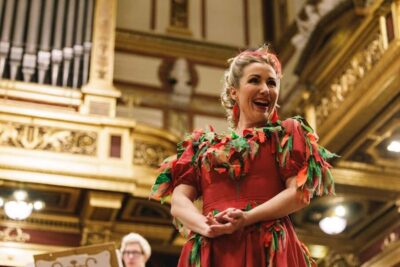
Mozart Concert at the Musikverein – Golden Hall
Read our review →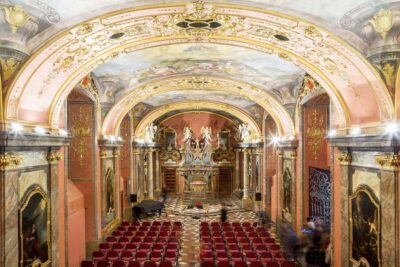
Entry Ticket Classical Concert at the Mirror Chapel
Read our review →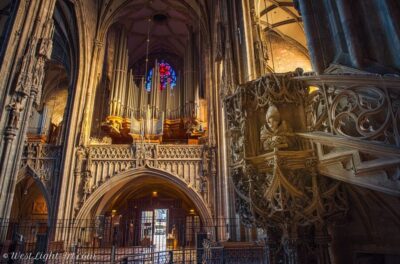
Classical Concert at St. Stephen’s Cathedral
Read our review →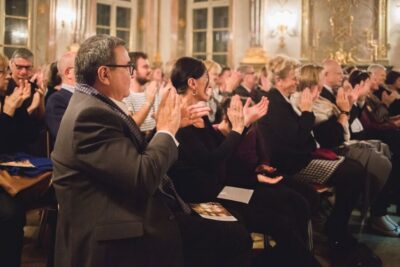
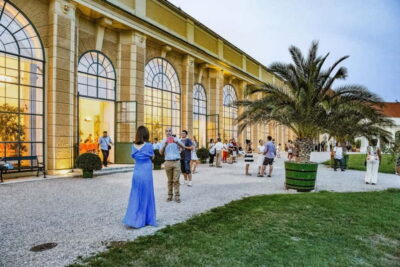
Mozart and Strauss Concert at Schönbrunn
Read our review →