
REVIEW · USA
New Orleans Jazz History and Music Walking Tour
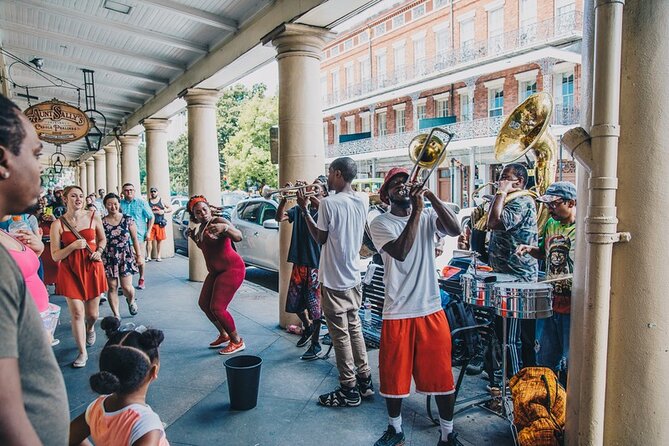
New Orleans jazz makes more sense when you follow its path through the city. This 2.5-hour walk begins in Louis Armstrong Park and Congo Square, then moves into the French Quarter and possibly Frenchmen Street, where the history lesson gives way to live music.
I like the small group limit of 12, which leaves room for questions and route changes. I also like that your $60.56 supports local musicians and venues, rather than treating the music as scenery. The main drawback is the pace: you cover about 14 blocks, so good shoes matter, and the exact club stops depend on the evening.
Key points to know before booking
- Congo Square puts jazz in its proper setting: You learn about the West African, Caribbean, Creole, and European influences that met in New Orleans.
- Louis Armstrong Park opens the tour well: The walk begins with Armstrong, Tremé, Mahalia Jackson, and the city’s early music traditions.
- The route can change with the music: Your guide may lead you through Bourbon Street or Frenchmen Street to reach the best available live performance.
- Live music is part of the evening: You receive one drink at a music stop, and the tour often includes two venues, though the exact plan can vary.
- Guides bring different strengths: Kristi is a local musician, while Adam and Andre have also led highly praised versions of the experience.
- Plan for an evening walk: The tour is for people age 21 and older, covers about 1.5 miles, and ends in the French Quarter.
Why the walk begins in Louis Armstrong Park
Starting at 701 North Rampart Street gives the tour a useful sense of place. You are just outside the French Quarter, in Tremé, one of the parts of New Orleans most closely tied to Black culture, local music, and the early development of jazz.
Louis Armstrong Park is not simply a green space to cross on the way to Bourbon Street. It gives your guide room to explain the people and traditions behind the music. The first section lasts about 35 minutes, so expect a proper introduction rather than a quick photo stop.
Louis Armstrong himself is the natural starting point. The tour uses his life and work to explain how New Orleans music reached far beyond the city. You also hear about the city’s wider musical world, including gospel and the influence of performers such as Mahalia Jackson, whose name lives on at the park’s performing arts theater.
The park can be a welcome place to settle into the evening. You may hear short music examples from your guide, although sound can be hard to catch if another event is taking place nearby. If your guide uses a phone to play clips, stand close and ask for a repeat when needed. The history is worth hearing clearly.
More Jazz Shows in New Orleans
- New Orleans Steamboat Natchez Jazz Cruise with Dinner Option
★ 4.0 · 7,533 reviews - New Orleans Steamboat Natchez Jazz Cruise
★ 4.5 · 5,334 reviews - New Orleans: Evening Steamboat Jazz Cruise + Optional Dinner
★ 4.3 · 4,548 reviews
Congo Square and the origins of a new sound
Congo Square is the most important historical stop. The area was one of the first places in New Orleans where enslaved people and free people of color were allowed to gather and socialize. That fact gives the music story a human setting, rather than reducing jazz to famous names and club listings.
Your guide explains how West African and Caribbean sounds met European instruments and musical forms. New Orleans was a place where cultures collided, adapted, and created something new. That blend helped form jazz, an American art form with roots that are both local and international.
I find this part especially useful because it gives you something to listen for later. You are not just told that New Orleans has a special sound. You get a basic map of where its rhythms, instruments, call-and-response patterns, and musical traditions came from.
The Congo Square section lasts about 15 minutes. It is short, but it supplies the frame for the rest of the evening. If you want a technical lesson on jazz styles, famous recordings, or every major musician, this tour may not go far enough on those subjects. Its focus is broader: place, culture, people, and the city’s living music scene.
Into the French Quarter, with the route shaped by the night
From Louis Armstrong Park, the walk heads into the Vieux Carré, the French Quarter. This section takes about 10 minutes as a formal stop, but the stories continue as you move through the streets.
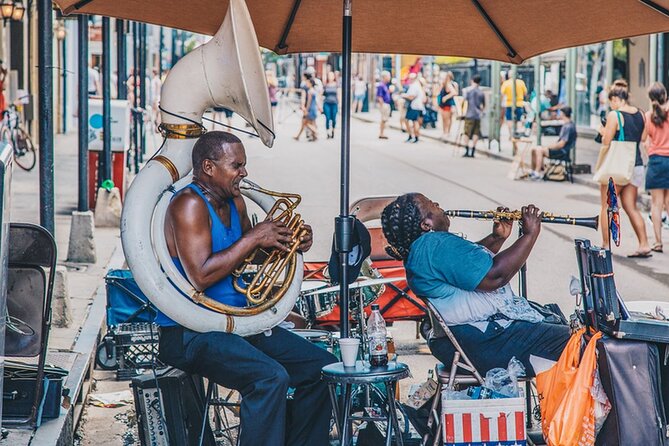
Your guide may take you along Bourbon Street. The point is not only to see its nightlife. You hear about the residential and commercial places where blues and jazz musicians worked together, built friendships, and developed the sound associated with New Orleans. You might also encounter a busker near the historic French Market.
Another possible route leads toward Frenchmen Street, which has the city’s largest concentration of live music venues. This flexibility is a real strength. A fixed route can look tidy on paper, but live music changes by night. Your guide chooses a path based on the available music and the best place to hear it.
The tradeoff is that you cannot count on one named club or one exact sequence of streets. If you need a guaranteed performance at a particular venue, book that separately. If you want help finding a worthwhile room on the night you are there, the flexible approach makes more sense.
Bourbon Street, Frenchmen Street, and the first live set
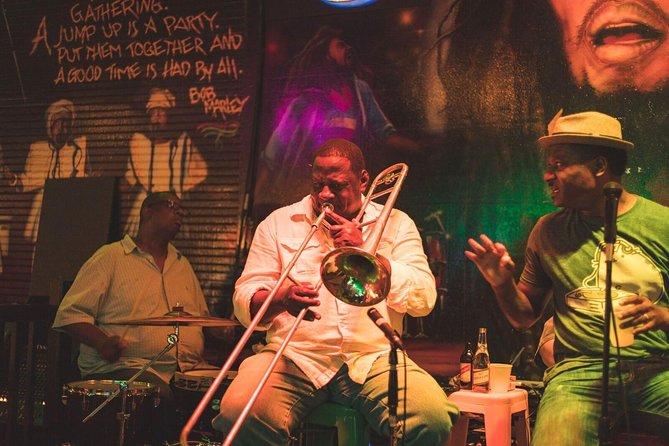
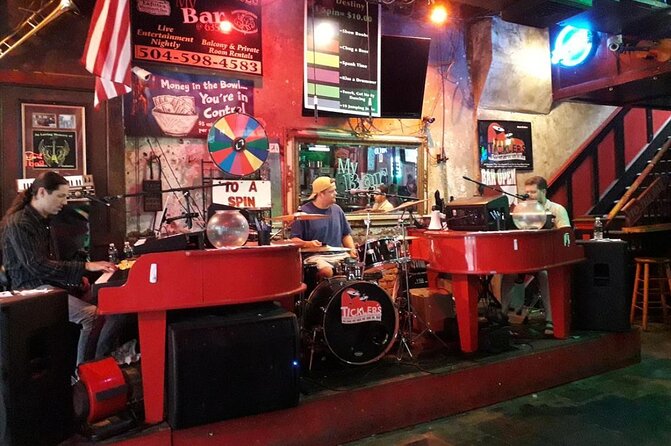
The tour is not complete with history alone. At a selected music stop, your guide takes you inside to listen to local performers. One drink is included, and you can buy more food or drinks if you wish. A nonalcoholic beverage can also work, so you do not have to drink alcohol to take part.
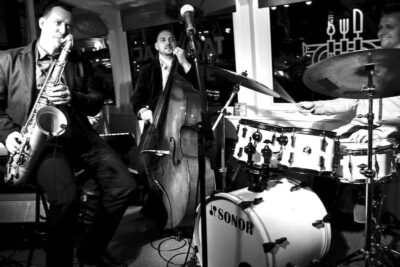
In many versions of the evening, the group visits two music venues and hears different bands. That gives you a useful comparison. One room may feel intimate and traditional, while another may offer a different style or energy. The exact venues are not promised, so consider the live music portion an informed introduction rather than a programmed concert.
This is where the guide matters most. Kristi, who is a local musician, has led tours that included two clubs and offered practical advice about finding music later in the trip. She has also adjusted the route around the group’s interests. Adam has been praised for his passion for jazz and his ability to explain the music’s background in a relaxed way. Andre has also led a well-received version of the walk.
The guide’s job is not only to get you through a door. You learn how to read local listings, when to arrive, how clubs operate, and where to continue after the tour. That advice can save you from wandering the French Quarter and choosing a room at random.
More Jazz Shows in the USA
- New Orleans: Daytime Steamboat Jazz Cruise + Optional Lunch
★ 4.3 · 4,164 reviews - Paddlewheeler Creole Queen Jazz Dinner Cruise in New Orleans
★ 4.0 · 1,469 reviews - New Orleans: Evening Jazz Boat Cruise with Optional Dinner
★ 4.4 · 1,024 reviews - Sunday Jazz Brunch Cruise in New Orleans
★ 4.0 · 889 reviews
Preservation Hall and the working music scene
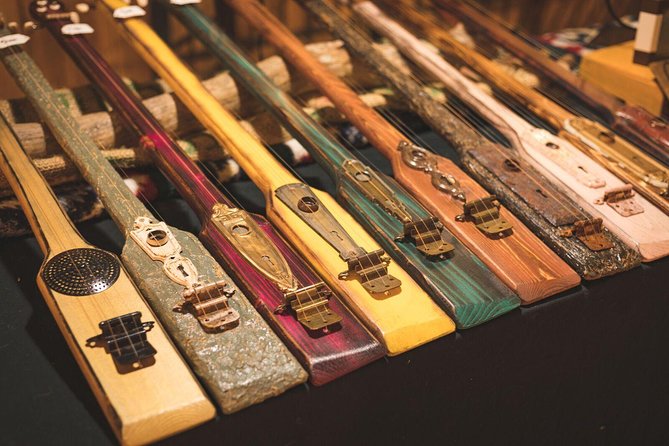
The route can pass Preservation Hall, a historic French Quarter venue devoted to protecting and continuing traditional New Orleans jazz. Even if you do not attend a performance there, the stop helps explain why preservation matters in a city where music is both a cultural inheritance and a source of income.
The tour also makes a direct connection between your evening and local musicians. Part of the price supports the artists and venues involved, helping musicians earn a living and keep performing. That does not replace a tip, however. Gratuities for the guide and musicians are not included.
This is a useful point to keep in mind as you listen. New Orleans music is not just a backdrop for a night out. It is work done by local performers, often in small venues with tight margins. The tour gives you some context for that working scene and directs money toward it.
One limitation is that the balance between history and current social issues may vary by guide. Most of the available feedback praises the mix of jazz, culture, and city history, but one unhappy participant felt a guide spent too much time on political and economic subjects and too little on jazz styles and musicians. If you want a tightly structured music lecture, tell your guide early. A clear question can help shape the discussion.
How much walking to expect over 2.5 hours
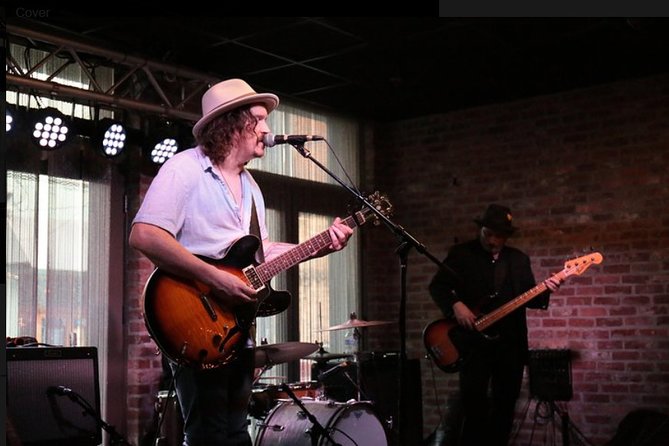
The advertised distance is about 14 blocks, or 1.5 miles. That is not a long walk for most people, but the evening includes standing, crossing streets, moving between venues, and keeping pace with a group. Wear comfortable shoes, especially if you are also planning to continue through the French Quarter afterward.
The walk is generally manageable for most people, and no special athletic ability is stated as necessary. Still, anyone with mobility concerns should consider the distance and the stop-and-go nature of the tour before booking. The route is outdoors and depends on good weather.
The small group helps. With no more than 12 people, you can hear the guide more easily than on a large city walk, and the group can move through doorways and sidewalks with less fuss. Several versions have had only a few people, creating a nearly private feel. That is not guaranteed, but the group cap keeps the experience personal.
The tour begins at 701 North Rampart Street and ends in the French Quarter. It is near public transportation, which is useful if you are staying outside the central area. Since the ending point is given as the French Quarter rather than one exact venue, you should allow a little flexibility for your plans afterward.
Is $60.56 a fair price?
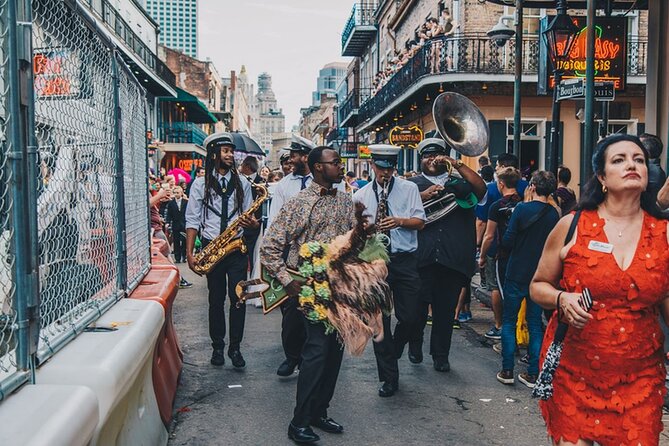
At $60.56 per person, this is not the cheapest way to hear music in New Orleans. You could walk into a bar, buy a drink, and hear a band for less. The value comes from the combination of a local guide, historical interpretation, a planned route, live music, and practical advice for the rest of your stay.
The included drink helps, but it is not the main reason to book. You are paying for the guide’s local knowledge and for access to a night that has some shape. Instead of spending your first evening guessing which streets or venues deserve your time, you get an introduction to the city’s music culture and a short list of places to try afterward.
The price also supports local musicians and venues. That matters if you want your night out to contribute directly to the people keeping the music alive. You will still need money for extra drinks, food, and tips.
The tour is especially good value early in your New Orleans visit. Several versions have left people wishing they had booked it sooner, since the guide’s recommendations improved the rest of their stay. Booking it near the start gives you time to use those suggestions.
Who will get the most from this experience?
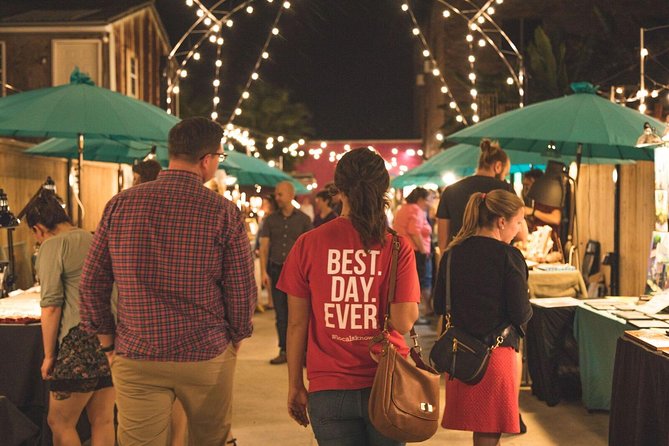
I would choose this tour if you want both context and music. It suits a first visit, solo visitors who want an organized evening, couples, and small groups who would rather hear local guidance than follow a broad sightseeing route.
It is also a good match for people who enjoy the cultural story behind a musical style. You will hear about Tremé, Congo Square, Louis Armstrong, Mahalia Jackson, Creole influence, and the way venues function today. The music is not separated from the city that created it.
You may want something else if your main aim is a long concert. The walk takes up much of the 2.5 hours, and the live music time depends on the selected venues and performances. It is also not designed for anyone under 21.
Book with an open mind about the exact route. You might visit Bourbon Street, Frenchmen Street, one club, or two. The strength is the guide’s ability to respond to the night, but that also means the experience is less fixed than a standard sightseeing tour.
Practical details for a smoother evening
Confirmation arrives when you book, and free cancellation is available up to 24 hours before the start time. Changes or cancellations inside that window are not accepted for a refund. If poor weather cancels the tour, you are offered another date or a full refund.
The tour is offered in English and uses a mobile ticket. Group discounts are available. Since the meeting point is outside the main French Quarter area, check your route before the start and give yourself enough time to arrive at 701 North Rampart Street.
Bring comfortable shoes and a light layer if the forecast calls for a cool evening. Keep your phone handy for the meeting details, but give your attention to the guide once the walk begins. If the group is larger or the street is noisy, stand near the guide during music clips and historical explanations.
The current rating is 4.7 from 477 ratings, with 93 percent recommending the experience. Those figures point to a reliably strong tour, but they do not erase the guide-to-guide difference. Kristi, Adam, and Andre each bring their own style, and the final balance of history, social context, and music can shift.
Should you book the New Orleans Jazz History and Music Walking Tour?
Book it if you want a useful first look at New Orleans music, especially if you are new to the city and want help finding live jazz afterward. The walk through Louis Armstrong Park and Congo Square gives the music a clear cultural setting, while the club stops let you hear how that tradition continues tonight.
Skip it if you want a full concert, a fixed list of venues, or a strictly technical lesson in jazz. For most people who want a social evening with history, local guidance, and at least one live music stop, the $60.56 price is reasonable. I would schedule it early in your visit, wear good shoes, and treat the route as part of the adventure.
FAQ
Where does the New Orleans Jazz History and Music Walking Tour begin?
The tour begins at 701 N Rampart St, New Orleans, Louisiana 70116, near the French Quarter.
Where does the tour end?
It ends in the French Quarter area of New Orleans.
How long is the tour?
The experience lasts approximately 2 hours and 30 minutes.
How far do you walk?
The route covers about 14 blocks, or approximately 1.5 miles, on foot.
Is live music included?
Yes. The guide takes the group to a live jazz or music venue selected for that evening. The route may include one stop or, in some versions, two venues.
Is a drink included?
Yes. One drink is included at a music stop. Additional drinks and food cost extra.
Can anyone under 21 join?
No. Participants must be at least 21 years old.
What happens if the weather is poor?
The experience requires good weather. If it is canceled because of poor weather, you are offered a different date or a full refund.
More History Tours in New Orleans
- Porto: An Intimate Fado Show in a Historical Tavern
★ 4.8 · 2,055 reviews - Vienna Mozart Concert in Historical Costumes at the Musikverein
★ 4.5 · 888 reviews - Tenerife: History The Evolution of Music Show Entry Ticket
★ 4.8 · 620 reviews - Lisbon: Live Fado Show in Historic Alfama with Port Wine
★ 4.8 · 572 reviews
Just added to the listings in New Orleans
- French Quarter Shrimp Boil & Live Music★ 5.0 · 177 reviews
- Court of Two Sisters Live Jazz Brunch Buffet with Mimosa★ 4.0 · 289 reviews
- New Orleans: ‘Court of Two Sisters’ Jazz Brunch Buffet★ 4.5 · 409 reviews
- New Orleans City Tour and Steamboat Natchez Harbor Jazz Cruise★ 4.0 · 446 reviews
- New Orleans: Sunday Steamboat Jazz Cruise + Optional Brunch★ 4.3 · 470 reviews
- Frenchmen Street VIP Live Music Pub Crawl in New Orleans★ 4.5 · 613 reviews
- VIP Jazz Dinner Cruise with Private Tour and Open Bar Option★ 4.5 · 838 reviews
- Sunday Jazz Brunch Cruise in New Orleans★ 4.0 · 889 reviews
Jazz Shows, compared.
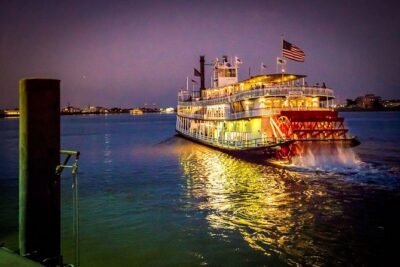
New Orleans Steamboat Natchez Jazz Cruise with Dinner Option
Read our review →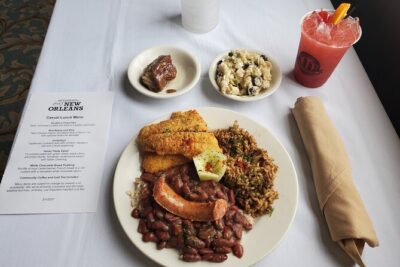
New Orleans Steamboat Natchez Jazz Cruise
Read our review →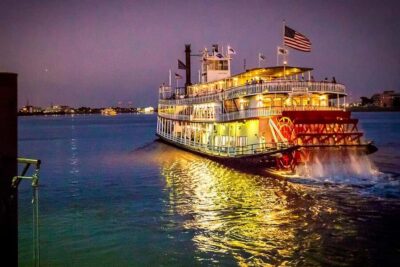
Evening Steamboat Jazz Cruise + Optional Dinner
Read our review →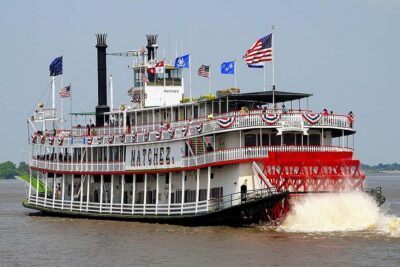
Daytime Steamboat Jazz Cruise + Optional Lunch
Read our review →
Jazz Boat Popular Live Jazz Dinner Cruise
Read our review →
Catamaran Cruise with optional Live Jazz Music
Read our review →
Paddlewheeler Creole Queen Jazz Dinner Cruise in New Orleans
Read our review →Browse the lists this tour appears in