
REVIEW · USA
The Soul of New Orleans: Jazz History Private Tour
New Orleans jazz began long before the neon signs of Bourbon Street. This private walking tour points you toward Congo Square, Preservation Hall, Palm Court Jazz Café, and Frenchmen Street, while connecting music to Creole culture, voodoo, and the people who shaped the city.
I like the private format, which keeps the conversation focused on your interests. I also like the practical music advice, especially from Holley, whose love of the city’s music comes through clearly. The main drawback is pace: ten stops in two and a half hours means many places receive only about 15 minutes, and concert admission is not part of the tour.
Key points to know before you book
- Congo Square gives the tour its strongest historical starting point, connecting the city’s African and Creole traditions to jazz.
- Holley is a noted guide, with useful suggestions for music and food after the walk.
- The route links major music sites with cultural landmarks, including Jackson Square, St. Ann Street, and Tennessee Williams’ former home.
- You finish on Frenchmen Street, with advice on music venues and a stop at the Louisiana Music Factory.
- The private group format offers flexibility, but the tour still follows a busy schedule of roughly 15 minutes per stop.
- The $111.20 per-person price buys personal guiding rather than concert tickets, so you should plan a separate music outing if hearing live jazz is your main goal.
Why Congo Square is the right place to begin
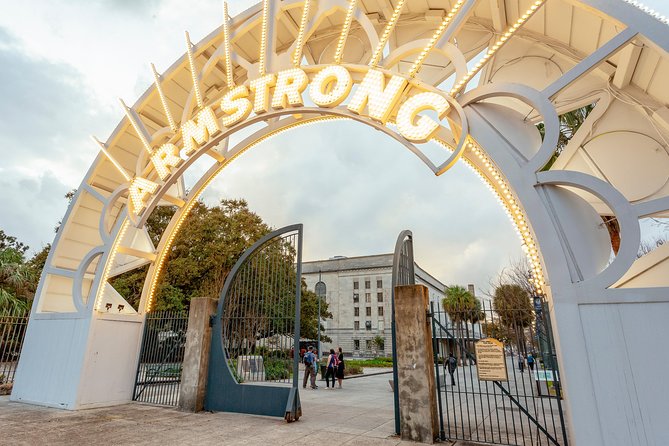
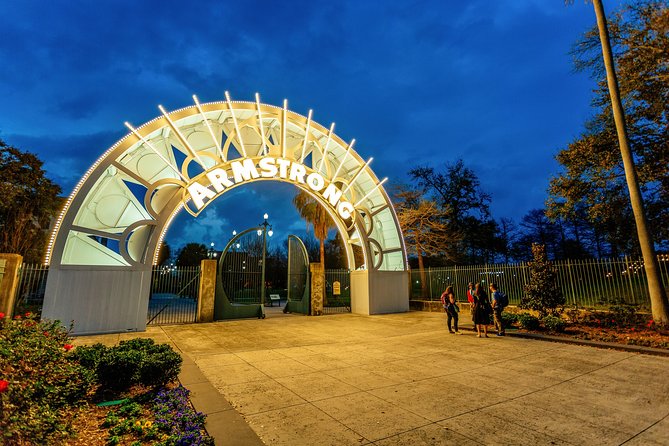
The tour starts near the Best Western Plus French Quarter Courtyard Hotel at 920 North Rampart Street. From there, you head toward Louis Armstrong Park and Congo Square, the most important stop for understanding what follows.
Congo Square is presented as the place where the roots of jazz lie. That does not mean you will hear a performance there, but it gives the music a physical starting point. The guide can explain how African musical traditions, communal gatherings, Creole culture, and New Orleans life came together over time.
You get about 15 minutes at this first stop. That is enough for an introduction and a look around, but not enough for a long lecture or a slow visit to every corner of the park. I would pay close attention here, since this is the point that gives the rest of the tour meaning.
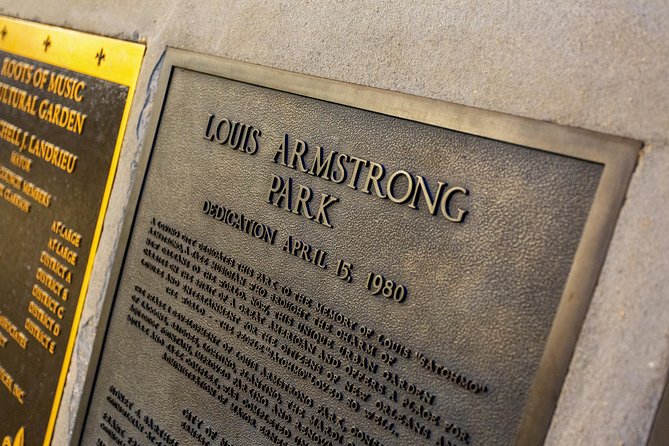
Louis Armstrong Park itself adds useful context. Its name honors the city’s most famous jazz musician, but the tour’s focus is broader than Armstrong alone. You are looking at the city, its neighborhoods, and the cultural forces that made jazz possible.
More Jazz Shows in New Orleans
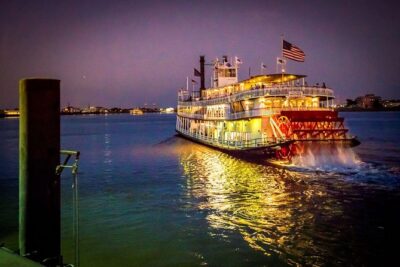
- New Orleans Steamboat Natchez Jazz Cruise with Dinner Option
★ 4.0 · 7,533 reviews - New Orleans Steamboat Natchez Jazz Cruise
★ 4.5 · 5,334 reviews - New Orleans: Evening Steamboat Jazz Cruise + Optional Dinner
★ 4.3 · 4,548 reviews
St. Ann Street and the city’s voodoo traditions
The next stop takes you to St. Ann Street, where the theme shifts from music to voodoo and Creole culture. You learn about the Home of the Voodoo Queen and the place of these traditions in New Orleans.
This section may appeal to you if you want more than a music timeline. New Orleans jazz developed within a city shaped by many cultures, languages, beliefs, and social traditions. The stop helps connect those subjects instead of treating jazz as an isolated art form.
You spend about 15 minutes here. The information may be more useful than the physical stop itself, since the itinerary does not include a separate admission or extended indoor visit. Bring questions if you have them. A private guide gives you a much better chance to ask about the difference between local tradition, popular legend, and the version of voodoo often sold to tourists.
Rampart Street and a recording studio hiding in plain sight
Back near the starting area, the route returns to Louis Armstrong Park and nearby Rampart Street. This is where the tour points out a regular-looking laundromat that once served as a recording studio for well-known stars.
That detail captures the appeal of this experience. The tour is not limited to grand buildings with plaques. It also looks at ordinary places that carry a musical past. You might walk past such a building on your own without knowing why it matters.
Again, the scheduled stop lasts about 15 minutes. You should think of it as a story stop rather than a full museum visit. The value comes from the guide explaining what you are seeing and why it belongs in the city’s music story.
Tennessee Williams, St. Mark’s Church, and the St. Pierre Hotel
The route then reaches the former home of Tennessee Williams, the playwright who lived in New Orleans and had a strong connection to music. This stop widens the subject beyond jazz musicians and clubs. It shows how music shaped the city’s artistic life, including writers and theater figures.
A few blocks away, you see St. Mark’s United Methodist Church. The church itself is part of the city’s architectural and cultural setting, but the tour’s main musical point in this area is the St. Pierre Hotel.
The St. Pierre Hotel once housed what is described as the world’s first jazz museum. You may be able to look inside, but the tour information does not promise a formal museum admission or extended interior visit. Treat this as a brief look at a place connected to jazz preservation, not as a full museum tour.
These stops are useful because they break up the music venues with people and buildings from New Orleans’ broader cultural life. The tradeoff is that each receives only a short visit. If Tennessee Williams, historic churches, or early jazz museums are your main interests, you may want to explore them more slowly on another day.
More Jazz Shows in the USA
- New Orleans: Daytime Steamboat Jazz Cruise + Optional Lunch
★ 4.3 · 4,164 reviews - Paddlewheeler Creole Queen Jazz Dinner Cruise in New Orleans
★ 4.0 · 1,469 reviews - New Orleans: Evening Jazz Boat Cruise with Optional Dinner
★ 4.4 · 1,024 reviews - Sunday Jazz Brunch Cruise in New Orleans
★ 4.0 · 889 reviews
Preservation Hall brings the music into focus
Near Place de Henriette Delille, the tour takes you to Preservation Hall on St. Peter Street. This is one of the most important music stops on the route.
Preservation Hall presents intimate, acoustic New Orleans jazz concerts more than 350 nights a year. Its performances feature ensembles drawn from a current collective of more than 50 local master practitioners. That makes it more than a historic name. It remains an active place for the city’s traditional music.
The tour does not include a concert ticket. Still, the guide can help you understand why the venue matters and how it fits into the local music scene. If live music is your priority, this is the point where I would ask for practical advice about attending a performance later.
The 15-minute timing means you should not expect a complete concert or a long indoor stay. You are getting orientation and context. That can be valuable before you return independently for a performance.
Jackson Square and the French Quarter setting
Jackson Square is the next major landmark. This historic park sits in the heart of the French Quarter and was declared a National Historic Landmark in 1960 because of its central role in New Orleans history.
The square gives you a visual pause in the route. After several compact stops, you have a chance to take in one of the city’s best-known public spaces. The guide can connect the square to the growth of New Orleans and the surrounding French Quarter.
This is not a separate jazz venue, and that is worth noting. Its value is in showing the setting where the city’s music culture developed. The tour works best when you want music placed within the city’s social and architectural story, not when you want two and a half straight hours of club recommendations.
La Maison Perrilliat and Palm Court Jazz Café
Near La Maison Perrilliat, you visit the area around Palm Court Jazz Café. Palm Court is presented as one of the city’s finest music venues and an important place to know if you want to hear live New Orleans music.
The tour does not include a meal or performance, so you should see this stop as a recommendation and orientation point. If you are planning an evening of music, ask the guide how Palm Court fits your schedule and what kind of experience you can expect there.
This is one of the tour’s practical strengths. A guide can do more than point out a famous address. You can ask where to go after the tour, how to avoid places aimed mainly at visitors, and which venues suit your musical tastes. The experience specifically promises tips for avoiding tourist traps and finding places locals favor.
The Louisiana Jazz Museum before Frenchmen Street
Just before the final stretch, the tour points out the Louisiana Jazz Museum and its collections. The stop gives you another way to look at the music, through objects and recorded material rather than only through buildings and stories.
The itinerary allows roughly 15 minutes here. It does not state that museum admission is included, so confirm the plan with your guide if you want to spend time inside. The short timing makes this more of a preview than a museum visit.
That distinction matters when you plan your day. If you enjoy exhibits, archives, and musical objects, save time for a separate museum visit. If you mainly want a guide to explain where the important places are, the stop should fit well.
Frenchmen Street is a useful final stop
The tour ends on Frenchmen Street, one of New Orleans’ best-known areas for live music. The guide walks with you and offers suggestions about the best venues and how to make the most of them.
Frenchmen Street is a strong ending because you leave with a practical plan for the evening. You can compare the different music choices you heard about earlier, then decide where to return. The tour also includes a look at the Louisiana Music Factory, whose shelves hold albums from across the ages.
For a music lover, that record store can be as useful as another landmark. It gives you a way to continue the subject at your own pace and find recordings tied to the city’s traditions.
The route ends on Frenchmen Street rather than returning to the starting hotel. That is convenient if you want to stay out for dinner or music, but it means you should plan your onward journey from there. Hotel pickup and drop-off are not included.
What $111.20 per person really buys
At $111.20 per person, this is not a low-cost sightseeing walk. The price makes more sense for a small private group that wants personal attention, questions answered, and help planning additional music experiences.
You are paying for a private local guide and about two and a half hours of focused conversation. You are not paying for concert admission, a meal, hotel transportation, or a long indoor visit at each site. If your group is larger, dividing the cost among several people may make the format more appealing.
I would compare the price with your goals. If you only want to see the French Quarter, a general walking tour may cost less. If you want the city’s jazz story, cultural background, and current venue advice in one route, the private format offers more value.
The experience is booked, on average, 48 days ahead. That suggests you should reserve early if your dates are fixed, especially if you want a particular day or time.
Timing, walking, and who will enjoy it
The tour lasts about 2 hours and 30 minutes and includes ten stops. The schedule works out to roughly 15 minutes at each location, with the remaining time used for walking and explanation.
You should have a moderate level of physical fitness. The route covers city streets and several areas of the French Quarter, so comfortable walking shoes are sensible. The tour is near public transportation, but hotel pickup and drop-off are not included.
I would recommend it most strongly for:
- First-time visitors who want a clear introduction to New Orleans music
- Couples or families who prefer a private guide to a large group
- Jazz fans who want venue suggestions as well as history
- Visitors interested in Creole culture, voodoo, writers, landmarks, and music together
- Anyone planning to attend live jazz after the tour
It may be less suitable if you want a concert included, dislike walking, or prefer to spend a long time inside museums and historic buildings.
The guide can shape the experience
The guide is central to the value here. Holley is specifically noted for her enthusiasm, love of music, and useful tips for food and live performances. Those details matter because the route itself includes many short stops. The guide’s ability to explain connections and respond to your questions will determine how much you gain from each one.
Since the tour is private, tell the guide what interests you most. You might want more time on jazz origins, Creole culture, voodoo, Tennessee Williams, recording studios, or present-day venues. The tour has a set route, but a private conversation should make it feel more personal than a standard group walk.
The experience has a five-star rating from four published reviews, so the sample is small. I would treat that as encouraging but not conclusive. The most useful praise focuses on Holley’s enthusiasm, her strong music background, and the practical food and music suggestions she provides.
Should you book The Soul of New Orleans?
Book it if you want context and personal guidance, not just a list of famous addresses. Congo Square, Preservation Hall, Palm Court Jazz Café, and Frenchmen Street give the tour a strong musical spine, while the voodoo, Creole, literary, and architectural stops show how jazz fits into New Orleans life.
Skip it if your main goal is a live performance included in the booking, or if you want to explore every site at leisure. For the right audience, the best payoff comes after the walking tour, when you use Holley’s advice to choose your own club, café, record store, or concert.
Free cancellation is available up to 24 hours before the start time. If you cancel later, the amount paid is not refunded.
FAQ
Where does the tour start?
It starts at the Best Western Plus French Quarter Courtyard Hotel, 920 N Rampart St, New Orleans, Louisiana 70116.
Where does the tour end?
The tour ends on Frenchmen Street in New Orleans.
How long does the experience last?
It lasts approximately 2 hours and 30 minutes.
Is this a private tour?
Yes. Only your group participates, and a local guide leads the experience.
What is included in the price?
The price includes the private tour and local guide.
Is hotel pickup and drop-off included?
No. Hotel pickup and drop-off are not included.
What places are covered?
The route includes Congo Square, St. Ann Street, Louis Armstrong Park, Tennessee Williams’ former home, St. Mark’s United Methodist Church, the St. Pierre Hotel area, Preservation Hall, Jackson Square, Palm Court Jazz Café, the Louisiana Jazz Museum, and Frenchmen Street.
Are concert tickets included?
The provided tour details list only the private tour and local guide as included. Concert tickets are not listed as part of the experience.
Can I cancel for a full refund?
Yes. You can cancel at least 24 hours before the experience start time for a full refund. Changes or cancellations made less than 24 hours before the start time are not accepted for a refund.
More History Tours in New Orleans
- New Orleans Jazz History and Music Walking Tour
★ 4.5 · 477 reviews - New Orleans Jazz History and New Orleans People of Color
★ 5.0 · 2 reviews - Porto: An Intimate Fado Show in a Historical Tavern
★ 4.8 · 2,055 reviews - Vienna Mozart Concert in Historical Costumes at the Musikverein
★ 4.5 · 888 reviews
Just added to the listings in New Orleans
- Small-Group New Orleans Jazz Tour★ 4.5 · 16 reviews
- New Orleans Jazz History and New Orleans People of Color★ 5.0 · 2 reviews
- New Orleans Jazz Walking Tour★ 5.0 · 80 reviews
- Private VIP Frenchmen Street Live Music Pub Crawl New Orleans★ 4.5 · 17 reviews
- Citywide Driving Tour with Local Jazz Musician★ 5.0 · 135 reviews
- Creole Queen Weekend Jazz Brunch Cruise on the Mississippi River★ 4.0 · 6 reviews
- New Orleans: Jazz Walking Tour★ 5.0 · 4 reviews
- New Orleans: Dew Drop Inn Guided Tour with Live Blues Show★ 5.0 · 5 reviews
Jazz Shows, compared.
New Orleans Steamboat Natchez Jazz Cruise with Dinner Option
Read our review →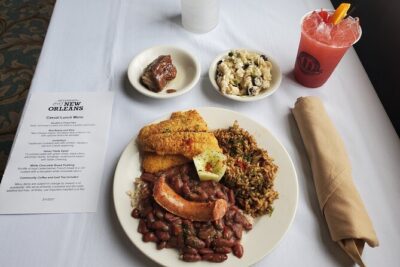
New Orleans Steamboat Natchez Jazz Cruise
Read our review →
Evening Steamboat Jazz Cruise + Optional Dinner
Read our review →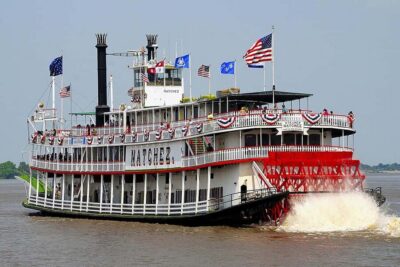
Daytime Steamboat Jazz Cruise + Optional Lunch
Read our review →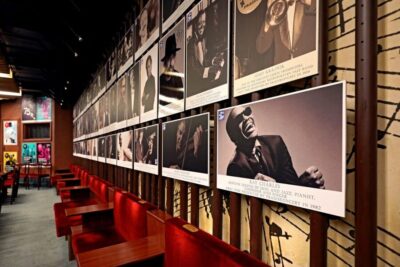
Jazz Boat Popular Live Jazz Dinner Cruise
Read our review →
Catamaran Cruise with optional Live Jazz Music
Read our review →
Paddlewheeler Creole Queen Jazz Dinner Cruise in New Orleans
Read our review →Browse the lists this tour appears in