
REVIEW · JAPAN
Japanese Traditional Music Show in Tokyo
Japanese traditional music can feel distant when you only hear it in a large theater or see the instruments behind glass. At ZAKURO SHOW, the musicians sit right in front of you, close enough to watch fingers move across the koto and hear the sharp attack of the shamisen. The small numbered audience keeps the one-hour concert personal.
I like the clear English explanations, which make unfamiliar sounds easier to follow, and I like the mix of ancient pieces, modern arrangements, and a surprise western song. You can also take photos and videos during the performance, then pose with the musicians afterward. The main consideration is the short running time: this is a focused introduction, not a full evening concert.
Key points
- Four distinctive instruments: Hear the koto Japanese harp, shamisen, shakuhachi flute, and taiko drums in one program.
- English-friendly presentation: The host explains the instruments, music, and cultural background in English and Japanese.
- Small numbered audience: Reserved seating puts you close to the musicians rather than far back in a theater.
- Old music with a modern twist: The program combines historic Japanese pieces, newer traditional music, and a western hit.
- Photos are welcome: Take pictures and videos during the show, then photograph yourself with the musicians afterward.
- Easy Harajuku access: Hall 60 is a one-minute walk from Meiji-Jingumae Station Exit 7 and five minutes from JR Harajuku Station.
A close-up introduction to Japanese wagakki
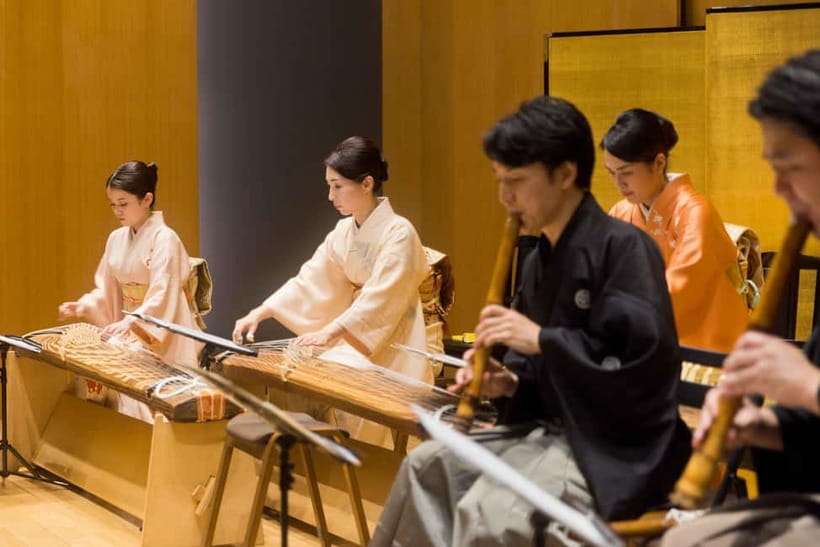
The show presents wagakki, the traditional instruments of Japan, through both performance and explanation. That combination matters. You are not simply hearing a sequence of unfamiliar pieces. You are learning what each instrument does, how it developed, and how its sound fits into Japanese music.
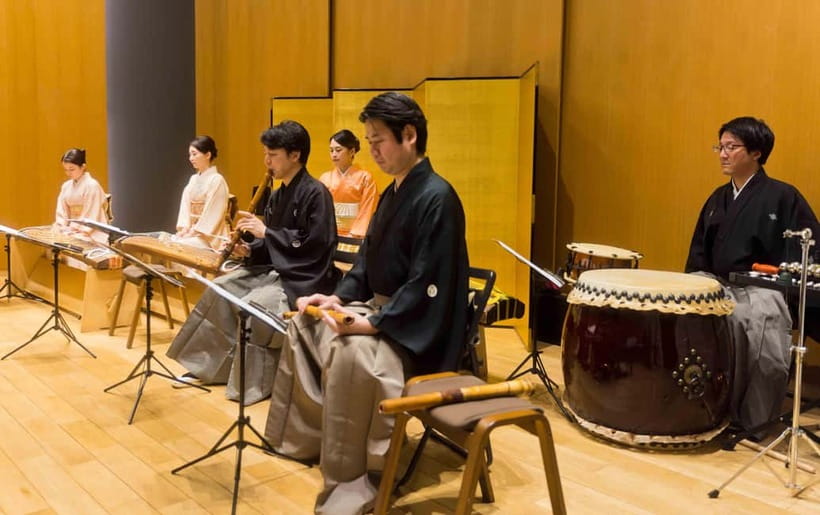
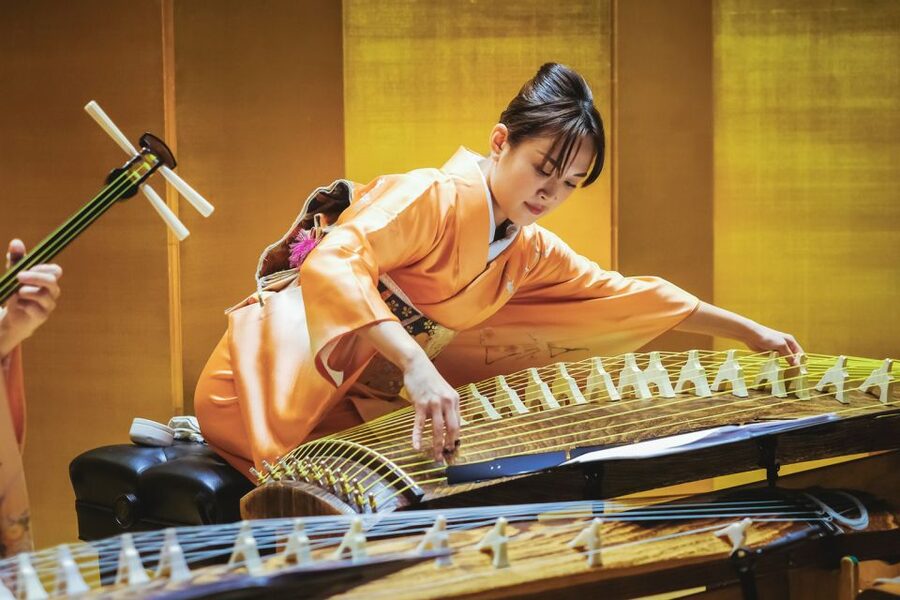
The concert features the koto, often described as a Japanese harp, along with shamisen, shakuhachi, and taiko. Each has a very different character. The koto gives you bright, ringing strings. The shamisen has a leaner, more percussive sound. The shakuhachi brings breath and space, while taiko supplies physical force and rhythm.
The musicians perform in kimono, adding a visual link to the music without turning the evening into a staged historical pageant. The point is not simply to display old instruments. The program shows how these instruments still work in modern arrangements and can even handle a familiar western pop song.
That surprise song is a useful bridge for anyone who worries that traditional music may feel too formal or difficult. You can compare a tune you already know with the sound of Japanese instruments. The contrast helps you hear the koto, shamisen, flute, and drums in a new way.
More Traditional Music and Dance Shows in the world:
- Budapest Danube Cruise and Dinner Options, Live Music and Dance
★ 4.5 · 7,428 reviews - Budapest: Dinner Cruise with Live Music and Folk Dance Show
★ 4.4 · 2,090 reviews - Budapest: Hungarian Folk Dance & Concert with Dinner Option
★ 4.2 · 786 reviews
Why the small room changes the experience
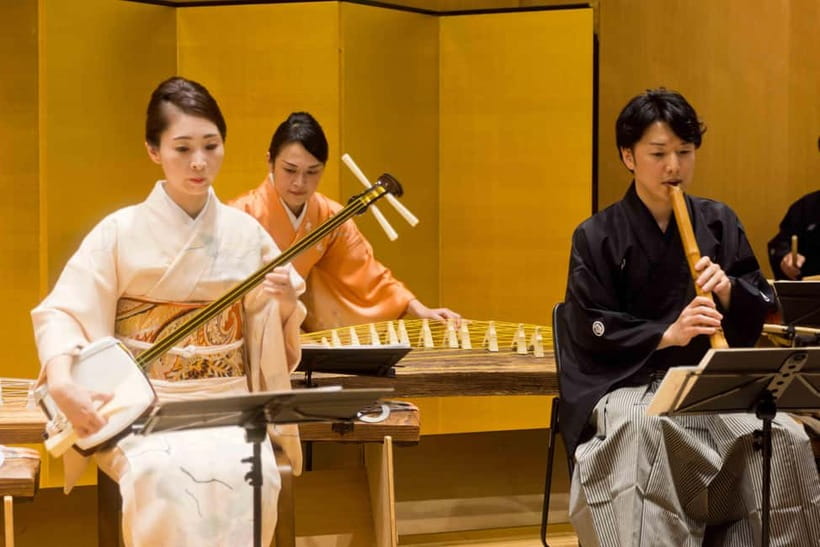
ZAKURO SHOW is designed for a small numbered audience. Your reserved seat gives you a clear place in the room, and the musicians remain close throughout the performance. This is a better setup for seeing technique than a large concert hall, where small hand movements can disappear.
I especially like this format for first-time listeners. You can watch how a musician strikes or plucks an instrument while hearing the host explain what is happening. The visual detail gives the music a practical shape. Instead of thinking only about whether you like a piece, you start noticing how it is made.
The small scale also supports the informal photo time at the end. You are not rushing out with hundreds of people. You can take pictures of the musicians and instruments, and you can have a photo with the performers afterward. That personal contact is a pleasant finish, especially for families and younger visitors.
The tradeoff is simple: limited seating means you need to check the available starting time and reserve ahead. The intimate format is part of the appeal, but it also means this is not a drop-in performance with unlimited capacity.
What happens during the one-hour program
The exact order of pieces may vary, but the structure is easy to understand. The host introduces the instruments and provides context before or between performances. You hear music, learn how the instruments work, then hear them again with a better ear.
The introductions
The host works in English and Japanese, translating explanations for an international audience. This is important because the program covers more than names. You learn about the history of the instruments and the background of the pieces being played.
You do not need musical training to follow along. The explanations are intended for both Japanese residents and international visitors. If you know little about the koto or shakuhachi, the talk gives you enough information to understand what makes each instrument unusual.
The presentation also helps families. One family specifically found the format suitable for teenagers, who were able to record the entire show. The music is serious, but the explanations and modern selection keep it from feeling like a school lecture.
More Live Music in the world:
- Vienna: Vivaldi’s Four Seasons Concert in Karlskirche
★ 4.7 · 14,951 reviews - Venice: La Fenice Opera House Entry Ticket with Audio Guide
★ 4.6 · 11,742 reviews - Sydney: Opera House Guided Tour with Entrance Ticket
★ 4.8 · 8,312 reviews - New Orleans Steamboat Natchez Jazz Cruise with Dinner Option
★ 4.0 · 7,533 reviews
The traditional pieces
The older compositions provide the cultural core of the program. You hear the instruments in forms connected to Japanese musical traditions, rather than only as props in a modern arrangement.
This is where the concert earns its price for people interested in Japanese culture. A shrine visit or museum display can show you the setting and objects, but live music lets you hear the techniques these instruments were built for. The sound is immediate, and the musicians demonstrate their craft rather than merely describing it.
The program also gives historical context for each tune. That helps you understand why a piece sounds the way it does and prevents the music from becoming a series of attractive but disconnected sounds.
The modern material and western cover
The program includes newer Japanese traditional music as well as older pieces. This keeps the concert from presenting wagakki as something frozen in the past.
The western cover is the playful change of pace. It is selected as a surprise, so you should not expect the song to be announced in advance. Its purpose is clear: to show how recognizable melodies change when played on Japanese traditional instruments.
I find this kind of comparison useful because it removes some of the distance around traditional music. You may recognize the basic tune, but the timbre and rhythm make it sound new. It is also the part most likely to connect with children, teenagers, and anyone who is unsure about spending an hour with unfamiliar music.
Hearing the koto, shamisen, shakuhachi, and taiko
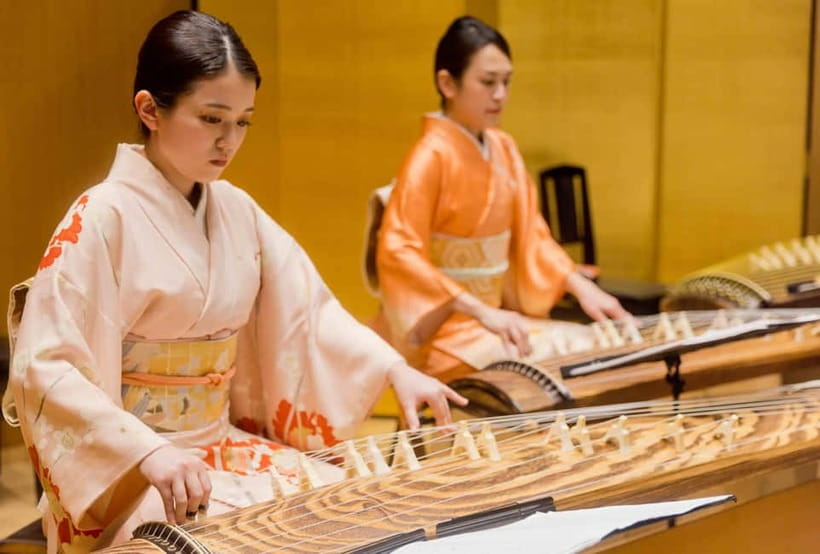
The range of instruments is one of the strongest reasons to choose this show. Each one offers a different route into Japanese music.
The koto is a long string instrument often compared with a harp. Its sound can be delicate and ringing, but its presence depends on how the strings are played. Seeing the musician work at close range makes the instrument easier to understand than a written description alone.
The shamisen is a three-stringed instrument with a distinctive, pointed tone. It can sound bright, dry, and rhythmic. In a small room, you are likely to notice the attack of each note and the physical movement involved in playing it.
The shakuhachi is a bamboo flute. Its breathy tone gives the program a different mood from the string instruments. The explanations are particularly helpful here because the sound may seem less familiar than that of a standard Western flute.
The taiko drums bring weight and energy. They change the scale of the performance, even within a small venue. After quieter passages from the strings or flute, the drums give the concert a strong rhythmic lift.
The appeal comes from hearing these instruments together rather than booking a program focused on only one. You get a compact survey of sound, technique, and musical history in about an hour.
How the English presentation helps
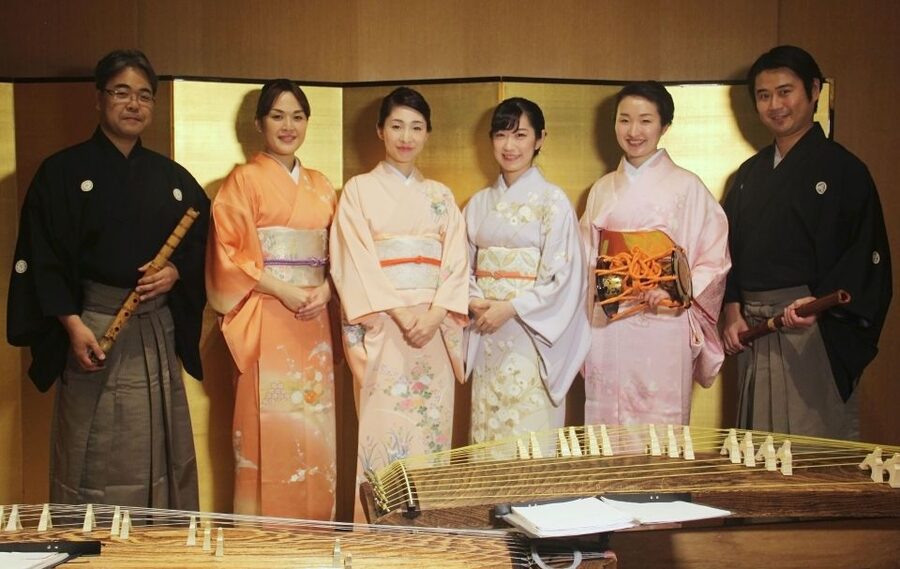
The host or greeter speaks English and Japanese. You should expect translation and explanation throughout the program rather than a concert with only a short English introduction.
That makes a real difference in Tokyo, where many cultural performances assume the audience already understands the tradition. Here, the host explains the instruments, how they are made or played, and the history connected to them. The information is placed between musical pieces, so you are not asked to sit through a long talk before the concert begins.
The strongest part of this approach is its timing. You hear an instrument first or learn about it and then hear it in context. This gives you something specific to listen for. Several pieces of feedback praised the clarity of the translation and the way the host made the program easy to follow.
No guide’s personal name is provided for this experience, so do not book it expecting a named lecturer or a private guide. The important feature is the bilingual host who leads the concert and explains its content.
Photos, videos, and meeting the musicians
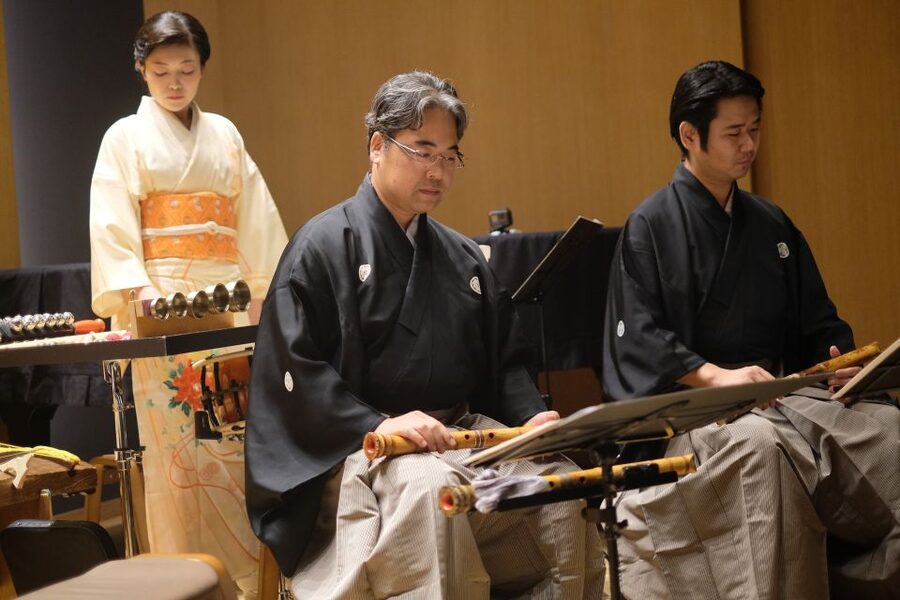
Photography is allowed during the show, and you can record video. That is unusual enough to mention because many formal performances restrict phones. You should still be considerate of the musicians and the people around you, but the activity is built to let you document the experience.
The photo opportunity after the concert adds value. You can take pictures of the performers and instruments, then take a photo beside the musicians. For families, this creates a keepsake beyond a ticket stub. For music fans, it gives you a chance to look closely at the instruments after hearing them played.
This is also one reason the show works well as a short cultural activity during a busy Tokyo day. You receive a complete performance and an opportunity for personal interaction without giving up an entire evening.
Location near Harajuku and Meiji-Jingumae
Hall 60 is easy to reach in the Harajuku area. From Meiji-Jingumae Station, use Exit 7 and allow about one minute on foot. From JR Harajuku Station, use the Omotesando Exit and allow about five minutes.
That location makes the concert convenient to pair with time in Harajuku. You can schedule it around shopping, sightseeing, or a visit to nearby areas, but the exact starting times vary, so check availability before planning the rest of your day.
The meeting point is specific, which helps in a crowded part of Tokyo. You are not being asked to find a broad neighborhood or wait outside an unnamed attraction. Go to Hall 60 and arrive ready for a reserved seat.
The experience is wheelchair accessible. Hotel pickup and drop-off are not included, so you make your own way to the venue by train or on foot.
Is $38 a fair price?
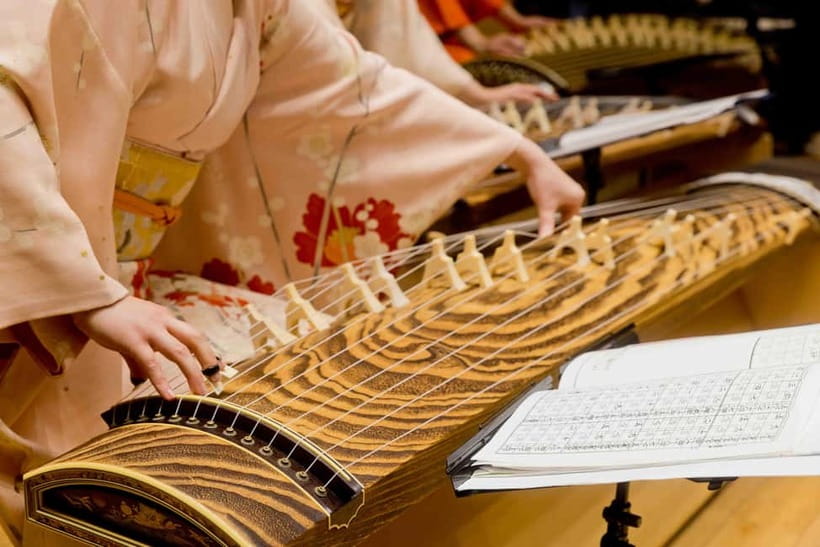
At $38 per person, the cost is reasonable for a one-hour live performance with a reserved seat, bilingual explanations, and access to several traditional instruments. The value is strongest if you would otherwise struggle to fit a longer cultural event into your Tokyo plans.
You are paying for more than entry to a concert. The host explains the instruments and music, the musicians perform a broad selection, and photos and videos are allowed. The chance to meet the musicians afterward adds a personal touch that many standard stage shows do not offer.
Still, you should keep the limits in mind. The program lasts one hour, and food, drinks, merchandise, and transportation are extra. If you want a long theatrical production, a major orchestra performance, or a full evening of music, this is too short.
For an introduction to Japanese traditional music, though, the price makes sense. You receive context without needing prior knowledge, and the western cover provides an easy point of comparison. The concert also avoids the cost and time commitment of a larger formal performance.
Who should book this concert?
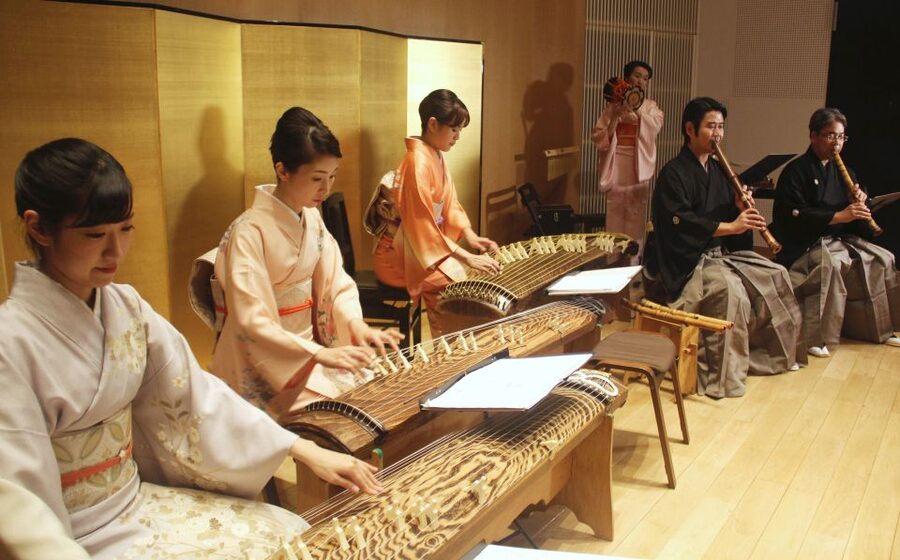
I would recommend ZAKURO SHOW to you if you want a direct cultural experience that fits neatly into a Tokyo itinerary. It works especially well for:
- First-time visitors who want to hear Japanese instruments in person
- Families with children or teenagers
- Music fans interested in unusual instruments and live technique
- Couples looking for a short evening activity
- Visitors who need English explanations
- Anyone who prefers a small venue to a large theater
You do not need to be a classical music expert. The host gives you the necessary background, and the program balances education with performance.
You might choose something else if you dislike explanations between pieces, want a long concert, or prefer a completely formal setting with no photography. The program is designed to be approachable and interactive, not solemn from start to finish.
My take: book it for access, not length
I would book this show if Japanese traditional music is on your Tokyo list but you want an easy entry point. The intimate room, clear bilingual host, varied instruments, and photo time give you more contact with the music than a quick cultural display.
The one-hour length is both its strength and its limit. You can fit it into a busy day, but you should not expect an exhaustive survey of Japanese music. Book it for a focused introduction, a close look at the instruments, and a performance that connects old traditions with modern sound.
At $38, it is a solid choice for a compact cultural evening, particularly if you reserve a place while the small audience format is available. Free cancellation up to 24 hours before the activity and reserve-now, pay-later booking also make it easier to fit into changing Tokyo plans.
FAQ
How long is the Japanese Traditional Music Show in Tokyo?
The concert program lasts one hour.
How much does the experience cost?
The listed price is $38 per person.
Where does the show take place?
The show takes place at Hall 60 in Tokyo.
How do I reach Hall 60?
Hall 60 is a one-minute walk from Meiji-Jingumae Station Exit 7. It is about a five-minute walk from JR Harajuku Station’s Omotesando Exit.
Which instruments are performed?
The program features the koto Japanese harp, shamisen, shakuhachi flute, and taiko drums.
Is the show presented in English?
Yes. The host or greeter presents the activity in English and Japanese, with explanations and translation for the audience.
Can I take photos or videos?
Yes. You may take photos and videos during the show, and you may take photos with the musicians afterward.
Is the venue wheelchair accessible?
Yes. The activity is wheelchair accessible. Hotel pickup, food, drinks, and merchandise are not included.
Just added to the listings in the world
- Arena di Verona Opera Ticket Package★ 4.0 · 46 reviews
- Master Concert in the Max-Joseph Hall in Munich★ 4.9 · 49 reviews
- Munich: Gala Concert in the Cuvilliés Theatre★ 4.9 · 101 reviews
- Munich: Concert in the Court Chapel of the Residenz★ 4.4 · 108 reviews
- Nashville: Jack Daniel’s Distillery Tour with BBQ and Music★ 5.0 · 14 reviews
- Afternoon Tea and Classic Concert on the Fjord★ 4.5 · 3 reviews
- Oslo fjord 3-Course Dinner Cruise with Live Music★ 4.5 · 123 reviews
- Waitangi Treaty Grounds: Combo Pass (Hāngī + Concert + Admission)★ 5.0 · 122 reviews
Live Music, compared.
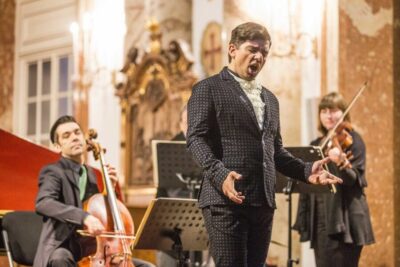
Vivaldi’s Four Seasons Concert in Karlskirche
Read our review →
La Fenice Opera House Entry Ticket with Audio Guide
Read our review →
Opera House Guided Tour with Entrance Ticket
Read our review →
New Orleans Steamboat Natchez Jazz Cruise with Dinner Option
Read our review →
Budapest Danube Cruise and Dinner Options, Live Music and Dance
Read our review →
3-Course-Dinner Cruise on the Seine with live music
Read our review →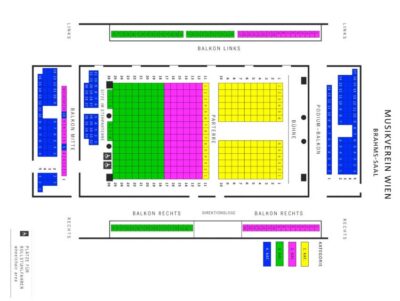
Classical Concert in the World-Famous Musikverein
Read our review →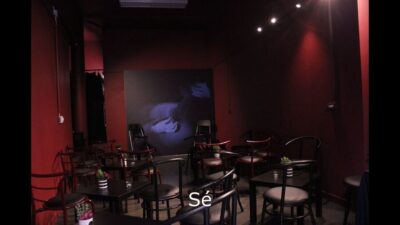
Browse the lists this tour appears in