
REVIEW · JAPAN
Japanaese tradtional Tsugaru Shamisen music lesson in Tokyo
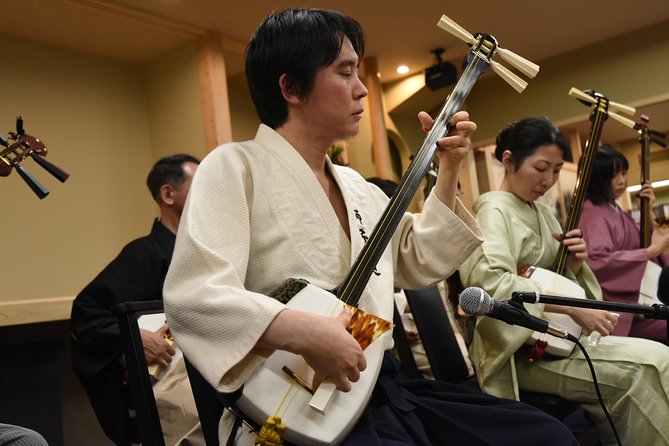
The best part of this Tokyo activity is that you do not just watch a shamisen performance. You hold the instrument yourself, learn how to strike its strings with the bachi pick, and work toward playing a simple song. First, an award-winning musician who won the Tsugaru Shamisen World Tournament group championship shows you what the instrument can do.
I like the small, personal teaching approach and the chance to hear the shamisen before trying it. I also like that children, families, school groups, and first-time musicians can take part. The main drawback is the short one-hour format. You will learn the basics, not become a shamisen player in one afternoon.
Key points to know before booking
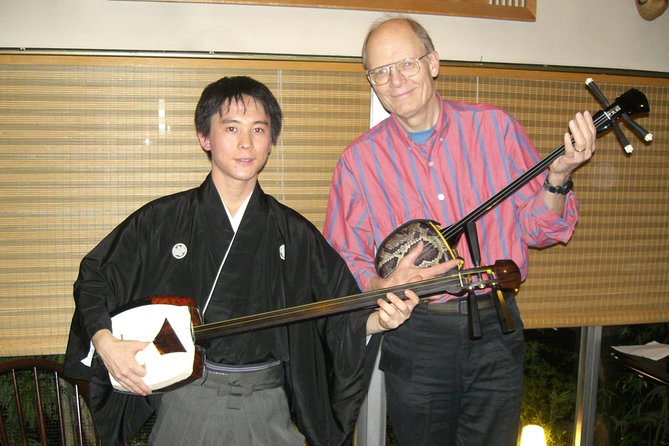
- A real performance comes first: Hear a professional Tsugaru shamisen player before you pick up the instrument.
- You play a song yourself: The lesson builds toward performing one easy piece with your instructor.
- Designed for complete beginners: You receive help with posture, the bachi pick, simple playing, and basic techniques.
- The activity is private: Only your group participates, which allows for more direct instruction.
- It costs $77.26 per person: The price includes the lesson, shamisen rental, and a nationally accredited guide-interpreter.
- The workshop lasts about one hour: It takes place in Shinjuku City, near Shinjuku, with transport to the venue not included.
Why this shamisen lesson is different from a standard Tokyo show
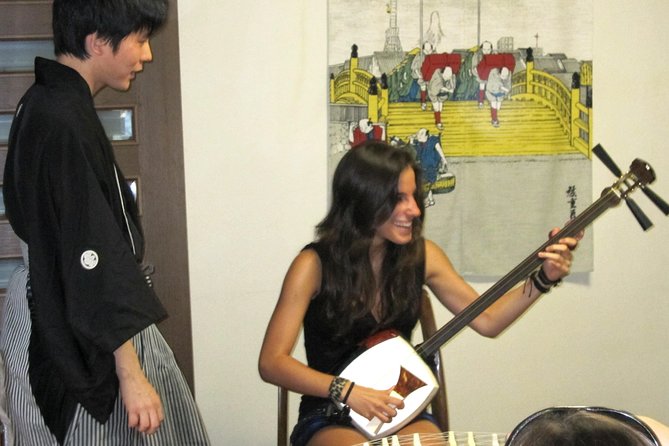
Many cultural activities ask you to sit quietly and watch. This one gives you a short performance, then puts the shamisen in your hands. That change matters. You hear the instrument’s force and unusual tone first, so you have a better sense of what you are trying to create.
The Tsugaru shamisen is the most powerful-sounding type of shamisen in this program. It has three strings, but its sound is far from thin. The instrument can produce a heavy, resonant tone, and the large bachi pick gives the player a physical way to shape the music.
I like this order of events. A short performance makes the lesson feel like more than a technical exercise. It also gives you a clear comparison between your first careful notes and the confident playing of a professional.
The instructor has won the group championship at the Tsugaru Shamisen World Tournament. You are not simply getting a demonstration from someone who knows a few basic tunes. You will hear a serious performer, then receive gentle guidance suited to beginners.
That contrast can be useful for families. Children can hear an exciting piece and then try the instrument without being expected to perform at a high level. Adults who have never played an instrument can also take part without needing musical training.
More Workshops in Japan:
- Kyoto: Japanese Koto & Shamisen Concert and Koto Class
★ 4.9 · 31 reviews - Mango’s Miami: Salsa Lessons, Mojitos, Bites & Live Music
★ 4.7 · 156 reviews - Afro Puerto Rican Folklore Bomba Class and Live Music
★ 4.5 · 55 reviews
Holding the shamisen and learning the bachi
The session begins with the basics of handling the instrument. You learn how to hold the shamisen before worrying about speed or complicated music. This is important because the instrument and pick may feel unfamiliar, especially if you are used to Western string instruments.
The bachi is a pick used to strike the strings. You are shown how to use it, then given time to try the movement yourself. Expect the instructor to focus on control and comfort rather than rushing you into a difficult song.
This is where the private format helps. Only your group takes part, so the instructor can give personal attention. If your grip is awkward or your timing is uncertain, there is room to correct it directly instead of trying to follow a large class from the back of a room.
The lesson is not designed as a full music course. You should think of it as a carefully guided introduction. You will learn enough to understand the instrument, make a few sounds, and take part in a simple performance.
Playing an easy song with your instructor
The central goal is to learn an easy song and play one piece together with the teacher. That gives the hour a clear purpose. You are not left with a few disconnected exercises and no sense of progress.
Your instructor breaks the music into manageable steps. The pace is described as gentle, and beginners are welcome. If you have never held a shamisen, you can still follow the program. If you already play music, you may move more quickly through the first steps.
The song itself is meant to be accessible, not a showcase for advanced players. The satisfaction comes from making a recognizable piece by yourself and then joining the instructor for a shared performance.
Photos and videos are allowed during your performance. That is a useful feature for families and anyone who wants a record of the lesson. You can also share the material on social media. Since you are using a rented instrument during the session, the photo opportunity gives you a lasting reminder without requiring you to own a shamisen.
Advanced techniques after the beginner basics
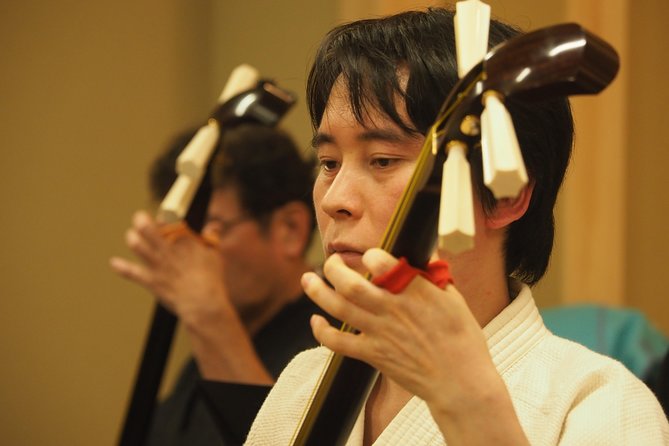
Once you have learned the basic way to hold the instrument and use the bachi, the instructor introduces some advanced techniques. The program does not specify how many techniques you will cover, so the exact amount depends on the pace of your group.
This part should be treated as an introduction rather than a full advanced class. You may see how more skilled playing works, even if you cannot reproduce every sound immediately. The benefit is that you gain a better idea of the shamisen’s range and why professional performance takes practice.
I like that this section is included after the simple song. You first get a small success, then see what lies beyond it. That order keeps the lesson encouraging while still showing the instrument’s greater possibilities.
The professional performance also returns as an important part of the session. You are given a chance to listen closely to the instrument’s tone and techniques, not just rush from one instruction to the next.
More Live Music in Japan:
- Kyoto: Traditional Concert at Townhouse or Bathhouse
★ 4.9 · 224 reviews - Experience the Asakusa Kabuki Opera Show!
★ 5.0 · 99 reviews - Japanese Traditional Music Show in Tokyo
★ 5.0 · 72 reviews - Traditional Japanese Music show & Experience Tour in Kyoto
★ 5.0 · 57 reviews
Understanding the instrument itself
The program includes an explanation of the shamisen’s structure. This adds useful context to the hands-on lesson. You learn not only how to play, but also what you are holding and how the parts relate to the sound.
The activity uses the Tsugaru shamisen, identified as the most famous and powerful-sounding type in the program. It is often compared with a Japanese banjo, though the comparison only goes so far. The three-string design, the large pick, and the forceful tone give it a character of its own.
A short explanation of the structure also helps you understand why technique matters. The way you hold the instrument and strike the strings affects the sound. Even in a one-hour workshop, that basic connection between the object and the music makes the lesson more meaningful.
You will not be expected to buy or bring an instrument. A shamisen rental is included, so you can try the activity without making a larger commitment.
What the private format means for your group
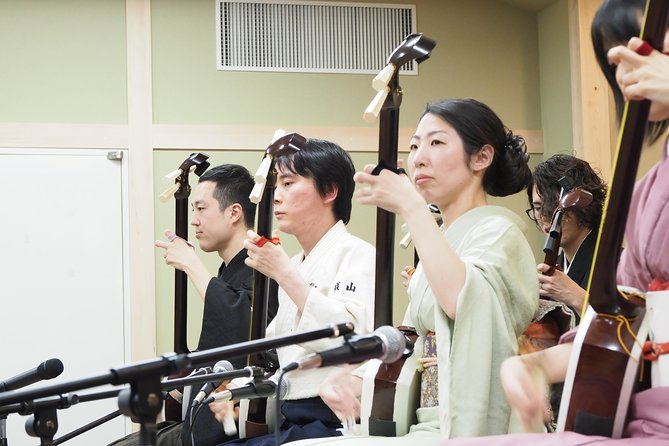
This is a private activity, meaning only your group participates. That is a strong point for families, couples, and small groups who prefer not to perform in front of strangers.
Private does not necessarily mean an entirely custom lesson. The program still follows a set flow: holding the shamisen, learning the bachi, practicing an easy song, trying some advanced techniques, hearing music, learning about the instrument, and taking photos or videos.
The advantage is the attention. The instructor can respond to the ability and comfort of your group. A child may need more time with the pick, while an adult with musical experience may be ready for the next step sooner.
Group discounts are available, though the supplied details do not state the discount amount or the minimum group size. Private lessons are also available for an additional charge. If you want a longer or more focused session, ask about that option before booking.
The activity can also suit educational programs. Schools, language programs, academic institutions, and corporate training groups are specifically welcomed. The combination of cultural explanation and physical participation makes it more useful than a performance alone for a class or organized group.
Is $77.26 a fair price for one hour?
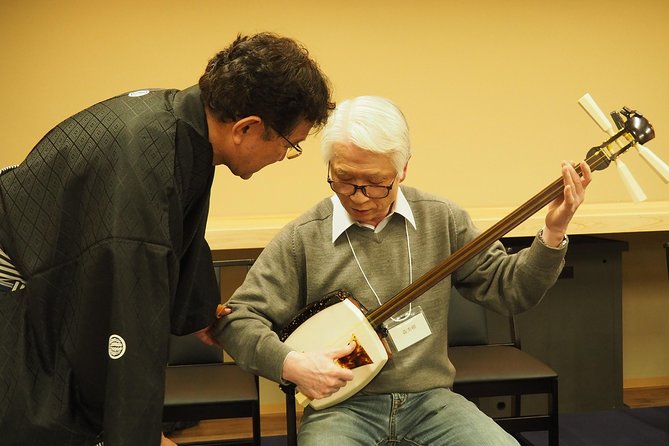
At $77.26 per person, this is not a cheap drop-in activity. The price includes the shamisen rental, playing instruction, a nationally accredited tour guide-interpreter, and a professional performance. You are paying for access to the instrument and the teacher’s time, not just a seat in an audience.
The value depends on what you want from your Tokyo schedule. If you only want to hear shamisen music, a concert or cultural performance may give you more music for less money. If you want a hands-on activity that gives you a simple skill and a personal memory, the price is easier to justify.
The private format strengthens the value for a group. You are not competing for the instructor’s attention in a large class. A family can learn together, and a school or company can use the lesson as a shared activity.
The one-hour length keeps the commitment manageable. You can fit it into a day in Shinjuku without giving up half your sightseeing schedule. The tradeoff is that the lesson cannot cover much beyond the basics. I would book it for the experience of trying the instrument, not as a substitute for ongoing lessons.
The activity is often booked about 42 days ahead. That suggests you should plan early if your Tokyo dates are fixed, particularly if you need a specific day or want to arrange language support.
Getting to the Shinjuku meeting point
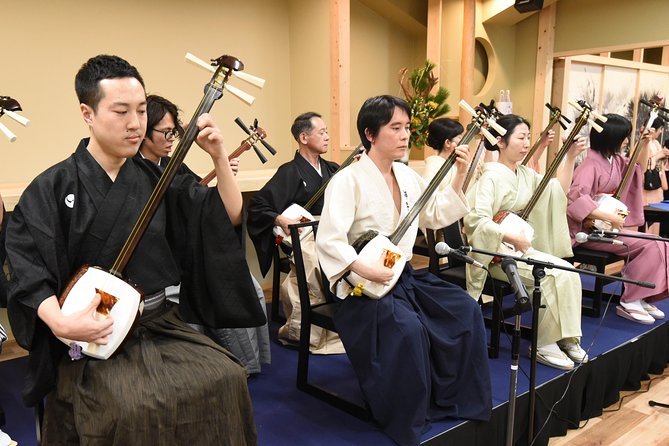
The meeting point is at 14-28 Yochōmachi, Shinjuku City, Tokyo 162-0055. The location is near Shinjuku and close to public transportation, but transportation to and from the venue is not included.
Build in time to find the exact address. Tokyo addresses can be less intuitive than a simple numbered street system, and a short buffer will make the start calmer. Your confirmation should provide the details needed for the meeting.
The published operating information covers January 5, 2026, through January 19, 2027, with Monday hours listed from 9 a.m. to 6 p.m. Check your selected date carefully because the supplied schedule only identifies Monday availability.
The activity ends back at the meeting point. That makes it easy to continue with plans in Shinjuku, though food and drinks are not included. You can arrange your own meal before or after the lesson.
Language help, children, and practical comfort
Licensed instructors are available in English. French and Spanish support can be arranged upon request, so make that request when booking rather than assuming it will be available automatically.
Children and families are welcome. The gentle teaching style makes this more suitable for beginners than for a high-pressure performance class. Still, children should be comfortable following instructions and handling an instrument with care.
Most people can participate, and service animals are allowed. No special physical requirements are provided, so contact the operator if someone in your group has a concern that is not covered by the basic information.
Confirmation is sent within 48 hours of booking, subject to availability. The activity can be canceled for a full refund up to 24 hours before the start time. Cancellations or changes made less than 24 hours ahead are not accepted for a refund, with cut-off times based on local time.
Who should book this Tokyo activity?
I would choose this lesson if you want a cultural activity that asks you to participate rather than simply watch. It works especially well for families, couples, small private groups, and first-time musicians.
It also makes sense for anyone curious about traditional Japanese instruments but unsure about committing to a longer class. In one hour, you hear a high-level performance, learn the basic mechanics, and play a simple piece.
You may want another option if your main goal is a long concert, a detailed history lesson, or serious musical training. The program introduces advanced techniques, but the time limit keeps the focus on an approachable first experience.
The activity is also a good fit for school groups and language programs. The lesson combines instruction, cultural explanation, performance, and a shared task. That gives participants several ways to take part, even if they are not confident musicians.
Should you book the Tsugaru shamisen workshop?
Book it if you want to play a traditional Japanese instrument, receive direct instruction, and leave with a short performance of your own. The award-winning performer, private setting, included instrument rental, and beginner-friendly format make the hour feel purposeful.
Skip it if $77.26 feels high for a one-hour lesson or if you want an extended music class. For most people, the best reason to book is not mastery. It is the chance to hear the shamisen at its strongest, try the bachi yourself, and share a simple song with your instructor and group.
FAQ
How long does the Tsugaru shamisen lesson last?
The activity lasts approximately one hour.
Where does the activity take place?
It takes place at 14-28 Yochōmachi, Shinjuku City, Tokyo 162-0055, near Shinjuku.
Is transportation to the venue included?
No. Transportation to and from the venue is not included.
Is shamisen rental included in the price?
Yes. Shamisen rental and the shamisen playing lesson are included.
Do I need previous musical experience?
No. The lesson is designed for beginners, and gentle instruction is provided.
Is the activity private?
Yes. Only your group participates in this private activity.
Can children take part?
Yes. Children and families are welcome.
Can I cancel for a full refund?
Yes. You can cancel at least 24 hours before the start time for a full refund. Cancellations made less than 24 hours before the start time are not refunded.
Just added to the listings in Japan
- Tsugaru shamisen performance over traditional dinner★ 5.0 · 9 reviews
- Easy for everyone! Now you can play handmade mini shamisen and show off to everyone! Musical instruments, sweets and live music★ 5.0 · 3 reviews
- Traditional Japanese Music show & Experience Tour in Osaka★ 5.0 · 25 reviews
- Traditional Concert in Public bath near Kyoto Station★ 5.0 · 5 reviews
- Private Japanese music concert★ 5.0 · 4 reviews
- Kyoto: Matcha & Traditional Japanese Music Immersive Experience★ 5.0 · 9 reviews
- Kyoto: Kujo-yu Sento Traditional Japanese Instrument Concert★ 5.0 · 2 reviews
- Echoes of Peace – A Soul-Stirring Koto Concert in Hiroshima★ 4.5 · 5 reviews
Live Music, compared.

Vivaldi’s Four Seasons Concert in Karlskirche
Read our review →
La Fenice Opera House Entry Ticket with Audio Guide
Read our review →
Opera House Guided Tour with Entrance Ticket
Read our review →
New Orleans Steamboat Natchez Jazz Cruise with Dinner Option
Read our review →
Budapest Danube Cruise and Dinner Options, Live Music and Dance
Read our review →
3-Course-Dinner Cruise on the Seine with live music
Read our review →
Classical Concert in the World-Famous Musikverein
Read our review →
Browse the lists this tour appears in