
REVIEW · JAPAN
Kyoto: Japanese Koto & Shamisen Concert and Koto Class
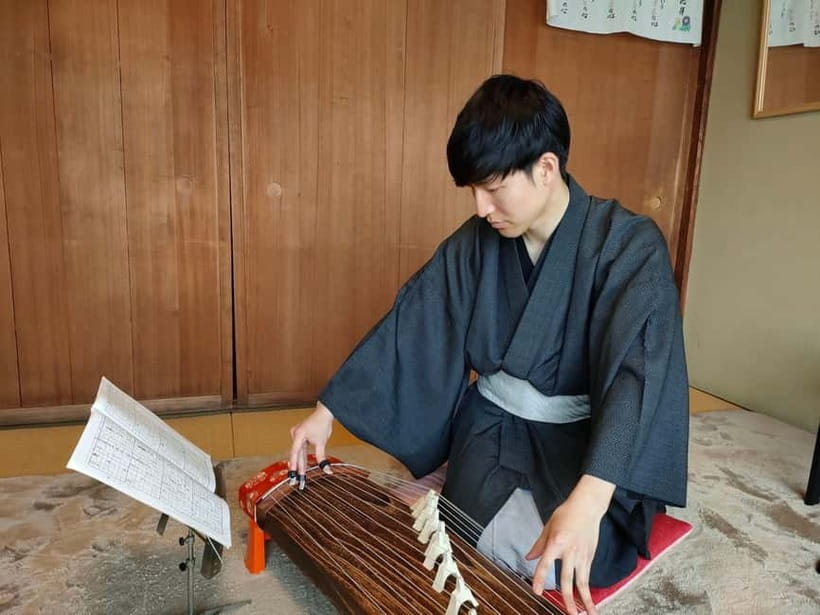
The best part of this Kyoto experience is its setting: not a polished theater or famous temple, but a small old Japanese house where the music feels close enough to touch. You hear the koto and shamisen played by professionals, then sit near the performer for questions, photos, and a simple koto lesson.
I like the mix of classical and contemporary music, including original compositions. I also like that you do more than watch. You learn how the instruments work and get to play the koto yourself. The main drawback is finding the house, which sits in a residential area and can be hard to spot, especially after dark.
Key points to know before booking
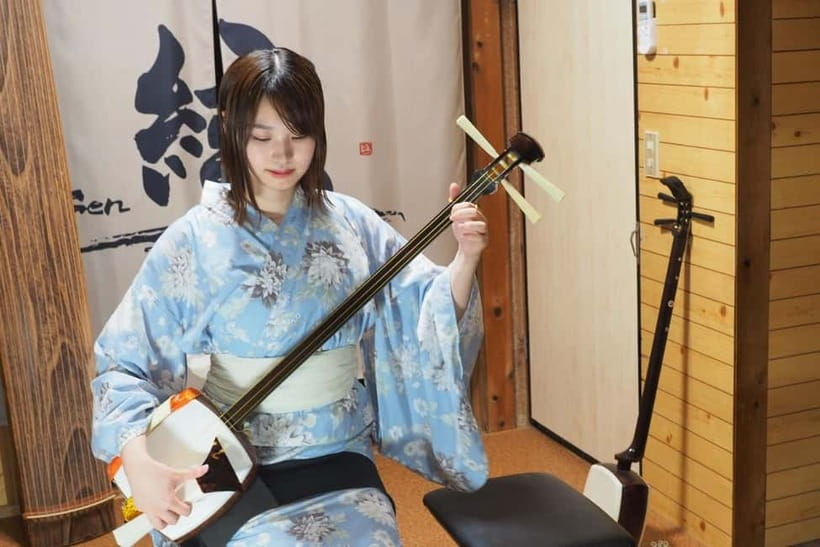
- The concert takes place in a cozy home, giving the hour a relaxed, personal feel rather than a formal stage atmosphere.
- You hear both koto and shamisen, with a program that may include classical pieces, modern music, vocals, and original works.
- The koto lesson is hands-on, with a professional helping you play a simple piece and try basic techniques.
- English and Japanese support is available, including explanations of the instruments, their music notation, and their cultural background.
- The format is private or small group, so you have time to ask questions and speak directly with the performer.
- The experience costs $38 per person, a strong value if you want both a concert and a short practical lesson.
What happens inside the Kyoto house
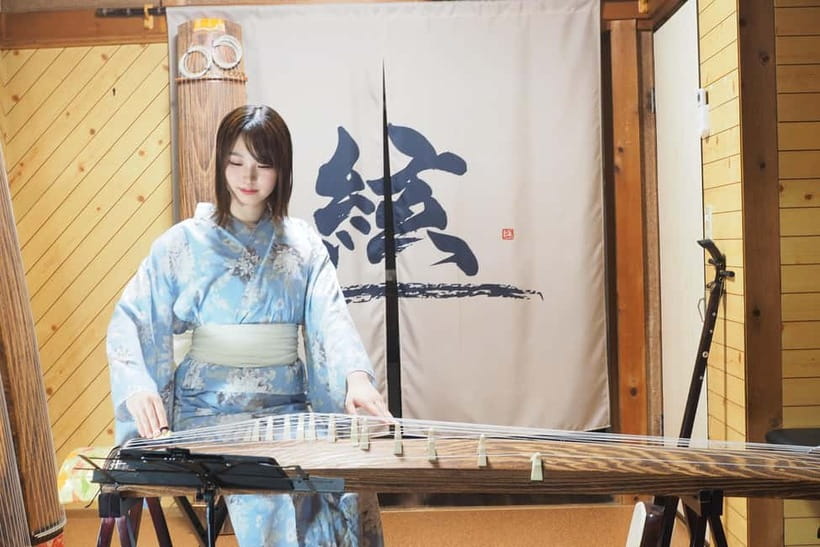
This is a one-hour to 100-minute activity, depending on the option you book. You enter a compact home in Kyoto and settle into a close-up listening space. The mood is warm and informal, more like being invited into a Japanese family’s music room than attending a large public concert.
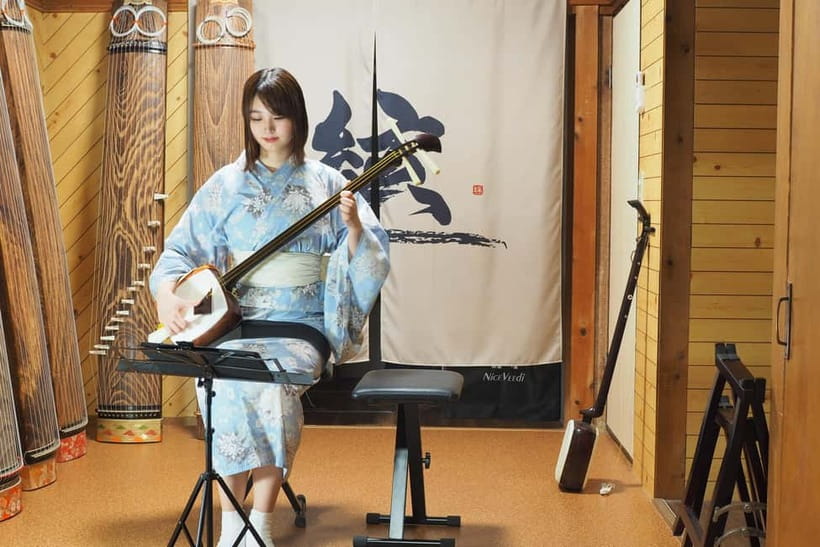
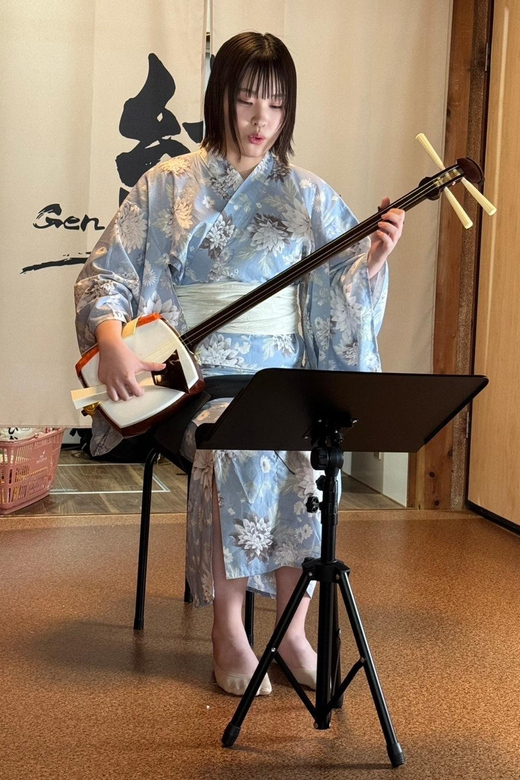
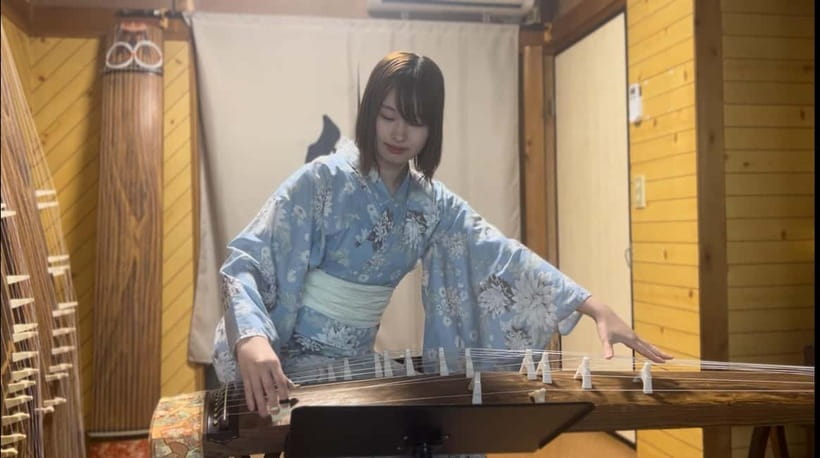
That setting matters. A koto can sound delicate and spacious in a concert hall, but here you are close enough to notice the movement of the player’s hands and the changing tone of each string. The shamisen adds a sharper, more percussive sound, giving the program a useful contrast.
The program starts with a short introduction to the instruments. You learn what the koto and shamisen are, how they are played, and how their unusual sheet music works. This opening talk gives you just enough background to listen with better ears without turning the event into a long lecture.
The performers then present a live program. You may hear traditional pieces, contemporary compositions, and original works. Some traditional selections include vocals, while newer pieces can have a more energetic feel. The exact music changes with the season and the performer, so you should not expect one fixed set list.
A performer named Aoi has led some sessions, and several participants have especially appreciated her koto playing and singing. Other sessions may involve different musicians or instructors, so the names and program can vary by booking option.
More Workshops in the world:
- Mango’s Miami: Salsa Lessons, Mojitos, Bites & Live Music
★ 4.7 · 156 reviews - Alicante:Evening Spanish Tapas Cooking Class with Live Music
★ 4.6 · 3 reviews
Why the concert feels different from a normal show
Kyoto offers many large cultural attractions, but large venues can create a distance between you and the art. This experience takes the opposite approach. You are close to the musician, in a small room, with time to ask about the sound, the instruments, and the techniques.
That personal scale is useful if you know little about Japanese music. You do not need to recognize a famous composition or understand the notation in advance. The presenter explains the basics in English or Japanese, and you can ask questions in the Q&A session.
The shamisen is particularly interesting for first-time listeners because its sound is direct and bright. The koto is more delicate, with long strings that can create a flowing, almost spacious effect. Hearing them in the same program helps you understand that traditional Japanese music is not one single sound.
You may also hear the performer sing. The vocals add another layer to some classical pieces, while the contemporary selections show that these instruments are not locked in the past. That balance is one of the strongest features of the program. You get cultural context, but you are not asked to sit through only solemn historical music.
The close-up Q&A and photo time
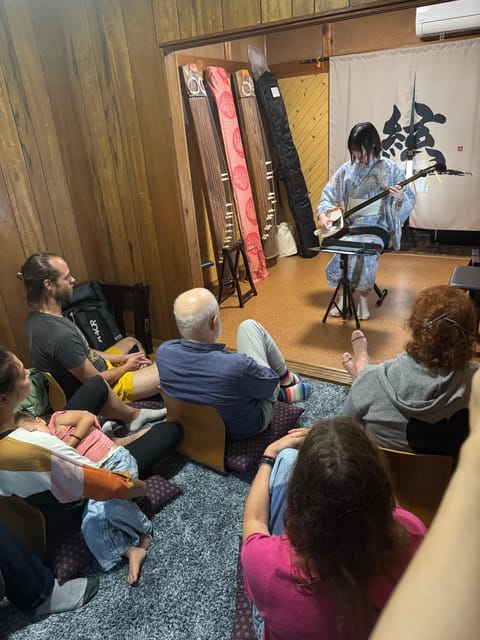
After the performance, you have time to speak with the performer and ask questions. This is not a rushed goodbye at the door. The format allows you to ask about the instruments, the music, or the performer’s methods.
For families, this part can be as useful as the concert itself. Children and adults often have different questions, and the small group format makes it easier to ask without interrupting a formal show. You can also take photos with the performer or instrument when appropriate.
Photos from the experience are included. That is a nice extra, especially because the final lesson gives you a natural moment for pictures. If you want a keepsake from the activity, you will not need to arrange a separate photographer or rely only on quick phone snapshots.
Trying the koto yourself
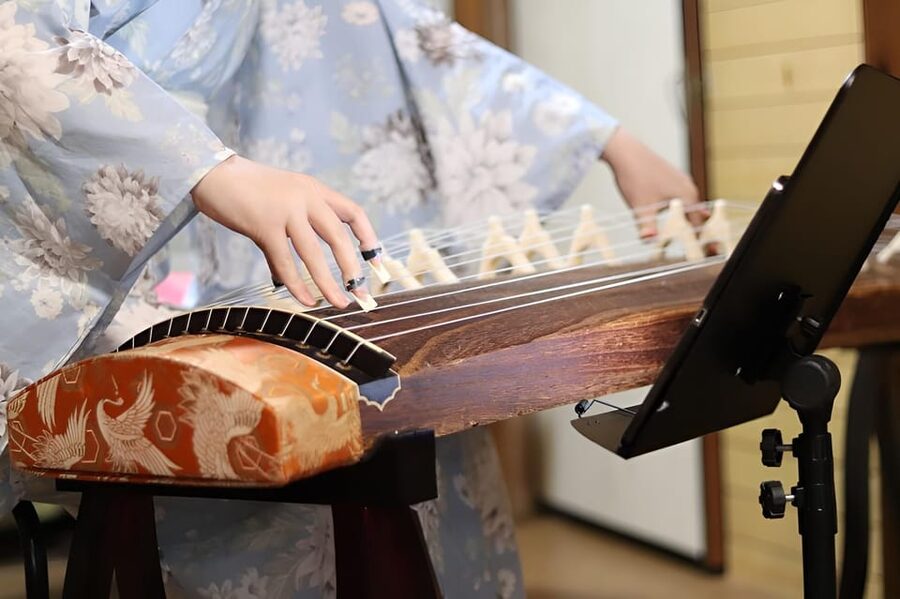
The hands-on lesson comes at the end. A professional instructor shows you how to play a simple piece on the koto, using the supplied instrument and materials. You are not expected to become a musician in one sitting. The point is to feel how the strings respond and understand the basic technique.
This part is beginner-friendly. Several participants with no musical background found that they could pick up the basics quickly. The instructors are described as patient and encouraging, and they can help you with finger placement and technique.
You may also have room to experiment. One session allowed a participant to try personal musical ideas along with the instructor. That kind of flexibility makes the lesson more memorable than simply copying a few notes and stopping.
If you are visiting with a child, the lesson gives the experience a clear focus. Instead of asking a young person to listen quietly for the entire hour, you can look forward to an active final section. Children under the listed minimum age are not suitable, however. The information gives several age restrictions, including children under four, under three, and under two, as well as babies under one. Check the exact option before booking if you are traveling with a young child.
More Live Music in the world:
- Vienna: Vivaldi’s Four Seasons Concert in Karlskirche
★ 4.7 · 14,951 reviews - Venice: La Fenice Opera House Entry Ticket with Audio Guide
★ 4.6 · 11,742 reviews - Sydney: Opera House Guided Tour with Entrance Ticket
★ 4.8 · 8,312 reviews - New Orleans Steamboat Natchez Jazz Cruise with Dinner Option
★ 4.0 · 7,533 reviews
How good is the $38 value?
At $38 per person, this is priced above a quick museum visit but below many formal cultural performances. You are paying for more than a seat. The fee includes the concert, cultural introduction, use of the koto, instructor guidance, materials, the Q&A, and photos.
I consider that a good deal if you want an activity with both watching and doing. A concert-only option may be available at a lower price, which gives you a choice. If you mainly want to hear professional musicians, the shorter format may be enough. If you want to understand the instrument through your own hands, choose the concert and class.
The value is strongest for couples, families, and small private groups. You have time to ask questions instead of simply following a standard script. A solo participant may also find the private format worthwhile, particularly if the lesson is offered one-on-one.
The program is not designed as a full music course. You will learn a simple piece and get a short introduction to technique, but you will not leave with advanced playing skills. Think of it as a well-made cultural encounter with a practical lesson attached.
Finding the house and planning your timing
The meeting point can vary according to the option you book, so read your confirmation carefully. The house is in a residential area rather than beside a major sightseeing entrance. One participant found the small house difficult to locate, and another noted that the alley was dark and required waiting outside until shortly before the show.
I would allow extra time to find the address. Avoid arriving at the last second, especially if you are walking from a station or using local buses. Late arrivals may shorten your session, and a delayed arrival is more disruptive in a small home than in a large theater.
The location works well as part of a sightseeing day. From the area, you can reach Arashiyama in about 25 minutes by train and on foot, using Saiin Station as a transfer point between the Hankyu and Randen lines. Nijo Castle takes about 20 minutes by train and on foot, and Kinkakuji is about 20 to 25 minutes by bus and on foot from the Nishioji Sanjo bus stop.
Nishiki Market is roughly 25 minutes away by train and on foot, with a direct Hankyu Line ride toward Karasuma or Kawaramachi. These estimates are useful for planning, but do not pack the concert too tightly between major sights. The house location and small-group timing make a little breathing room sensible.
Transportation to and from the house is not included. Meals, drinks, souvenirs, and extra koto accessories are also outside the price.
Who will enjoy this experience most?
I would choose this for you if you want a cultural activity that feels personal and participatory. It suits people who enjoy music, families seeking something beyond temples, and anyone curious about instruments they may not encounter at home.
It also works well for musicians. You can ask more detailed questions about technique, notation, and sound, and the instructor may give you room to test your own ideas. At the same time, you do not need any musical training to enjoy the session.
This may not be the best choice if you want a large-scale stage show, a long formal concert, or a guaranteed fixed program. The house is small, the time is limited, and the music changes depending on the performer and season.
The setting is also worth considering for people who have mobility concerns or allergies. You are asked to report physical limitations or allergies ahead of time. Since this is a small home, it is sensible to raise any needs before the day rather than assume the space will suit every situation.
Language, instructors, and group size
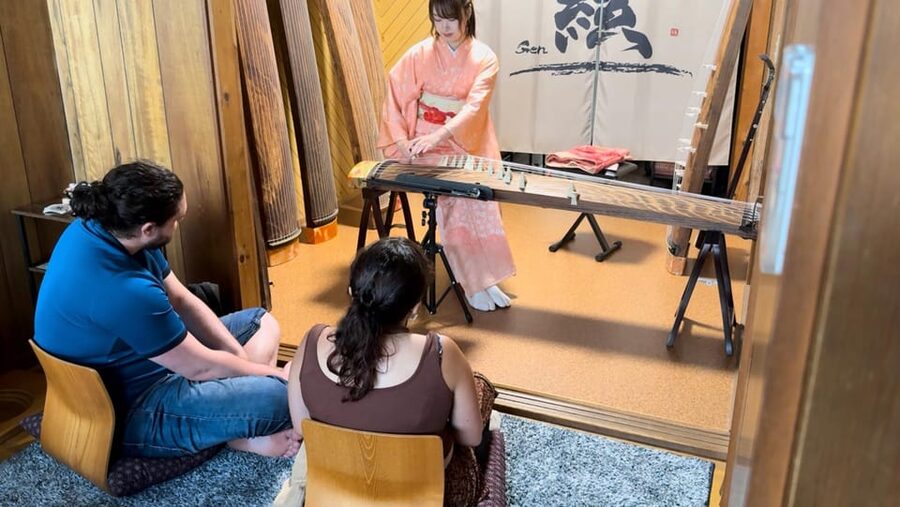
The activity is offered in English and Japanese. English support covers the cultural introduction, explanations of the instruments, the Q&A, and the lesson.
The people leading the activity can vary. Aoi has performed the koto and sung during some sessions. Kyoko has helped with instruction and encouraged participants to explore their own ideas, while Shohei has also been involved in sessions. The exact lineup depends on the date and option, so do not book solely around one named performer unless the booking details confirm it.
Private and small-group formats are available. That is important here because the experience depends on conversation. In a large crowd, the lesson and Q&A would lose much of their value. A small room also means you should expect a quieter, more attentive setting rather than a casual drop-in attraction.
Should you book the Kyoto koto and shamisen experience?
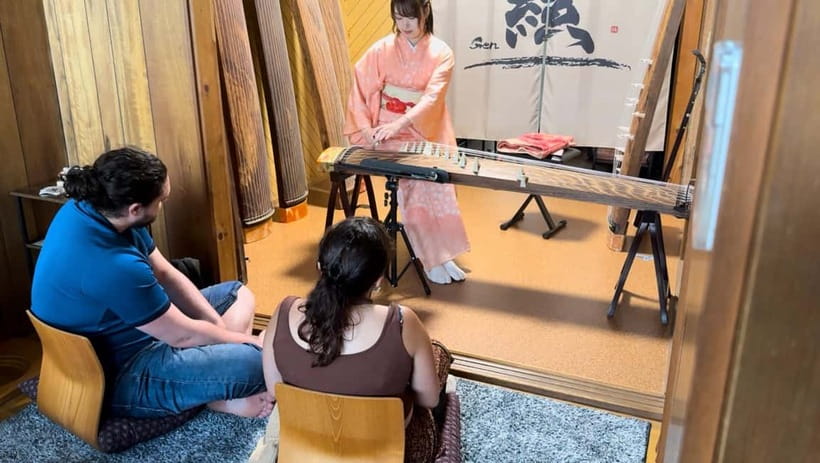
Book it if you want a close-up concert plus a real chance to play the koto. The professional musicianship, friendly instruction, changing program, and home setting give the hour a clear sense of purpose. For $38, you receive a concert, cultural explanation, lesson, Q&A, instrument use, and photos.
Skip it if you prefer grand venues or need a perfectly clear location beside a major station. Give yourself extra time to find the house, check the meeting point, and confirm the age and accessibility details for your group.
For most people who want a quieter and more personal side of Kyoto, this is an excellent choice. You leave with more than a few pleasant sounds in your memory. You understand how the instruments work, you have spoken with the performer, and you have tried making music yourself.
FAQ
How long does the koto and shamisen experience last?
The activity lasts from one hour to 100 minutes, depending on the option booked. Starting times vary, so check availability for your date.
What languages are available?
The experience is offered in English and Japanese. English support is available for the introduction, explanations, questions, and koto lesson.
Do I get to play the koto?
Yes. The session includes use of a koto and professional guidance. You learn to play a simple piece at the end of the program.
Is this a private experience?
Private and small-group options are available. The exact group type depends on the option you choose.
Are photos included?
Yes. Photos of your experience are included. You can also have photo time with the performer and instruments after the performance.
What is not included in the price?
Transportation to and from the location, meals, drinks, souvenirs, and additional koto accessories are not included.
Just added to the listings in the world
- Beijing: Night Tour Of Peking Opera Show / Transfer★ 4.3 · 5 reviews
- Barcelona: Jam Session – Jazz, Cocktails and Tapas★ 4.8 · 19 reviews
- Barcelona: Taste 5 Spanish Wines paired with Live Music★ 5.0 · 3 reviews
- Beijing Culture Event: Tea Ceremony, Music Show, Calligraphy★ 5.0 · 5 reviews
- Bangkok: ThreeSixty Jazz Lounge at Millennium Hilton★ 4.0 · 8 reviews
- Barcelona: Solo Piano Intimate concerts in Barcelona★ 4.9 · 9 reviews
- Bangkok: Party Boat Cruise with DJ and Live Music★ 4.3 · 3 reviews
- Bali Phinisi Cruise: Sunset Dinner with Live Music & Buffet★ 3.7 · 18 reviews
Live Music, compared.

Vivaldi’s Four Seasons Concert in Karlskirche
Read our review →
La Fenice Opera House Entry Ticket with Audio Guide
Read our review →
Opera House Guided Tour with Entrance Ticket
Read our review →
New Orleans Steamboat Natchez Jazz Cruise with Dinner Option
Read our review →
Budapest Danube Cruise and Dinner Options, Live Music and Dance
Read our review →
3-Course-Dinner Cruise on the Seine with live music
Read our review →
Classical Concert in the World-Famous Musikverein
Read our review →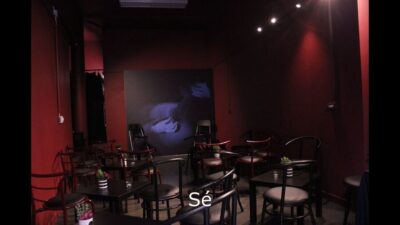
Browse the lists this tour appears in