
REVIEW · JAPAN
Tokyo: Traditional Asakusa Music Show with Dinner
The best part of this three-hour evening is the change of pace: you begin above Asakusa, walk through its famous temple grounds, then settle into a local-style izakaya as shamisen music fills the room. I like the way the tour connects the sights with the meal instead of treating dinner and sightseeing as separate events. I also like the one-drink choice, which includes beer, sake, a cocktail, or a soft drink.
The main consideration is the walking. You go from the Asakusa Culture Tourist Information Center through Sensoji and the surrounding streets before reaching the restaurant. If that is too much, tell the guide early. One booking note specifically advises taking a cab to the restaurant if needed.
Key points at a glance
- Panoramic Asakusa introduction: Begin at the observation deck of the Asakusa Culture Tourist Information Center, across from Kaminarimon Gate.
- Classic Sensoji route: Walk past Kaminarimon, Nakamise shopping street, Hozomon Gate, and the temple’s main hall.
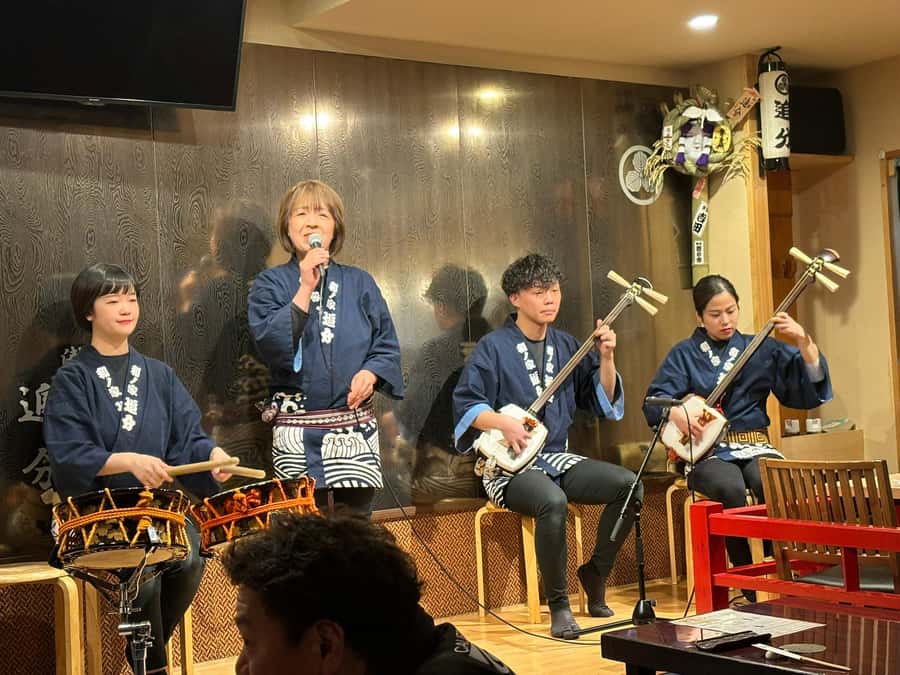
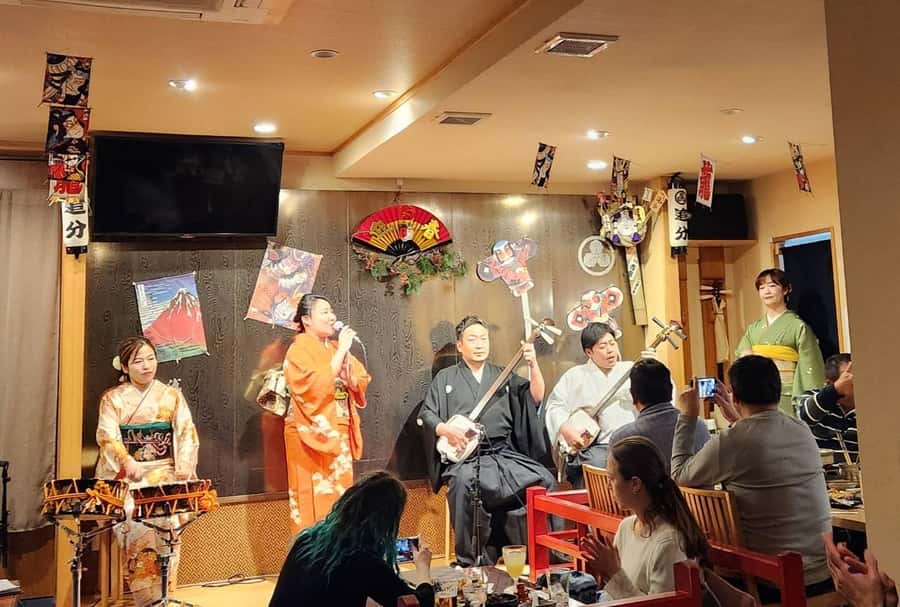
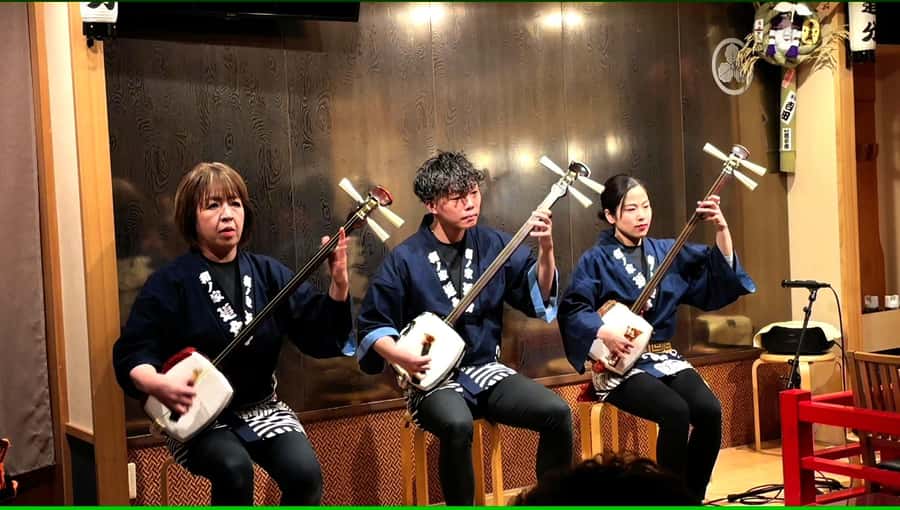
- Dinner with live music: Eat at an izakaya while professional musicians perform shamisen, drums, and traditional folk songs.
- One welcome drink included: Choose beer, sake, a cocktail, or a soft drink. Additional drinks cost extra.
- English guidance throughout: Guides such as Akiko explain both the neighborhood and the instruments.
- Simple meeting point: The tour begins and ends in front of the Asakusa Culture Tourist Information Center.
Why this Asakusa evening works so well
Asakusa is one of Tokyo’s best areas for a first look at old-fashioned city life. The giant Kaminarimon Gate, temple approach, incense, lanterns, and small shops give you plenty to see. Yet the area can feel like a string of disconnected photo stops if you do not know what you are looking at.
This tour gives those sights a clear shape. You first look down on the district from the Asakusa Culture Tourist Information Center, then walk through the Sensoji precinct, and finally hear traditional music in a restaurant. I like that order. It lets you understand the area from above before seeing its busiest landmarks at street level.
The evening is also a useful choice if you want a cultural activity that does not require a full formal concert. The restaurant setting is relaxed and unassuming. You eat dinner, have a drink, and watch musicians perform close by. It feels less ceremonial than a theater show, while still giving you a real introduction to instruments and songs that may be unfamiliar.
At $140 per person, this is not a cheap dinner. The price covers a three-hour guided outing, dinner, one welcome drink, a walk through some of Asakusa’s key sights, and the live performance. The value depends on what you want. If you would otherwise book a meal, a neighborhood tour, and a music performance separately, the combined format is convenient. If you mainly want a low-cost meal, you can find cheaper options in Asakusa.
More Concerts with Dinner in the world:
- New Orleans Steamboat Natchez Jazz Cruise with Dinner Option
★ 4.0 · 7,533 reviews - Budapest Danube Cruise and Dinner Options, Live Music and Dance
★ 4.5 · 7,428 reviews - Paris: 3-Course-Dinner Cruise on the Seine with live music
★ 4.7 · 7,248 reviews
Starting above the Kaminarimon Gate
Meet your guide in front of the entrance to the Asakusa Culture Tourist Information Center. The building sits directly across from Kaminarimon, making it easy to spot, and the guide will hold a sign.
The center’s observation deck gives you a bird’s-eye view of Asakusa and the area beyond. Your guide points out the main sights and explains how the neighborhood fits together. This opening matters because Asakusa can look busy and confusing at ground level. From above, you can see the relationship between the temple grounds, the shopping street, and the surrounding city.
The location is also convenient for public transport. It is a one-minute walk from Exit 1 of Tokyo Metro Asakusa Station on the Ginza Line, and a two-minute walk from Exit A4 of Toei Asakusa Station on the Asakusa Line. You do not need hotel pickup, so plan to reach the meeting point under your own power.
The tour has set starting times, so check availability for the exact departure. Because the restaurant booking and guide arrangement require preparation, last-minute bookings may not always work, though the local provider tries to accommodate them.
Walking through Sensoji’s most important sights
From the information center, you walk through Sensoji Temple. The route includes the four places most first-time visitors want to see:
- Kaminarimon Gate: The famous entrance with its large lantern and thunder-god associations.
- Nakamise shopping street: The approach lined with shops and food stalls.
- Hozomon Gate: The inner treasure gate leading toward the main temple building.
- Sensoji’s main hall: The central worship space within the precinct.
The benefit of having a guide here is not simply finding the gates. You get an explanation of what you are seeing and how the temple area developed as part of everyday Asakusa. Keep in mind that this is an essence of the area’s history, not a long specialist lecture. The tour has to keep moving toward dinner.
You will also leave the main temple precinct and walk through the older streets around it. These lanes reflect the commoner culture associated with Edo-period Asakusa. The appeal is less about one famous monument and more about the change in mood after the grand temple entrance. You see a quieter, more ordinary side of the neighborhood.
This portion does involve walking, and the surface, pace, and distance may not suit everyone. The supplied practical advice is useful: tell your guide if walking is difficult, and ask about taking a cab to the restaurant. That adjustment may change part of the walking route, but it allows you to keep the dinner and music portion.
Settling into an Asakusa izakaya
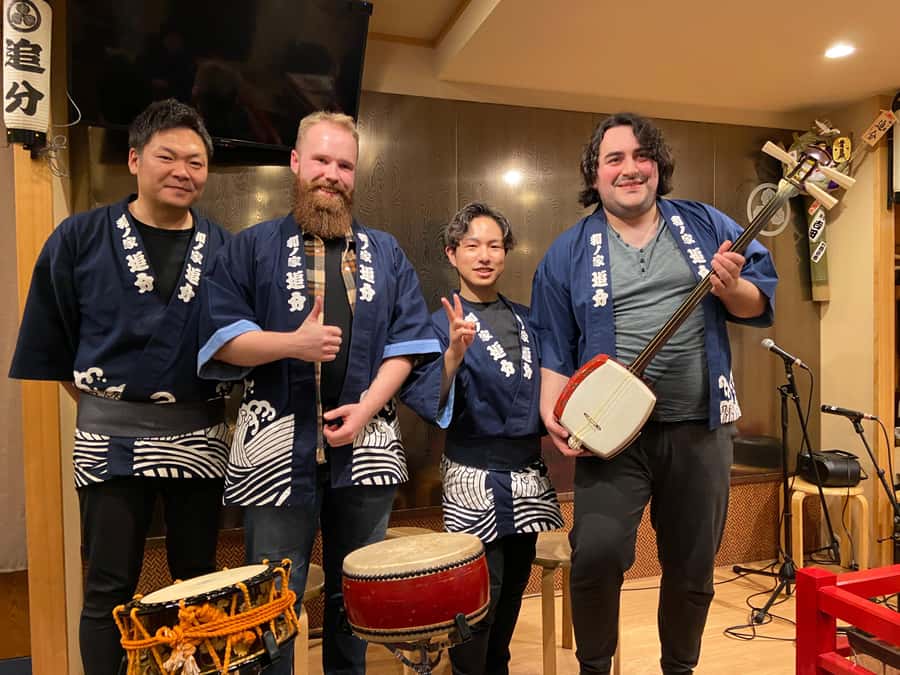
The restaurant is an izakaya, a Japanese drinking and dining place built around shared dishes, drinks, and an informal atmosphere. Do not expect a highly polished fine-dining room. The appeal is the friendly setting and the straightforward dishes associated with local dining.
Dinner is included, along with one welcome drink. You can choose from beer, sake, a cocktail, or a soft drink. That range is helpful if your group has mixed tastes, and the sake option gives you a natural way to connect the meal with Japanese food culture without needing to order a full tasting.
Extra drinks are not included, so keep that in mind when judging the total cost. The included drink is a welcome beverage, not an open bar. If you like to linger over several drinks with dinner, your final bill for the evening will be higher than the advertised tour price.
The meal is described as traditional cuisine and unassuming food loved by locals. Specific dishes are not provided, so you should not book this expecting a fixed menu built around one famous specialty. The strength here is the combination of food, setting, and performance rather than a detailed culinary itinerary.
More Live Music in the world:
- Vienna: Vivaldi’s Four Seasons Concert in Karlskirche
★ 4.7 · 14,951 reviews - Venice: La Fenice Opera House Entry Ticket with Audio Guide
★ 4.6 · 11,742 reviews - Sydney: Opera House Guided Tour with Entrance Ticket
★ 4.8 · 8,312 reviews - Vienna: Classical Concert in the World-Famous Musikverein
★ 4.6 · 6,673 reviews
Learning what the instruments do
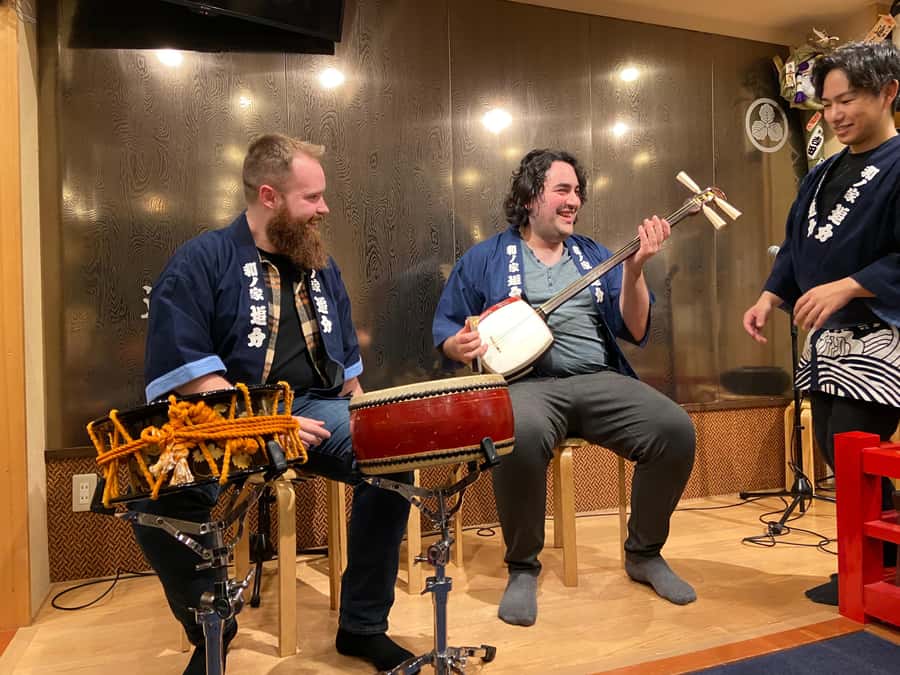
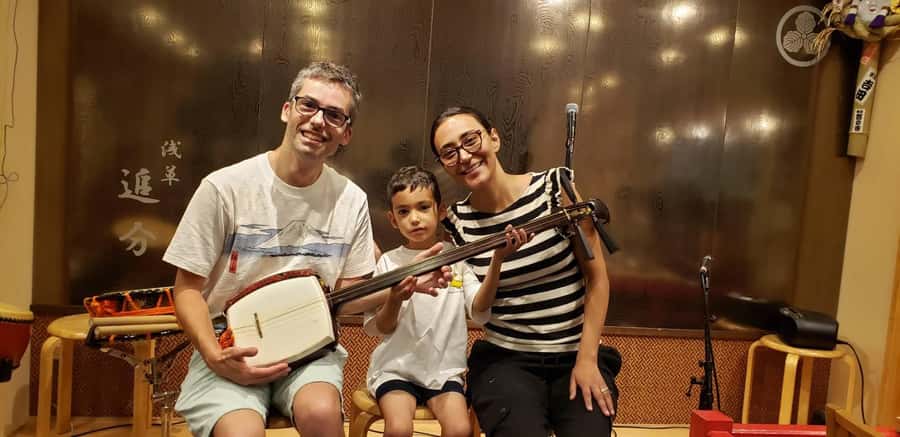
Before the performance begins, the guide explains the instruments and the music you are about to hear. That short introduction can make a big difference. A shamisen may look simple at first glance, but understanding its place in Japanese music helps you listen for its sharp, expressive sound.
The performance includes traditional instruments such as shamisen and drums, along with folk songs. The musicians are described as award-winning professionals, and the shamisen is played at close range in the restaurant. You should expect a lively presentation rather than background music.
The music is one of the strongest reasons to book this activity. You are not merely hearing a recording or watching a brief demonstration from across a large stage. The restaurant setting places the performance right beside your meal, giving the sound a direct, physical quality.
The performance also supplies a social high point to the evening. The tour begins with views and explanations, shifts into a temple walk, and ends with food and music. That rising rhythm helps the three hours feel like one connected event rather than several unrelated stops.
What the guide adds to the evening
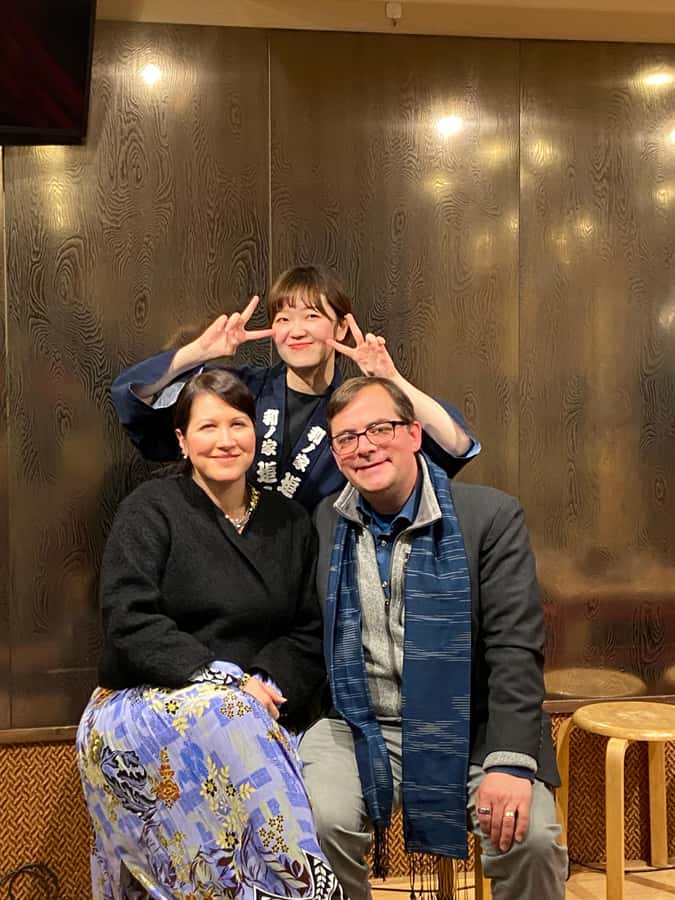
The guide’s role is more important here than it would be on a simple restaurant reservation. You need someone to explain the view from the information center, point out the temple landmarks, help connect the neighborhood to the Edo period, and introduce the instruments.
The tour is conducted in English. Akiko is one guide specifically associated with this experience, and her work has been praised for clear explanations and a warm manner. Guide assignments can vary, so you should not assume Akiko will lead every departure, but the English-speaking guide is part of the booking.
A good guide also helps with the practical transitions. The walk from Sensoji to the restaurant, the timing of dinner, and the move into the performance all work better when someone is managing the evening. If you have mobility concerns, raise them at the beginning rather than waiting until the group is already on the way.
Who will get the most from this $140 experience
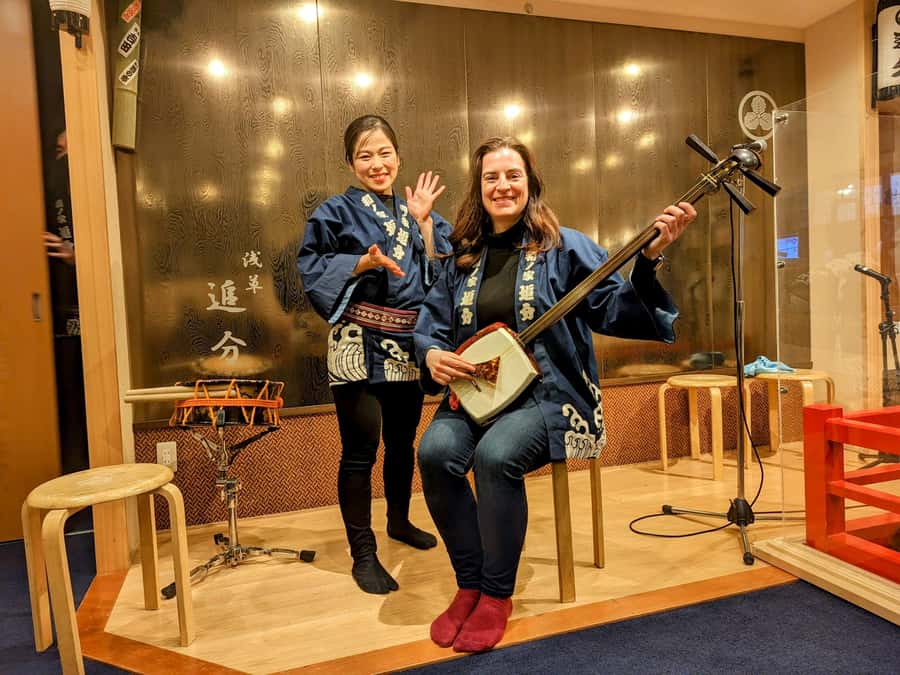
I would recommend this tour to you if you want a single evening that combines three familiar Tokyo pleasures: an old neighborhood, Japanese food, and live performance. It suits first-time visitors who want context around Asakusa instead of simply taking photos at Kaminarimon.
It is also a good fit if you enjoy small-group activities and prefer a relaxed restaurant to a formal concert hall. The setting gives you room to eat and talk, while the musicians provide the main event.
Families and mixed-age groups may appreciate the variety, especially if not everyone wants a long museum visit. The one-drink choice also makes the meal easier for groups with different preferences.
I would think twice if you want a quiet, private dinner. The live performance is the point, and the restaurant atmosphere is social. I would also compare the price carefully if your main goal is only seeing Sensoji. You can visit the temple area independently for far less, but you would not get the guide, dinner, drink, and music together.
People with limited walking ability should ask about the cab option before the route begins. The official activity includes a walk through Sensoji and the surrounding streets, so this is not a seated dinner from start to finish.
Timing, transport, and the end of the night
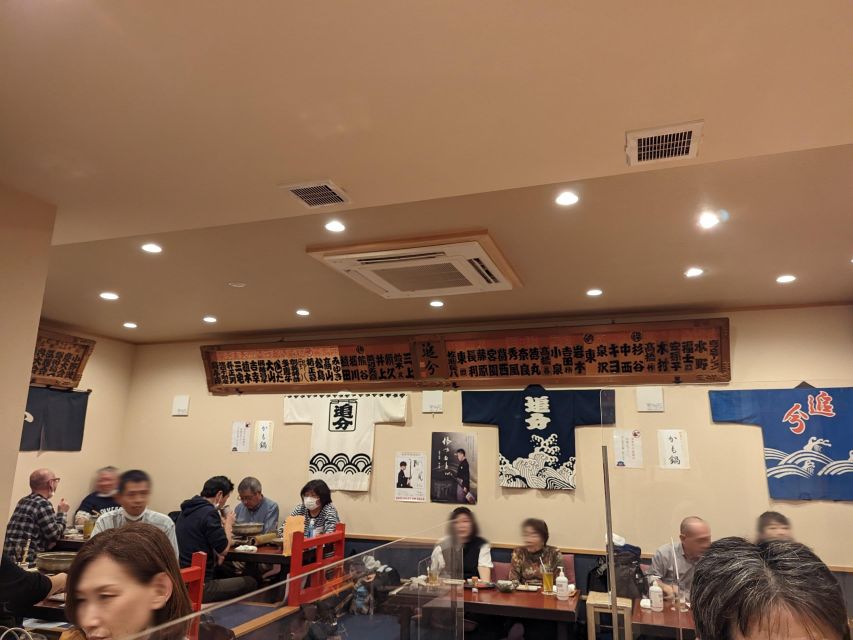
The activity lasts three hours and returns to the original meeting point. That makes it easy to fit into an evening plan near Asakusa, but you should avoid scheduling another fixed activity immediately afterward. Dinner timing and the performance need room to run naturally.
There is no hotel pickup or drop-off. You reach the meeting point yourself and return there at the end. The station access is excellent, with Tokyo Metro and Toei entrances only a short walk away.
The meeting point is particularly simple because it is across from Kaminarimon Gate. Arrive with enough time to locate the information center entrance and find the guide’s sign. A meeting point directly beside a famous landmark is much easier than an address hidden on a side street.
You can cancel without charge up to 24 hours in advance, and the reserve-now, pay-later option keeps your schedule flexible. Those terms are useful in Tokyo, where weather, jet lag, and changing plans can affect an evening outing.
My practical verdict on the experience
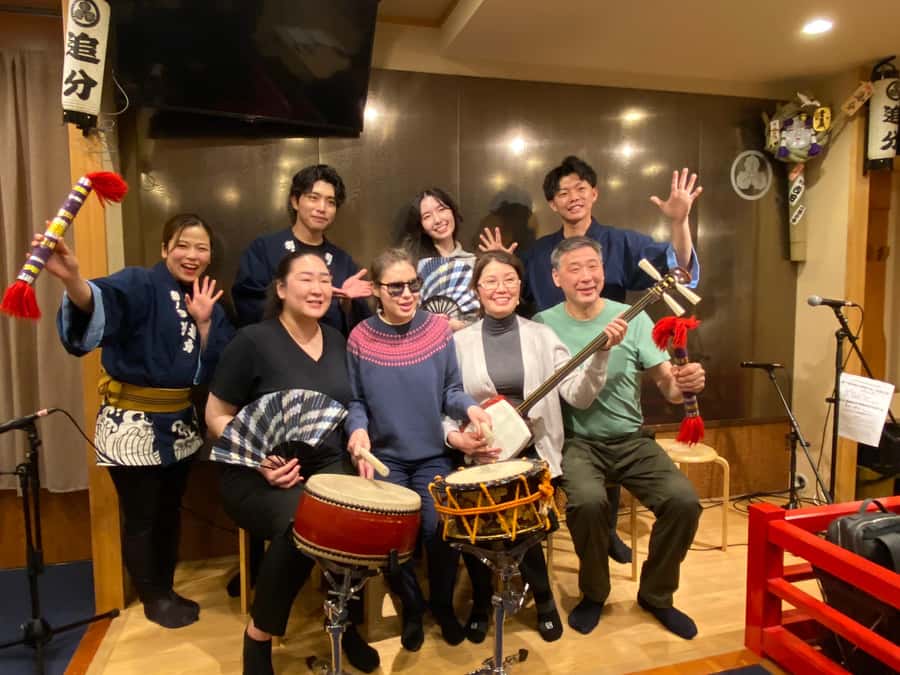
I like this tour because it gives you more than a meal and more than a standard temple walk. The view from the information center sets the scene, the Sensoji route supplies the visual landmarks, and the shamisen performance gives the evening a clear reason to remember it.
The biggest praise belongs to the music and the guide. The performance has real professional weight, while guides such as Akiko help turn the route into a cultural introduction rather than a march between photo stops. The dinner is important, but it is the setting for the music, not the sole reason to pay $140.
The main weakness is that the experience is not highly customizable. You follow a planned route, walk between the temple and restaurant, receive one included drink, and eat the food arranged by the provider. That is convenient, but you have less control than you would with an independent evening.
Should you book this Asakusa dinner and music tour?
Book it if you want an easy, guided introduction to Asakusa with live shamisen and folk music as the evening’s centerpiece. It is especially useful for a first Tokyo visit, a special night, or anyone who wants dinner and cultural context in one reservation.
Skip it if you want the cheapest possible meal, a private dining room, or a full-length historical tour. Also check the walking plan if mobility is a concern. For most visitors who value a well-organized cultural evening, the combination of Sensoji, an English-speaking guide, traditional food, and close-up music makes the $140 price reasonable.
FAQ
How long does the Asakusa music and dinner experience last?
The activity lasts three hours. Check availability for the exact starting time.
Where does the tour begin?
It begins in front of the entrance to the Asakusa Culture Tourist Information Center, directly across from Kaminarimon Gate.
How do I reach the meeting point by train?
The meeting point is a one-minute walk from Exit 1 of Tokyo Metro Asakusa Station on the Ginza Line. It is also a two-minute walk from Exit A4 of Toei Asakusa Station on the Asakusa Line.
Where does the tour finish?
The activity ends back at the original meeting point in front of the Asakusa Culture Tourist Information Center.
Is dinner included?
Yes. Dinner at the izakaya is included in the price.
Is a drink included?
Yes. One welcome drink is included. You can choose beer, sake, a cocktail, or a soft drink. Additional drinks are not included.
What kind of music will I hear?
The performance features traditional Japanese instruments, including shamisen and drums, as well as traditional folk songs.
Is the tour conducted in English?
Yes. An English-speaking guide leads the activity and explains the Asakusa sights, music, and instruments.
Does the tour include hotel pickup and drop-off?
No. You must make your own way to the meeting point, and the tour returns there at the end.
Just added to the listings in the world
- Beijing: Night Tour Of Peking Opera Show / Transfer★ 4.3 · 5 reviews
- Barcelona: Jam Session – Jazz, Cocktails and Tapas★ 4.8 · 19 reviews
- Barcelona: Taste 5 Spanish Wines paired with Live Music★ 5.0 · 3 reviews
- Beijing Culture Event: Tea Ceremony, Music Show, Calligraphy★ 5.0 · 5 reviews
- Bangkok: ThreeSixty Jazz Lounge at Millennium Hilton★ 4.0 · 8 reviews
- Barcelona: Solo Piano Intimate concerts in Barcelona★ 4.9 · 9 reviews
- Bangkok: Party Boat Cruise with DJ and Live Music★ 4.3 · 3 reviews
- Bali Phinisi Cruise: Sunset Dinner with Live Music & Buffet★ 3.7 · 18 reviews
Concerts with Dinner, compared.
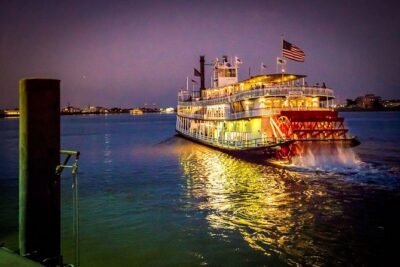
New Orleans Steamboat Natchez Jazz Cruise with Dinner Option
Read our review →
Budapest Danube Cruise and Dinner Options, Live Music and Dance
Read our review →
3-Course-Dinner Cruise on the Seine with live music
Read our review →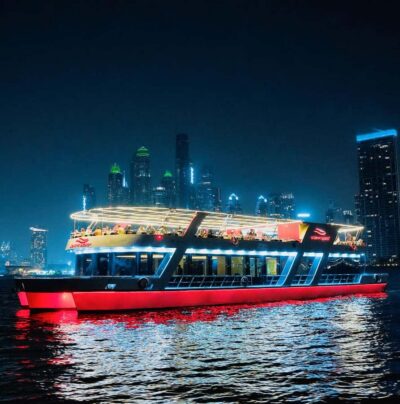
Sunset or Dinner Cruise with Live Music & Open Bar
Read our review →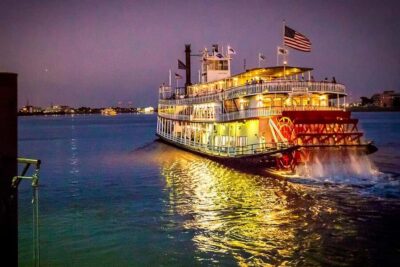
Evening Steamboat Jazz Cruise + Optional Dinner
Read our review →
4-Course Dinner Cruise on Seine River with Live Music
Read our review →
Dubai Marina Dinner Cruise with Live Music & Open Bar
Read our review →
Gourmet Dinner Cruise on Seine River with Live Music
Read our review →Browse the lists this tour appears in